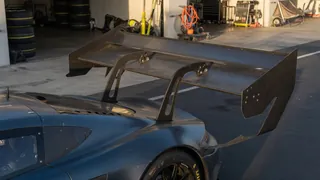
Race car rear wing angle
A race car rear wing angle is not a fixed setting but a balance between cornering grip and straight-line speed. The angle positions the wing profile in the airflow to trade downforce against aerodynamic drag. A steeper angle can stabilize high-speed corners and improve braking traction, while a flatter angle reduces resistance. The correct setting changes with track layout, speed range, and vehicle balance, so the answer is always a tuning decision rather than one universal number.
Essential answer
The essential answer is that the best rear wing angle is the one that balances the car's need for rear-end grip against its penalty in straight-line speed. When the angle of attack increases, the wing deflects air upward more aggressively. This pushes the rear tires into the pavement, creating downforce. That additional load raises the tire's traction limit, allowing higher cornering speeds and better stability under braking. However, the same deflection increases aerodynamic drag, which slows acceleration and reduces top speed on long straights. Therefore the angle is a compromise selected for a specific circuit.
The practical setting depends on how much of the lap is spent cornering versus accelerating. On a tight track with many medium-speed turns, a more aggressive angle can pay back the drag penalty with time gained in the curves. On a high-speed oval or a circuit with long straights, a shallow angle often produces a faster overall lap despite slightly less grip in slow corners. Engineers and drivers also adjust the angle to correct handling balance. If the car oversteers on corner entry or exits, adding rear wing angle shifts aerodynamic load rearward, calming the rear axle without changing the mechanical suspension.