What Is a Digital Rearview Mirror?
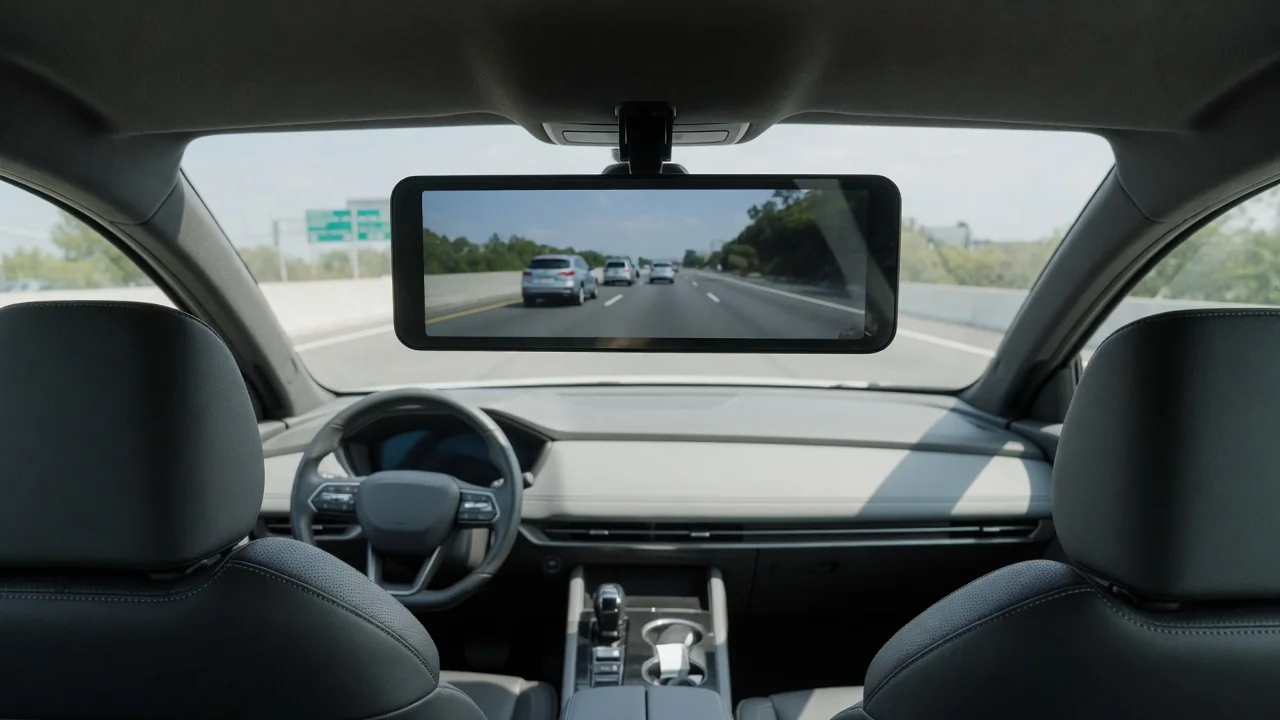
What is a digital rearview mirror? It is an interior mirror housing that doubles as a video screen, showing a live feed from a rear-facing camera instead of a reflection through the cabin. The idea is to give the driver a view behind the vehicle that is not blocked by passengers, headrests, cargo, or thick roof pillars, while keeping a conventional mirror available on demand.
Camera view
The camera is typically mounted at the rear of the vehicle, often high on the liftgate, inside the top of the rear window, or near the roof-mounted antenna housing, depending on the manufacturer. Its feed is sent to a display built into the mirror housing on the windshield. Because the lens sits behind everything in the cabin, the picture skips the rear seats entirely, so a full load of passengers or a stack of luggage no longer hides the traffic behind you.
The image usually covers a wider field than a glass mirror, which can reveal vehicles in adjacent lanes that would otherwise sit near the edges of the frame. That wider angle also changes perspective: following cars may appear smaller or farther away than they do in a reflection. Many systems let the driver adjust brightness, tilt the image up or down, or zoom, though the available settings and the way they are reached differ between brands and model years, so the owner's manual is the best reference.
Optical mirror switch
Most digital rearview mirrors are dual-mode units. A lever or tab on the bottom edge of the housing, in the same place as the day-night flip tab on a traditional mirror, typically toggles between the camera display and ordinary reflective glass. In some vehicles the switch is a button or a menu selection instead. With the display off, the unit works as a regular mirror and must be aimed for the driver's seating position like any other.
That switch matters more than it may seem. The optical mode serves as a fallback if the camera lens is obscured, the screen misbehaves, or the driver simply finds the video tiring on a long trip. It is worth setting the glass angle properly first, before turning the display on, so that flipping back mid-drive gives a usable reflection immediately. Some drivers also notice a faint reflection layered over the video image; tilting the housing slightly often reduces it.
Cleaning
An exterior or glass-mounted camera lens collects road film, salt, dust, and water droplets just as a rear window does, and a dirty lens shows up as a hazy, smeared, or blotchy picture. Some vehicles include a washer nozzle for the camera, sometimes tied to the rear washer, while others rely on the rear wiper sweeping the glass in front of an interior-mounted camera. Where neither exists, the lens needs occasional hand cleaning, especially in winter or after unpaved roads.
A soft, clean microfiber cloth dampened with water is a gentle choice for both the lens and the screen surface; abrasive towels and harsh solvents can scratch coatings or leave a film that worsens glare. The display face picks up fingerprints from the mode lever being used, and those smudges become obvious in sunlight. Cleaning products approved for a given vehicle vary, so the manufacturer's care instructions should take priority over general habits used on ordinary glass.
Everyday Use and Observations
The first drive with the display on often feels odd. Eyes focus on a reflection as though it were far away, but a screen sits a short distance from the face, so glancing from the road to the mirror requires refocusing. Drivers who wear reading glasses or progressive lenses sometimes find this more noticeable. Most people adapt after a few trips, and others prefer to reserve the camera view for times when the cabin is packed or the rear window is blocked.
At night, headlights from following traffic may appear as bright blooms or streaks rather than the dimmed glow of an auto-dimming mirror, and LED lamps on other vehicles can seem to flicker on screen. Rain presents a trade-off: droplets on the lens blur the image, yet a clean camera can see past a fogged or snow-covered rear window. The display also cannot show the rear seat, so checking on children or pets means switching back to the glass.
Limits and Next Steps
A digital rearview mirror is a visibility aid, not a replacement for side mirrors, shoulder checks, or the separate backup camera shown on the center screen when reversing. Distance judgment through a wide-angle lens takes practice, and any camera can be degraded by glare from a low sun, heavy spray, ice, or condensation. A blank, frozen, or flickering display does not by itself identify which part is at fault, since the camera, wiring, display, and software are all involved.
If the picture stays poor after the lens is cleaned and the settings are checked, switching to the optical mirror keeps the vehicle usable while a qualified technician diagnoses the system. For shoppers, the feature may be standard, optional, or limited to certain trim levels, and aftermarket versions differ widely in image quality and installation. A test drive in daylight and after dark, trying both modes, is the most reliable way to judge whether the camera display suits a particular driver.