What Is an Auto-Folding Side Mirror Feature?
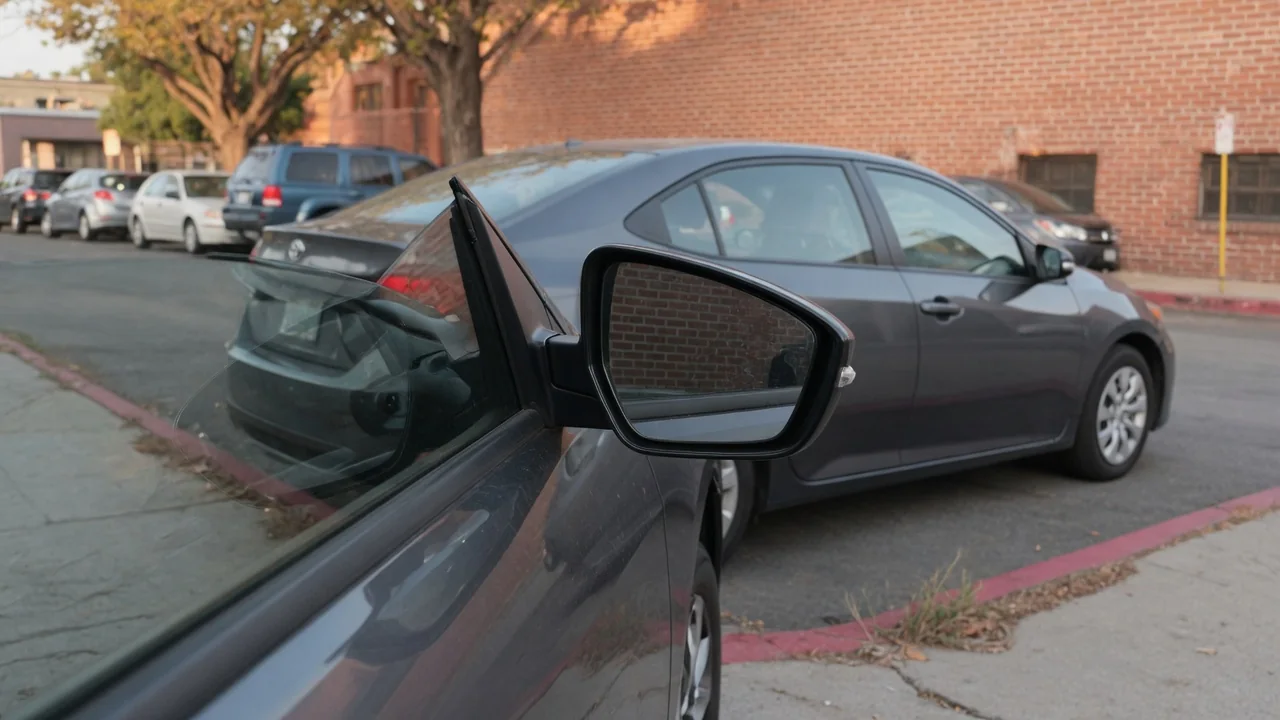
Drivers who ask what is an auto folding side mirror feature are usually describing something they have already seen: the door mirrors swinging inward against the body when a car is locked, then opening again when it is unlocked or started. The feature uses small electric motors in each mirror housing to tuck the mirrors away while parked and restore them for driving.
Activation
Power-folding mirrors contain a motor and gear set at the pivot where the housing meets the door. In an automatic setup, the vehicle's body electronics send the fold command without any button press. The most common trigger is locking the doors with the key fob or a door handle sensor, and the mirrors usually unfold on unlock or when the ignition is switched on. Some vehicles tie the action to shutting off the engine or opening the driver's door instead, so the exact sequence depends on the manufacturer.
On many vehicles the behavior is a setting rather than a fixed trait. It may be switched on or off through the infotainment screen, the instrument cluster menu, or a position on the mirror adjustment control. A car that has power-folding mirrors does not necessarily fold them automatically; some fold only when the driver presses a button. If the mirrors stay out after locking, the owner's manual will show whether the automatic function exists on that trim level and how it is enabled.
Winter caution
Cold weather is the main situation where automatic folding deserves some thought. Freezing rain, packed snow, or meltwater that refreezes overnight can bond the mirror housing to its base. When the car is unlocked, the motor tries to move a housing that is held in place, and the gears and clutch inside the pivot take the strain. A driver may hear the motor run, click, or hum briefly while the mirror stays put or moves only partway.
For that reason, many owner's manuals suggest turning off the automatic function when icing is expected, so the mirrors remain extended and do not need to break free. If a mirror is already frozen, clearing the ice around the pivot seam and letting the cabin and any mirror heating warm the area is gentler than forcing the housing by hand or cycling the switch repeatedly. Heated mirror glass helps with visibility, but it does not necessarily thaw the hinge itself, so the two should not be confused.
Manual override
Most vehicles with this feature also give the driver direct control. A dedicated fold button, or a specific position on the mirror selector knob, lets the mirrors be folded or opened on demand regardless of the lock state. This is useful when squeezing through a narrow garage opening, pulling alongside a wall, or entering an automatic car wash. On some systems, folding the mirrors with the button suspends the automatic routine until they are opened with the button again, which can surprise owners who expect them to unfold on unlock.
The housings can generally also be pushed by hand, since the pivot is designed to give way if a mirror is struck by a passing car or pedestrian. After a mirror has been moved manually, it may sit loosely, look slightly out of position, or make a ratcheting noise the next time the motor runs. Many designs resynchronize when the power-fold control is cycled once, though the correct reset method varies and is worth confirming in the vehicle's documentation rather than assumed.
Everyday Use and Observations
In daily driving, the practical benefit is protection in tight spaces. Folded mirrors reduce the vehicle's overall width, which lowers the chance of a clipped housing on a narrow street, in a crowded parking structure, or in a shared driveway. There is also a simple visual cue: mirrors folded flat confirm at a glance from across a parking lot that the car actually locked. Some owners rely on this more than on the horn chirp or light flash.
A healthy system moves both mirrors together, smoothly and quietly, and stops them firmly in the same position each time. It is worth noticing how the mirrors behave normally so that changes stand out. One mirror lagging behind the other, a grinding or repeated clicking sound, or a housing that shakes at highway speed suggests the mechanism is no longer seating fully. Auto folding is also separate from other mirror functions, such as glass that tilts downward in reverse or memory settings linked to a driver profile.
Limits and Next Steps
The feature has boundaries that are easy to overlook. Folding happens only while parked or at very low speed on most vehicles, and the mirrors are not meant to be driven folded, since that removes rearward visibility and may disable side-mounted cameras or blind spot indicators built into the housing. Aftermarket folding kits exist for some cars without the factory function, but wiring, control module support, and mirror hardware differ widely, so suitability has to be checked for the specific vehicle.
When a mirror stops folding, the cause is not automatically a failed motor. A disabled setting, a blown fuse, a weak battery, a damaged wire in the door hinge area, or a mechanism knocked out of sync can all produce the same symptom. Checking the menu setting and trying the manual fold button are reasonable first steps. If the mirror remains stuck, noisy, or loose, a technician can test the circuit and the pivot assembly and confirm what the particular model requires before any parts are replaced.