What Is a Cowl Drain?
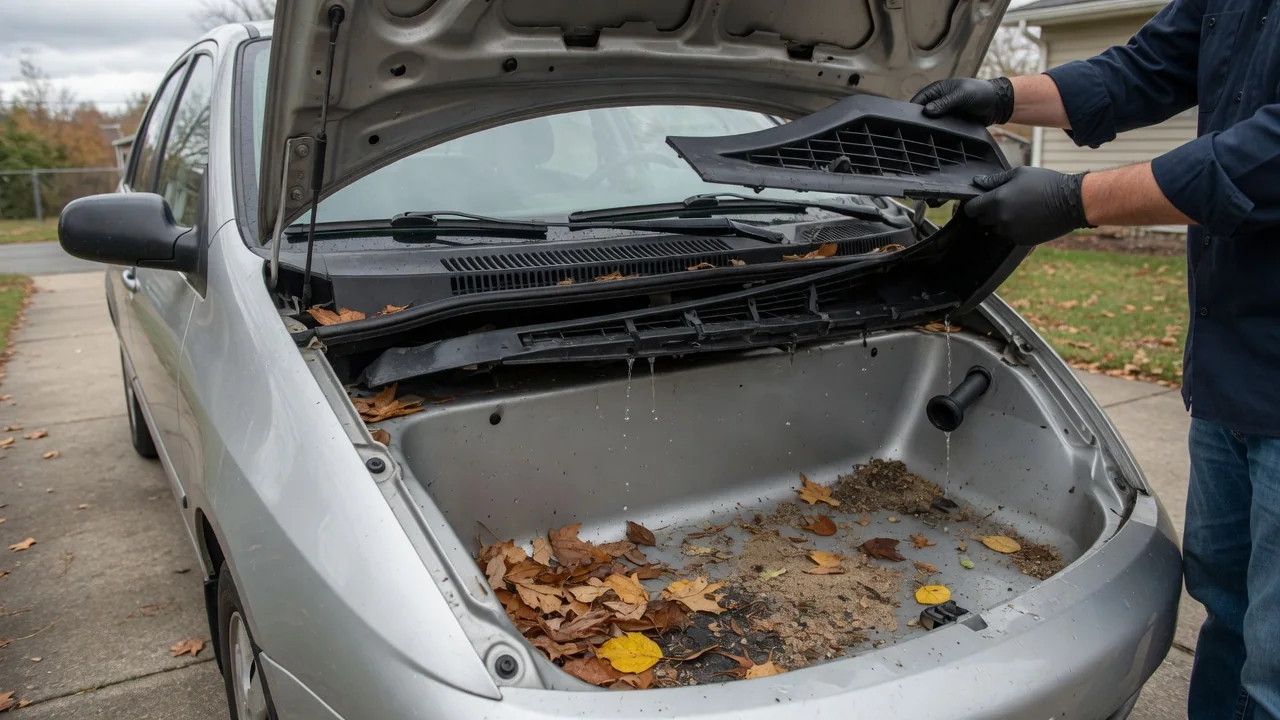
If you have ever wondered what is a cowl drain, the answer sits just below your windshield. The cowl is the trough-like panel between the rear edge of the hood and the glass, and its drains are the openings or tubes that carry rainwater and wash water down and out of the body. When they work, you never notice them; when they clog, water finds another route.
Debris accumulation
The cowl sits in a spot that collects whatever slides down the windshield or blows across the hood. Leaves, pine needles, seed pods, blossoms and road grit fall through the slots of the plastic cowl cover and settle in the trough beneath. Once there, the material gets wet, breaks down into a dark, soil-like sludge and migrates toward the lowest point, which is exactly where the drain openings are located. A small outlet does not need much of this compost to become partially or completely blocked.
What you can see depends on the vehicle. On some models the debris is visible through the grille near the wiper arms, while on others the trough is hidden beneath a trim panel and the outlets exit behind the fender liners or near the door hinges. Some designs use open slots, and others use rubber grommets or flap-style valves that can stick shut with dirt. Cars parked under trees or left outside through autumn usually gather material faster than garaged ones, so the same design can behave very differently between owners.
Cabin leak signs
When the outlets cannot keep up, water pools in the cowl chamber and rises toward openings that were never meant to be submerged. The fresh air intake for the heating and air conditioning system is commonly located in this area, so standing water can spill into the blower housing. Seams, wiring pass-throughs and firewall grommets are other potential paths. The usual result is a damp or soaked front carpet, often on the passenger side, though the affected side varies with the layout of the particular vehicle.
Other clues are less direct. A musty smell when the fan starts, windows that fog heavily and are slow to clear, or a sloshing sound from behind the dashboard during turns can all point to trapped water. Some drivers notice drips from under the glove box after heavy rain or a car wash. None of these signs proves the cowl drains are the cause, because a clogged air conditioning condensate drain, sunroof drains, a windshield seal or door seals can produce similar wet floors, so the source needs to be traced.
Maintenance
Routine care is mostly about keeping the area clean before a blockage forms. Lifting the hood and removing loose leaves from the base of the windshield by hand takes very little time, and doing so during seasonal changes makes sense for vehicles parked outdoors. If the trough is visible, looking for standing water or packed sludge after rain gives a quick indication of how well the outlets are flowing. Many owner's manuals say little about this area, so a visual check during other underhood tasks is a practical habit.
Deeper cleaning needs more caution. Reaching the drains may involve removing wiper arms or trim panels held by brittle clips, and the procedure differs by make and model, so vehicle-specific service information is worth consulting first. Forcing rigid tools or high-pressure air into an outlet can dislodge a hose or damage a valve, and pouring large amounts of water into a blocked cowl may push it straight into the cabin air intake. If access is not straightforward, a shop can clean the area during other service.
Everyday Use and Observations
In daily driving, a healthy cowl drain announces itself only in small ways. After a rainstorm or wash, you may see water trickling out behind the front wheels or dripping from the lower body near the front doors, which is typically normal and shows the system is moving water. The windshield base should empty within a short time rather than hold a puddle. A clean cabin air filter, where the vehicle has one, without leaf fragments or water staining, is another quiet sign that the intake area is staying dry.
Parking habits shape what you observe. A car left nose-down on a steep driveway may drain differently from one parked level, and one that sits beneath a shedding tree will collect debris between every drive. Noticing patterns helps: dampness that appears only after rain points toward body drainage, while moisture that appears after running the air conditioning on a dry day suggests a different source. Keeping simple mental notes about weather, parking position and where water shows up makes any later diagnosis faster and more accurate.
Limits and Next Steps
Clearing leaves is within reach of most owners, but there are limits to what a visual check can tell you. Water that has already reached the interior can soak carpet padding, which holds moisture long after the surface feels dry and can lead to odors, mold and corrosion of the floor. Electrical connectors and control modules are sometimes mounted low in the footwell or near the cowl, so repeated wetting may cause faults that seem unrelated. A blower motor that becomes noisy after a leak deserves attention as well.
If the floor stays damp, warning lights appear after rain, or the drains cannot be found or reached, professional diagnosis is the sensible next step. A technician can perform a controlled water test, inspect seals and seams, and confirm drain locations using information for that exact vehicle. Any stored fault codes should be treated as evidence to interpret alongside the moisture, not as proof that a specific component has failed. Drying the interior thoroughly after the repair matters as much as fixing the entry point itself.