What Is a Fresh-Air Intake on a Car? Cowl, Filter, and Blockage Explained
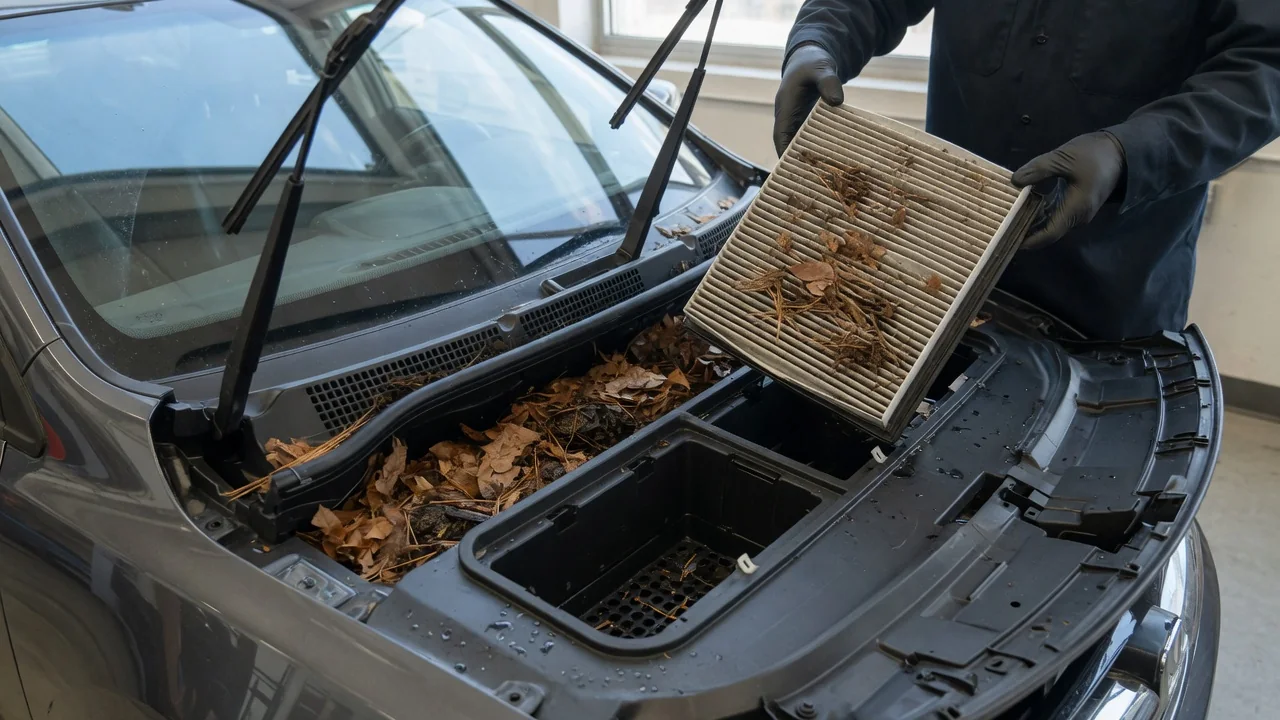
A fresh-air intake on a car is the opening that lets outside air into the heating, ventilation, and air conditioning (HVAC) system, where it is filtered, heated or cooled, and sent out through the dash vents. When people ask what a fresh air intake on a car is, they usually mean the inlet near the base of the windshield. Knowing where it sits, how the cabin air filter fits in, and what happens when it clogs explains many common airflow, odor, and moisture complaints.
Cowl location: where outside air enters the car
On most passenger vehicles, the car cabin fresh air intake is in the cowl, the area between the rear edge of the hood and the bottom of the windshield. It is usually covered by a plastic panel with slots or a mesh grille, often called the cowl screen or cowl cover, and the windshield wiper arms are commonly mounted in or near the same panel. Beneath the cover, a cavity often called the plenum guides air toward the HVAC module behind the dashboard. This describes the typical layout; the exact panel shape, which side the inlet opening is on, and how it is accessed vary from vehicle to vehicle, so the service information for a specific model is the reliable reference.
The cowl is a practical spot for several reasons. When the vehicle is moving, air tends to build up slightly in front of the windshield, and that pressure helps push outside air into the inlet even before the blower fan does much work. The location is also well above the road surface and far from the tailpipe, which reduces how much road spray, dust kicked up by tires, and exhaust the system draws in compared with a low-mounted opening. Finally, the cowl sits directly in front of the HVAC housing, so the air path into the cabin can stay short.
Because rain, snowmelt, and wash water fall straight onto the cowl, the intake area is designed to separate water from air. Typical designs collect water in channels and route it through drain openings or tubes that empty outside the body, while incoming air follows a path over baffles or raised walls before reaching the HVAC inlet. A rubber seal along the hood edge is often part of this arrangement. These drains carry no air, but they are an essential part of how the fresh-air intake keeps water out of the ventilation system.
Filter: cleaning the air before it reaches the cabin
After passing the cowl, incoming air in many modern vehicles goes through a cabin air filter before it reaches the blower fan. The filter traps dust, pollen, soot, and small bits of plant debris that slip through the cowl screen. Some filters add a layer of activated carbon intended to reduce certain odors. Not every vehicle has a cabin air filter, however. Older designs and some current models were built without one, and certain vehicles have a filter housing that was left empty from the factory.
Filter location varies widely. Common positions include behind the glove box, under the dashboard on the passenger side, and beneath the cowl panel itself near the intake opening. It is worth separating this part from the engine air filter, which cleans the air the engine burns and sits in the engine's intake path under the hood. The cabin air filter affects only the air the occupants breathe and how freely air moves through the HVAC system; it has no role in engine operation.
In many layouts the filter sits after the door that chooses between fresh air and recirculated cabin air, so it cleans both sources; in others, the arrangement differs, and the owner's manual or service information shows the actual path. Replacement intervals are set by each manufacturer in the maintenance schedule rather than by a universal rule. Conditions such as frequent driving on unpaved roads, heavy pollen seasons, or dense traffic can load a filter faster than the schedule assumes, which is why some schedules list a shorter interval for severe service.
Blockage: what clogs the intake and how it shows up
The most common source of blockage is debris collecting in the cowl: leaves, pine needles, seeds, and blossoms that settle at the base of the windshield, especially on vehicles parked under trees. Snow and ice can pack over the cowl screen in winter. Further inside, a cabin air filter that has gone too long without replacement gradually restricts flow. Animals are another cause; rodents and insects sometimes build nests in the plenum or filter housing. Debris that gets past the screen can settle in the cavity and break down over time.
Typical symptoms include weak airflow from the vents even with the blower on a high setting, slower window defogging and defrosting, a musty or earthy smell when the fan starts, and rustling, whistling, or ticking noises as debris moves near the blower. Small fragments may even blow out of the vents. When the cowl drains clog, water can back up in the cowl and find its way into the HVAC intake or the cabin, which can lead to damp carpets, persistent window fogging, and mildew odors.
None of these symptoms point exclusively to a blocked intake. Weak airflow can also come from a failing blower motor, blower speed control, or a stuck air-mix or mode door. Odors often originate from moisture on the air conditioning evaporator, and water on the floor can come from a clogged A/C condensate drain or a leaking door or windshield seal. Checking the cowl area and the cabin filter is a sensible first step because both are usually reachable, but a clear intake means the cause lies elsewhere.
Practical implications and limits
The intake matters most in how the fresh-air and recirculation settings are used. Fresh-air mode continuously replaces cabin air, which helps carry away the humidity from breath and wet clothing that causes fogged glass. Recirculation can be useful for short periods, such as passing through exhaust-heavy traffic or speeding up initial cooling on a hot day, but prolonged use lets moisture and carbon dioxide accumulate inside. Many automatic climate systems switch between modes on their own, and some select fresh air automatically when defrost is chosen; exact behavior depends on the vehicle.
A few habits keep the intake working as intended: brushing snow off the cowl area before driving, removing leaves that collect at the base of the windshield, and replacing the cabin air filter according to the maintenance schedule. Aiming a strong water stream directly into the cowl slots during washing is best avoided, since it can push water past the baffles faster than the drains can handle. If a musty smell or damp floor appears after heavy rain, the cowl drains are worth checking early.
There are also clear limits to what intake care can achieve. A clean cowl and fresh filter cannot fix a failing blower, a faulty door actuator, or a refrigerant problem, and a standard particle filter does not remove gases. Even carbon-layer filters have finite capacity. Accessing the cowl area on some vehicles requires removing wiper arms and clips that can break, and filter access differs between models. The owner's manual and factory service information remain the authority on location and procedure, and persistent symptoms call for diagnosis by a technician using that information.