What Happens When Windshield Cowl Drains Clog?
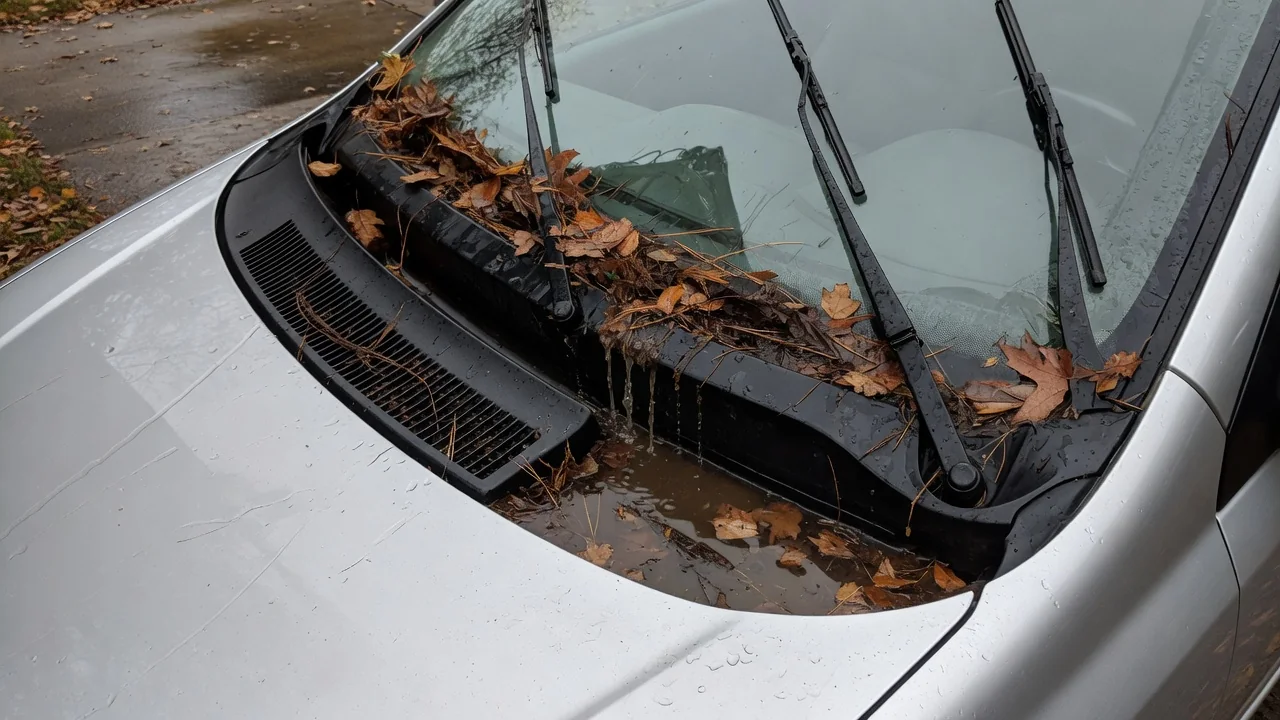
The cowl is the trough at the base of the windshield that catches rain and channels it down drain passages to the ground. Understanding what happens when windshield cowl drains clog matters because trapped water does not simply sit there. It rises, finds another exit, and that exit can lead into the cabin or onto components never meant to get wet.
Debris
Leaves, pine needles, seed pods, blossoms, and roof grit wash down the glass and slip through the cowl grille slots. Once inside the plenum, this material settles at the lowest points, which are exactly where the drain openings sit. Wet organic matter breaks down into a dense, mud-like compost that seals a small outlet far more effectively than a single dry leaf would. Vehicles parked under trees collect it fastest, though wind-blown dust and road grime can build the same plug over a longer period.
Drain design changes the way a blockage forms. Some vehicles use open slots at each end of the cowl, while others route water through rubber tubes or flattened duckbill valves behind the fender liners or along the firewall. Those rubber ends are meant to keep out road splash and noise, but they also trap fine sediment and can stick shut as they age. A look through the grille with a flashlight often reveals a mat of debris, though the actual restriction may sit lower and out of view.
Symptoms
When the outlets stop flowing, the cowl behaves like a small bathtub. Water level climbs until it reaches the next available opening, and on many vehicles that is the fresh air intake for the heating and air conditioning system. From there it can run into the blower housing, soak the cabin air filter, and drip onto the passenger footwell carpet. Other paths include firewall grommets, wiring pass-throughs, and body seams whose sealer was only ever expected to shed a light splash.
The signs tend to be indirect. Damp or squelching carpet after rain, a musty smell when the fan starts, windows that fog heavily and clear slowly, and a sloshing sound from behind the dashboard on turns or stops all point toward retained water. A blower motor that becomes noisy or intermittent may have been wetted. On some layouts the wiper linkage and motor sit inside the cowl, and standing water there encourages corrosion, so stiff or slow wipers can belong to the same story.
Safe cleaning
Gentle methods come first. Lifting loose leaves and needles out of the grille area by hand or with a vacuum removes the supply of new clogging material without pushing anything deeper. Where the drain exit is reachable, squeezing a rubber valve end to break up packed silt often lets the trapped water release on its own. A flexible plastic probe, such as a length of trimmer line, can loosen a plug with far less risk than stiff wire, which may puncture a tube or scratch paint and invite rust.
Force deserves caution. High-pressure water or strong compressed air aimed into the cowl can drive debris further down, pop a drain tube off its fitting, or push water straight into the air intake and nearby wiring connectors. Slowly pouring a small amount of water and watching for it to appear beneath the vehicle is a better test of flow. Access differs widely, and some cowl covers require removing wiper arms and fragile clips, a job where the vehicle's service information is worth following.
Everyday Use and Observations
Routine habits reveal a lot. After a rain or a car wash, water should appear dripping behind the front wheels or under the firewall area within moments and then stop. Water that keeps trickling long after the vehicle is dry, or a sudden gush on the first corner of a drive, suggests the cowl was holding a pool. Clearing visible leaves during a fuel stop or a wash takes seconds and keeps the material from being carried down into the outlets.
Seasons and parking spots shift the risk. Autumn leaf fall and spring blossom drop load the grille quickly, and a nose-down or nose-up driveway changes where water collects inside the trough. A wet cabin air filter found during replacement is a useful clue that water reached the intake at some point. Vehicle layout also determines consequences, since some designs place a control module, fuse box, or battery near the cowl area, while others keep that zone almost empty.
Limits and Next Steps
Clearing a blocked drain stops new water from entering, but it does not undo what has already soaked in. Carpet padding holds moisture like a sponge and can stay wet for weeks beneath a surface that feels dry, promoting odor, mold, and corrosion of floor pans and wiring that runs under the trim. Electrical faults that appear after water intrusion, including warning lights or stored fault codes, are evidence to interpret alongside the moisture history, not proof that a particular sensor or module has failed.
A wet footwell also has other possible sources, so the cowl should not be assumed guilty. A blocked air conditioning condensate drain, sunroof drain tubes, a failed windshield seal, door vapor barriers, and a leaking heater core can all produce similar dampness, and coolant leaves a sweet smell and oily film that rainwater does not. When the drains run freely and water still appears, or when the leak path cannot be seen, a shop can perform a controlled water test and inspect behind the trim.