Where Does Water Go When It Runs Off a Windshield?
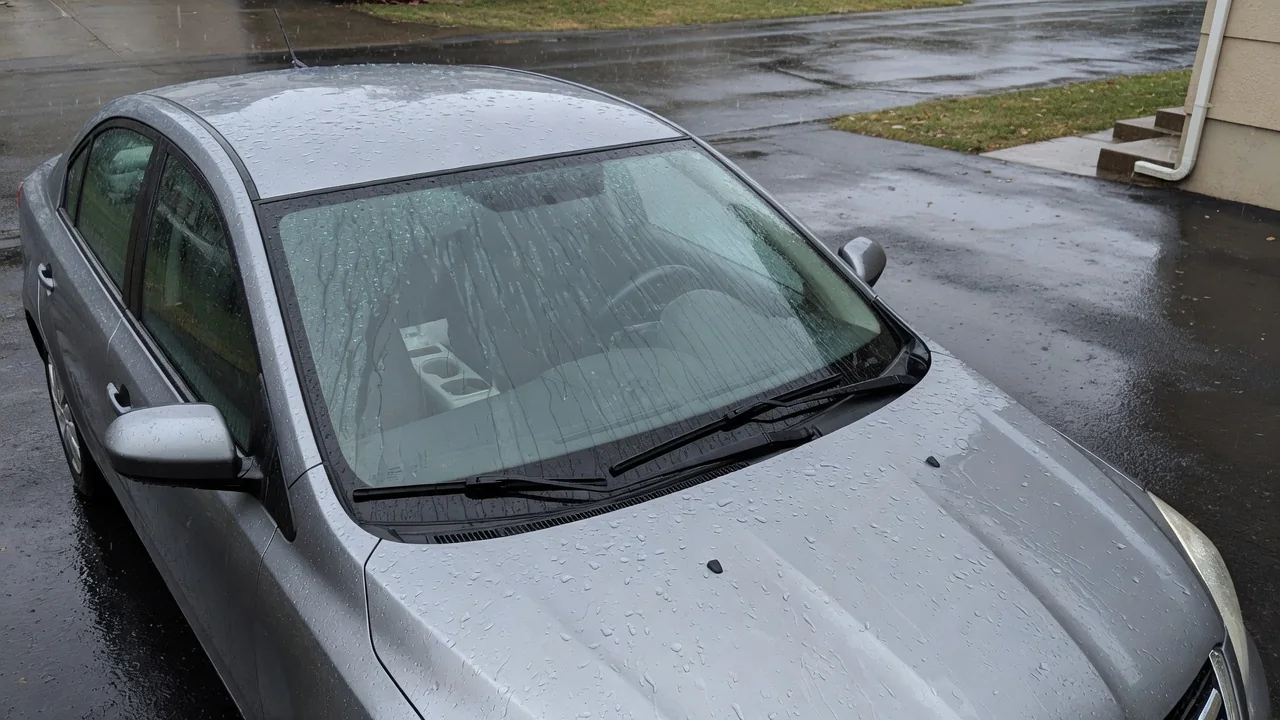
Rain hitting the glass does not simply vanish at the base of the wipers. So where does water go when it runs off a windshield? Most of it follows a deliberate path: down the glass and along its edges, into a trough called the cowl, and out through drains that release it under the car, away from the cabin and electronics.
Windshield edge
Water leaves a windshield in two main directions. Gravity pulls most of it straight down to the lower edge of the glass, while airflow at speed and the sweep of the wipers push a share sideways toward the pillars on either side. On many vehicles, trim moldings along those pillars form a shallow gutter that guides the sideways flow upward over the roof or down toward the fender area, keeping it from sheeting across the side windows when you drive in rain.
The glass itself is bonded to the body with a continuous bead of urethane adhesive, and that bond, not the visible trim, is what keeps water out of the cabin. The exterior moldings mostly steer flow and cover the gap. Designs differ considerably: some vehicles use exposed rubber gaskets, others have flush glass with almost no visible trim, and some route pillar runoff into channels hidden behind the fender. Watching a slow stream from a garden hose shows which way your particular vehicle sends it.
Cowl intake
At the bottom of the glass sits the cowl, the area between the windshield and the rear edge of the hood. A slotted plastic or metal panel usually covers it, and the wiper arms pass through it. Underneath is a trough, sometimes called the plenum, that catches everything running off the glass. This same space commonly feeds outside air to the heating and air conditioning system, which is why the grille has openings rather than a sealed surface.
Because air and water enter the same space, the cowl is shaped to separate them. The fresh air inlet is typically raised above the floor of the trough or shielded by a baffle, so water collects below it and runs toward drain openings at the outer ends. From there it exits through short tubes, rubber flap valves, or gaps behind the front fenders, falling to the ground near the front wheels. The exact location and number of drains depend on the manufacturer and body style.
Blockage clues
The cowl grille stops large debris, but leaves, pine needles, seed pods, and grit still work their way through and settle in the trough. Over time that material turns into a dense mat that slows or stops the drains. When that happens, the trough fills like a clogged gutter, and the water level can rise to the fresh air inlet or to seams and grommets in the firewall that were never meant to sit underwater.
The signs tend to appear inside the car. Damp carpet in the front footwells, especially after rain rather than after using the air conditioning, is a common clue. Others include a musty smell from the vents, windows that fog heavily and stay fogged, a sloshing sound when turning or braking, or water dripping from behind the dashboard. A wet cabin air filter points the same direction. None of these proves a blocked cowl on its own, since door seals, sunroof drains, and windshield bonding can produce similar symptoms.
Everyday Use and Observations
A healthy drain path is easy to observe without tools. After a rainstorm or a car wash, water should drip or stream from behind the front wheels or under the lower fender area for a short time and then stop. Opening the hood and looking at the cowl panel shows whether leaves are piling up along the base of the glass. Vehicles parked under trees collect debris much faster than those kept in a garage or in open lots.
Seasonal habits matter as well. Autumn leaf fall and spring blossoms load the cowl quickly, and winter adds ice that can temporarily block drains even when they are clean. Brushing loose debris off the cowl grille by hand when washing the car keeps it from being drawn into the trough. Using the recirculation setting does not change where the water goes, but a noticeable change in vent smell or airflow after heavy rain is worth noting as an early hint.
Limits and Next Steps
Simple observation only goes so far. On many vehicles the drains sit behind fender liners, under the cowl cover, or beneath the wiper mechanism, and reaching them means removing trim that is held by brittle clips. Poking blindly with a rigid tool can dislodge a drain valve or damage wiring and the wiper linkage that share the space. Blasting high-pressure water into the cowl can also force moisture into the air inlet or onto a blower motor mounted directly below.
If the cabin stays wet after visible debris is cleared, the source needs proper diagnosis, because the same symptoms can come from a failed windshield bond, a body seam, a sunroof drain, or a blocked air conditioning condensate tube. A shop can water test the vehicle in stages to isolate the entry point. Prompt attention matters: standing water under carpet promotes corrosion, mold, and electrical faults in modules and connectors that many manufacturers place low in the footwell area.