How Do Car Window Seals Keep Water Out?
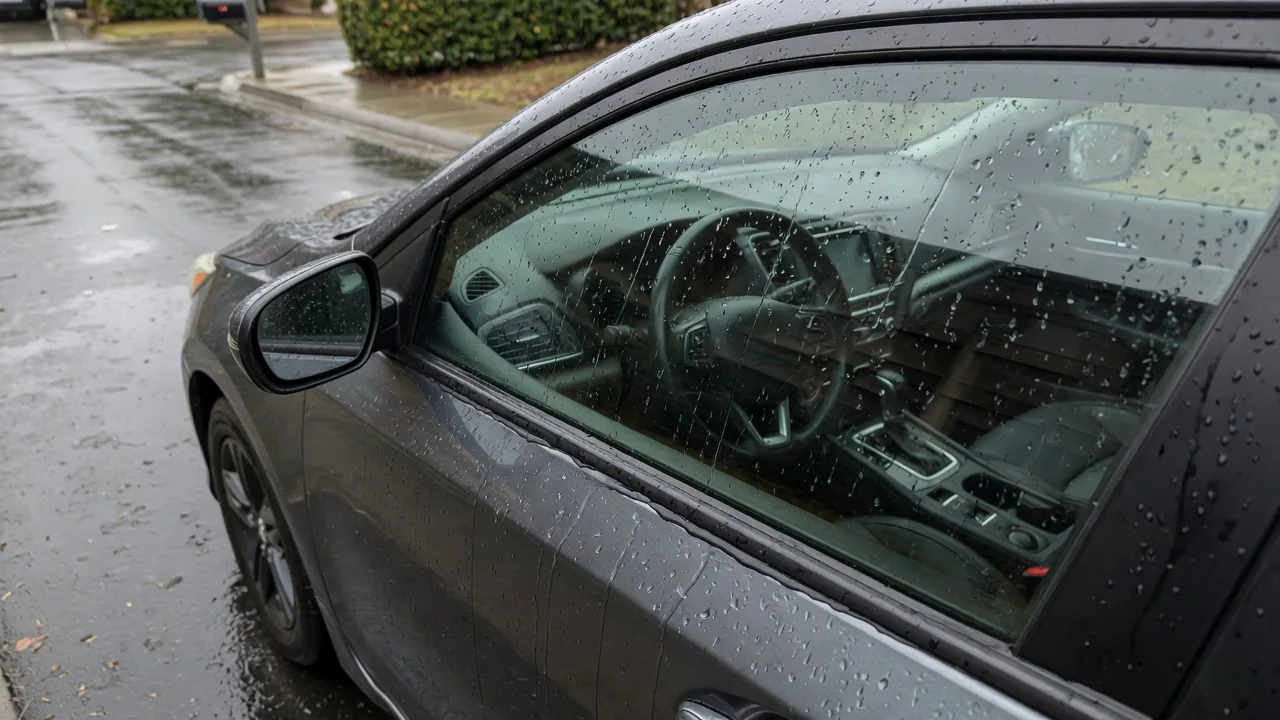
A car door is not a watertight box, and it was never meant to be. So how do car window seals keep water out of the cabin? The answer is a team effort: glass run channels guide the window, belt weatherstrips wipe the glass, and drain openings release whatever slips past. Understanding how these parts cooperate makes wet carpets and foggy glass much easier to explain.
Seal roles
Each seal around a side window has a distinct job. The glass run channel is the flocked or felt-lined rubber track that lines the door frame, holding the glass along its front, top and rear edges while letting it slide. At the base of the opening, inner and outer belt weatherstrips, sometimes called window sweeps, press lightly against both faces of the glass. They squeegee off most water and grit as the window moves and keep the gap narrow when it is closed.
Separate from those, a primary door seal on the body or door edge compresses when the door shuts, blocking water that runs down the opening. Designs vary considerably. Framed doors hold the glass inside a metal surround, while frameless doors on many coupes and convertibles rely on the glass pressing directly against a body-mounted seal, often with the window dropping slightly as the door opens. Fixed quarter glass and windshields are usually bonded or gasketed instead, so their sealing depends on adhesive rather than sliding contact.
Water path
Rain hitting a side window runs down the glass toward the outer belt weatherstrip. That strip deflects most of it, but it cannot seal perfectly against a moving pane, so some water passes into the door shell. This is expected. Inside the door, water trickles down the outer skin and the glass itself, past the window regulator and latch mechanisms, and collects along the bottom seam, where small drain holes or slots let it escape back to the road.
The cabin stays dry because a barrier separates that wet zone from the interior trim. Depending on the vehicle, this may be a plastic sheet stuck to the inner door panel with sealant, a molded foam shield, or a sealed carrier module holding the regulator and speaker. Water that reaches the barrier is steered downward, back inside the door, and toward the drains. Sunroofs and some rear quarter areas use a similar idea, with a tray catching water and tubes routing it down the body pillars.
Leak diagnosis
Finding a leak starts with where the water appears. Dampness at the bottom of the door trim or along the sill often points to a disturbed vapor barrier or blocked door drains, especially after speaker, regulator or lock work. Drips from the top of the glass or wet upper trim suggest the run channel or primary door seal. Water in the footwell is less clear, since windshield bonding, cowl drains, sunroof tubes and air conditioning condensate can all leave carpet wet in the same place.
A controlled test narrows things down. Running a gentle stream from a hose over one area at a time, starting low and working upward, while a helper watches inside with a flashlight, usually reveals the entry point better than soaking the whole car. A door that sloshes when swung, or releases a stream when opened, indicates trapped water. Look also for flattened, torn or shrunken rubber, hardened corners, and window glass that sits unevenly in its channel, since misalignment can open a gap the seal cannot bridge.
Everyday Use and Observations
Seals usually give warning before water appears. Increased wind noise at highway speed, a whistle near the mirror, or a window that slows, tilts or squeaks as it rises can indicate a worn or dirt-packed run channel. Vertical scratches or streaks left on the glass after lowering it suggest the belt weatherstrips are holding grit or have lost their soft lining. Persistent interior fogging, a musty smell or damp door pockets are quieter hints that moisture is lingering somewhere it should not.
Routine care is simple. Wiping the visible rubber with a damp cloth removes the grit that abrades both seal and glass, and clearing leaves, wax residue or mud from the drain openings along the door's lower edge keeps water moving. Some manufacturers recommend a specific rubber conditioner, while others advise against certain products, so the owner's manual is the right reference. In freezing weather, glass can stick to the seals, and forcing a frozen window may strain the regulator or tear the rubber.
Limits and Next Steps
No seal arrangement is designed to resist everything. High-pressure washers aimed directly at the edge of the glass can force water past strips that cope easily with rain, and a few drops after such a wash do not necessarily mean a fault. Rubber also ages; heat, sunlight and repeated compression gradually harden it and reduce its ability to spring back. How quickly that happens depends on climate, storage and material, so there is no universal age at which seals need replacing.
When a leak persists, the sensible next step depends on what the inspection showed. Clearing a blocked drain or reseating a loose strip may be within an owner's ability, but door trim removal involves clips, wiring and sometimes side airbag components, so the vehicle's service information should guide that work. Bonded glass, frameless window adjustment and water tracing through pillars are jobs for a body or glass specialist. Acting early matters, because trapped moisture encourages corrosion, mildew and electrical faults in switches and modules.