What Is a Car's Primary Control Zone? Steering, Pedals, Reach and Safety
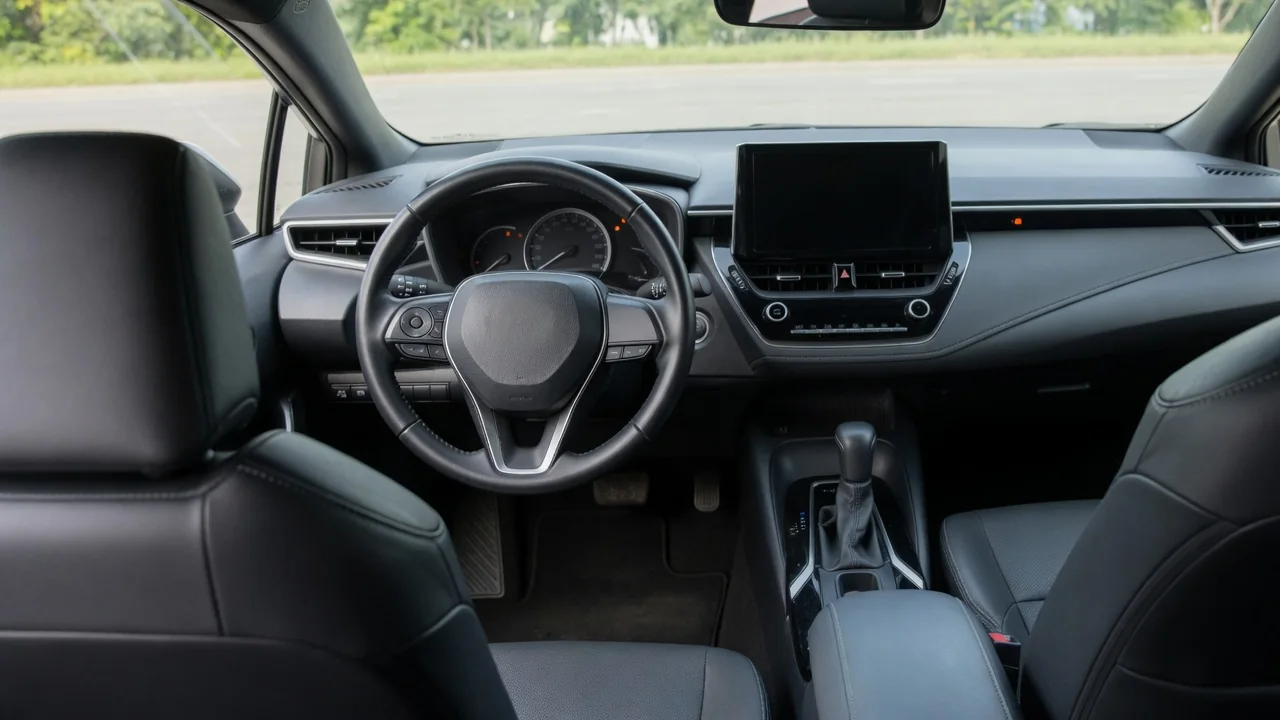
A car's primary control zone is the area around the driver that holds the controls needed to steer, accelerate, and stop at any moment. In ergonomic terms, these are the controls a driver uses continuously or must reach without hesitation. They differ from secondary controls such as lights and wipers, and tertiary controls such as climate or audio settings. Understanding this zone explains why seating position, steering adjustment, and pedal layout matter so much to safe, comfortable driving.
Steering and pedals
The core of the driver primary control zone is the steering wheel and the foot pedals. Together they govern the vehicle's direction and speed, the two tasks a driver can never set aside while the car is moving. The steering wheel sits directly in front of the driver, usually on a column that can be adjusted for tilt on many vehicles and for telescoping distance on some. The pedals sit in the footwell below: the accelerator on the right, the brake to its left, and, in a car with a manual transmission, the clutch at the far left. This arrangement is broadly standardized so drivers can move between vehicles without relearning basic movements.
Designers treat these controls differently from dashboard switches because they demand constant or emergency use. The brake pedal is generally placed so the right foot can pivot from the accelerator with minimal lift, and its pad is often larger than the accelerator's, which makes it easier to find by feel. Items used frequently while driving, such as turn signal and wiper stalks, the horn, and paddle shifters where fitted, are typically clustered on or around the wheel. Whether those items are classed as primary or secondary depends on the classification scheme, but they are deliberately positioned so the hands rarely need to leave the rim.
Reach
The boundaries of the primary control zone are set by reach: the space a driver's hands and feet can cover comfortably while seated with the back and shoulders against the seat. Controls inside this reach envelope can be operated without leaning forward, stretching a leg, or shifting body position. Because drivers vary widely in height, limb length, and proportions, vehicle designers aim to place the primary controls within comfortable reach for a broad range of body sizes, then rely on adjustment to fine-tune the fit for each person.
Adjustment is what turns a generic layout into a personal control zone. Common adjustments include seat fore-aft travel, seat height, backrest recline, and steering column tilt and telescope; some vehicles also offer power-adjustable pedals. Widely used setup guidance suggests the knee should remain slightly bent when the brake pedal is pressed fully, and the elbows should stay bent when the hands hold the wheel. A frequently cited check is that, with the shoulders against the seatback, the wrists should be able to rest on top of the wheel rim. These are general guidelines rather than fixed measurements, and the owner's manual for a given vehicle may add specific recommendations.
Reach can become a compromise for drivers at either end of the size range. A shorter driver may move the seat far forward to reach the pedals and end up uncomfortably close to the wheel, while a taller driver may find the knees near the steering column or the wheel too low. In such cases, combining seat height, column position, and recline usually helps, but some drivers still face trade-offs. Pedal extenders and seat cushions exist for these situations; any such aid should be chosen carefully, since it changes how the feet and body interact with the controls.
Safety
A well-arranged primary control zone supports safety mainly through speed and precision. When the wheel and pedals are within easy reach, the driver can respond to a hazard with a quick, controlled movement instead of a stretch or a shift in posture. Stretching for a pedal can weaken or delay braking, and an awkward arm position reduces fine steering control. Over a long drive, a poor fit also adds fatigue, which further erodes attention and reaction.
The steering wheel also houses the driver's frontal airbag, which links the control zone directly to occupant protection. Sitting very close to the wheel increases the risk of injury from a deploying airbag, so general safety guidance advises keeping a meaningful gap between the chest and the wheel hub and angling the wheel toward the chest rather than the face. Hand position matters for the same reason. Many driving instructors now recommend holding the wheel near the 9 and 3 o'clock positions, which keeps the arms out of the airbag's direct path and still allows smooth, balanced steering inputs.
The footwell deserves equal attention. Floor mats that slide forward, stacked mats, or loose objects can interfere with pedal travel and prevent the brake or accelerator from moving freely. Using mats designed for the vehicle, securing them with any retention hooks provided, and keeping bottles and other items out of the driver's footwell help preserve the pedals' full range of motion. Footwear also plays a role, since bulky or slippery soles can make precise pedal control harder.
Practical implications and limits
In everyday use, the concept is most valuable whenever a driver gets into an unfamiliar or shared vehicle, such as a rental, a family car, or a fleet vehicle. Setting up the seat and steering column before moving, then locating the brake and accelerator by feel while stationary, takes little time and avoids adjusting controls in traffic. Vehicles with memory seat functions make this easier for households with several drivers, but the stored settings should still be confirmed, because a small difference in seating can change how the pedals feel underfoot.
The idea also has limits. The primary control zone is a general ergonomic framework, not a single universal geometry; pedal spacing, column adjustment range, and the placement of stalks and switches differ from one vehicle to another. Vehicles adapted for drivers with disabilities may move primary functions to hand controls or other devices, which redefines the zone entirely. Driver assistance systems can reduce workload, but they do not remove the need for the driver to keep the steering and pedals within immediate reach. For details specific to a particular vehicle, the owner's manual remains the authoritative reference.