What Is a Steering Wheel Grip Zone?
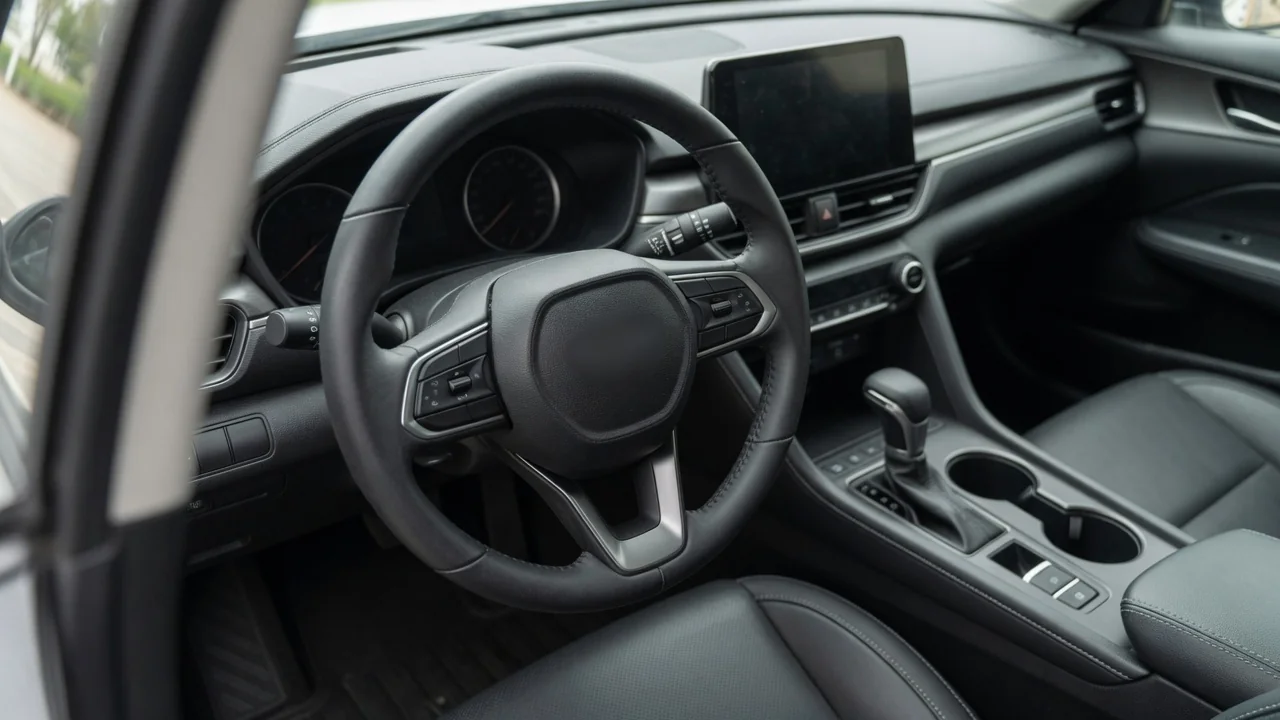
A steering wheel grip zone is the part of the rim where a driver's hands are meant to rest and hold the wheel during normal driving. It is not a single standardized feature. It is a combination of design choices: how the rim is shaped and covered in certain areas, where the controls sit relative to the thumbs, and how the wheel's position affects the driver's view of the instruments. Together, these explain why some wheels feel natural and others do not.
Rim shape: how the wheel guides your hands
Most steering wheels are not uniform circles of the same thickness all the way around. Designers often shape specific sections of the rim to invite the hands into a particular position. These sections are typically on the left and right sides, near what drivers know as the nine and three o'clock positions, or slightly lower. They may be thicker, slightly flattened on the inner face, or contoured with shallow finger grooves or thumb rests where the spokes meet the rim. The goal is a secure hold that does not require a tight squeeze, which reduces hand and forearm fatigue on longer drives.
In steering wheel grip design, the cross-section matters as much as the overall diameter. A rim that is too thin can feel insubstantial and encourage a white-knuckle grip. One that is too thick can be hard to wrap the fingers around, especially for drivers with smaller hands. Many wheels use an oval or slightly D-shaped cross-section rather than a perfectly round one, which gives the palm a broader contact surface. Some designs also flatten the bottom of the rim. This can add knee and thigh clearance and makes the lower portion of the wheel less inviting as a resting place.
Surface material is part of the grip zone as well. Leather, synthetic leather, polyurethane, and suede-like fabrics each offer different levels of friction and feel, and some wheels combine materials so the main hand areas use a grippier covering while the top and bottom use smoother trim. On wheels where heating covers only part of the rim, the heated sections tend to follow the expected hand positions, reflecting the same design assumption about where the grip zone lies.
Controls: buttons, paddles, and stalks within reach
A grip zone is defined by where the hands sit and also by what the fingers can reach from there. Multifunction steering wheels place audio, phone, voice command, cruise control, and driver-assistance buttons on the spokes so the driver can operate them with the thumbs without letting go of the rim. When the controls are well placed, the thumb can move from its resting position to a button and back with little hand movement. When they sit too far inboard or too close together, the driver may have to shift the hand or glance down to find the right input.
Behind the rim, stalks for turn signals, wipers, and lights extend the grip zone to the fingertips, and so do shift paddles on vehicles that have them. Paddles mounted to the wheel rotate with it, so they stay in the same place relative to the hands while turning. Column-mounted paddles and stalks stay fixed as the wheel rotates. Both approaches involve trade-offs. Wheel-mounted controls stay consistent relative to the grip. Column-mounted controls stay in a predictable position in space during large steering inputs.
Physical buttons, scroll wheels, and touch-sensitive surfaces also behave differently under a resting hand. Tactile controls with distinct shapes and detents can often be found by feel. Capacitive pads may react to an accidental brush from a thumb. Some vehicles use sensing in the steering system or rim to detect whether the driver's hands are on the wheel for certain driver-assistance functions, but how and where that detection works varies by vehicle.
Visibility: the wheel's role in the driver's line of sight
The steering wheel sits directly between the driver's eyes and the instrument cluster, so the rim shape and spoke placement influence what the driver can see. Designers typically arrange the upper part of the wheel so the main gauges or digital display show through the opening above the hub. This works when the wheel is straight and the seat and column are adjusted as intended. If the top of the rim is thick or the column is set too low, the wheel can hide parts of the speedometer, warning lights, or driver-assistance indicators.
Hand placement interacts with this sightline. Hands resting on the sides of the wheel generally stay clear of the view to the instruments. Hands placed at the top of the rim can cover part of the display. This is one reason the upper section of many wheels is shaped more slimly than the sides. Head-up displays, where fitted, move some information above the wheel entirely. They still depend on a seat and column position that keeps the projected image within the driver's view.
Practical implications and limits
For everyday driving, the most useful step is adjusting the seat and steering column so the grip zone falls where it was designed to be. Owner's manuals commonly describe a sequence for this. Set the seat height and distance first. Then adjust the wheel's tilt and, if available, its telescoping reach, so the arms stay comfortably bent, the shoulders stay against the seatback, and the instruments remain visible. A wheel that is too far away or too low can push the hands toward the bottom of the rim or onto the spokes, which undermines the shape that was meant to support them.
Hand position also matters for safety, not only comfort. Driver-education guidance commonly recommends keeping the hands on the sides of the wheel rather than at the top. One reason is that the airbag deploys from the hub, and hands or arms across the center can be thrown toward the driver. Crossing the arms over the hub during large turns raises a similar concern, which is why techniques such as push-pull steering are often taught. Recommended positions can differ between sources and vehicles, so the owner's manual for a specific car is the best reference.
The grip zone concept has limits. It describes a design intention, not a fixed standard, and manufacturers interpret it differently in rim thickness, control layout, and display placement. A grip zone that suits one driver's hand size, height, and seating preference may feel awkward to another. Aftermarket wheel covers can change rim thickness and texture enough to alter how the original zone feels. Trying a wheel in person, with the seat and column properly adjusted, gives a more reliable sense of fit than any general description.