Why Does Pedal Placement Matter? Foot Movement, Reach, and Comfort
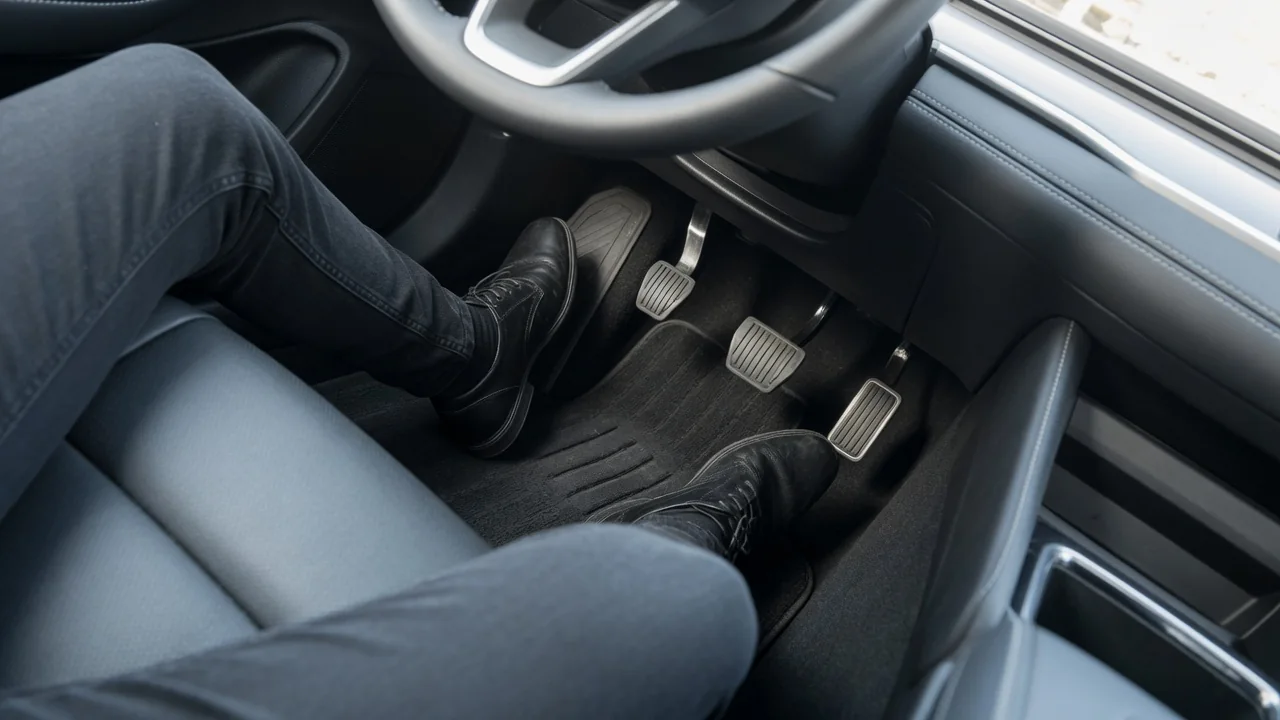
Pedal placement shapes how quickly, accurately, and comfortably a driver can control a car. Where the accelerator, brake, and, in manual cars, the clutch sit relative to the seat, the steering wheel, and each other affects how the foot moves between them. It also determines whether the driver can reach full pedal travel without straining and how the legs feel after a long drive. This guide explains the general principles of car pedal placement ergonomics and why small layout differences matter in everyday driving.
Foot movement
Most drivers work the accelerator and brake with the right foot, usually by keeping the heel on the floor and pivoting the foot from one pedal to the other. The path between the two pedals decides how much the foot has to lift, swing, or slide. A layout that lets the heel stay planted while the foot rotates supports a quick, repeatable motion that becomes automatic with practice. If the brake sits too far to the side or noticeably higher than the accelerator, the driver may have to lift the whole leg. That adds time to the movement and makes it less consistent from one stop to the next.
The vertical and lateral relationship between pedals also matters. In many cars the brake pedal rests somewhat higher than the accelerator, which helps the foot find the correct pedal by feel and reduces the chance of catching the edge of the brake while pressing the throttle. If that height difference is too large, the foot must lift clear of the accelerator before it can reach the brake. If it is too small, the foot can snag or touch both pedals at once. Lateral spacing works the same way: a narrow gap can let a wide shoe brush two pedals, while a wide gap increases the distance the foot must travel. In manual cars the left foot needs its own clear path to the clutch and enough room to move without hitting trim or the brake.
Pedals are not always lined up directly in front of the seat. Wheel wells, the transmission tunnel, and other packaging constraints can push the pedal box toward the center of the car or toward the door. When that happens, the legs angle sideways to reach the pedals and the pivot motion may feel less natural. The way pedals are mounted also changes the arc the foot follows: a pedal hinged at the floor moves differently under the foot than one suspended from above. How noticeable any of this is depends on the individual vehicle, so it is best judged by sitting in the car rather than assumed.
Reach
Reach describes whether the driver can press each pedal through its full travel from a stable seated position. The key test is the brake: with the pedal pressed firmly to the end of its stroke, the knee should still be slightly bent. A fully straightened leg leaves no margin for applying more pressure and is generally discouraged in driving position guidance. The seat's fore-and-aft adjustment is the main tool for setting this distance, and it should be set so the driver is not sliding forward in the seat or pointing the toes to complete a stop.
Pedal reach rarely stands alone, because the seat position also sets the distance to the steering wheel. A driver who moves the seat forward to reach the pedals may end up too close to the wheel, while one who sits far back for arm room may struggle with full brake travel. A steering column that adjusts for both height and reach lets drivers set the pedals and the wheel more independently. Seat height changes the leg angle too: a higher seat tends to make the motion more of a downward press, while a lower seat turns it into more of a forward push. Some vehicles offer adjustable pedals that move the pedal box itself, which can help drivers whose proportions fall outside the typical range.
In manual cars the clutch usually has the longest travel, so it often dictates where the seat ends up. The clutch needs to reach its fully disengaged position without the driver shifting the hips forward. If full clutch travel requires stretching, the seat is too far back, and incomplete clutch application can make gear changes harder.
Comfort
Comfort becomes most noticeable over time. During steady highway driving, the right ankle holds the accelerator at a partial angle for long stretches. The pedal's angle, the point where the heel rests, and the shape of the floor beneath it all influence whether the ankle sits near a relaxed position or stays flexed. A pedal that requires the foot to point sharply upward or downward to hold a steady speed can lead to ankle and calf fatigue, even if the layout feels fine on a short trip.
The left foot needs support as well. In cars with automatic transmissions, a footrest to the left of the brake, often called a dead pedal, gives the left leg a natural resting place and lets the driver brace against it to stay stable during cornering. Without a well-placed rest, or when the footwell is cramped, the left leg can end up in an awkward bent or splayed posture. Knee clearance matters too: the knees should not press against the lower dashboard, the steering column, or the center console when moving between pedals.
Pedal position can also influence posture above the legs. When the pedals are offset from the seat's centerline, the pelvis and lower back may twist slightly to line the feet up with them. Over a long drive that small rotation can contribute to discomfort in the hips or back. Cruise control can reduce the time spent holding the accelerator, but it does not correct the underlying layout.
Practical implications and limits
When trying a car for the first time, set the seat and steering wheel before judging the pedals. Then check a few things in order: whether the brake can be pressed fully with a bent knee, whether the foot can move from accelerator to brake with the heel kept down, whether the left foot has somewhere to rest, and whether the legs point straight at the pedals or angle off to one side. Footwear changes the result. Thick soles reduce pedal feel, and wide or bulky boots are more likely to touch two pedals at once, so it helps to evaluate the layout in the shoes normally worn for driving.
Anything that interferes with pedal movement deserves attention. Floor mats should be the correct type for the vehicle and secured with the retention points described in the owner's manual, since a loose mat can slide under or over a pedal. Aftermarket pedal covers or extensions should only be used if they fit securely and do not change how the pedals operate. The owner's manual is also the place to confirm which seat, steering, and pedal adjustments a specific vehicle actually provides.
No single pedal layout suits every driver. Leg length, foot size, flexibility, and any existing joint or back problems all change what feels right, and the principles here describe general mechanisms rather than the behavior of any particular model. A well-chosen seating position and a consistent habit of placing the feet help reduce mistakes such as pressing the wrong pedal, but they do not replace attentive driving. Persistent pain linked to driving is worth raising with a qualified health professional rather than solving by adjustment alone.