What Happens When a Car's App Subscription Ends?
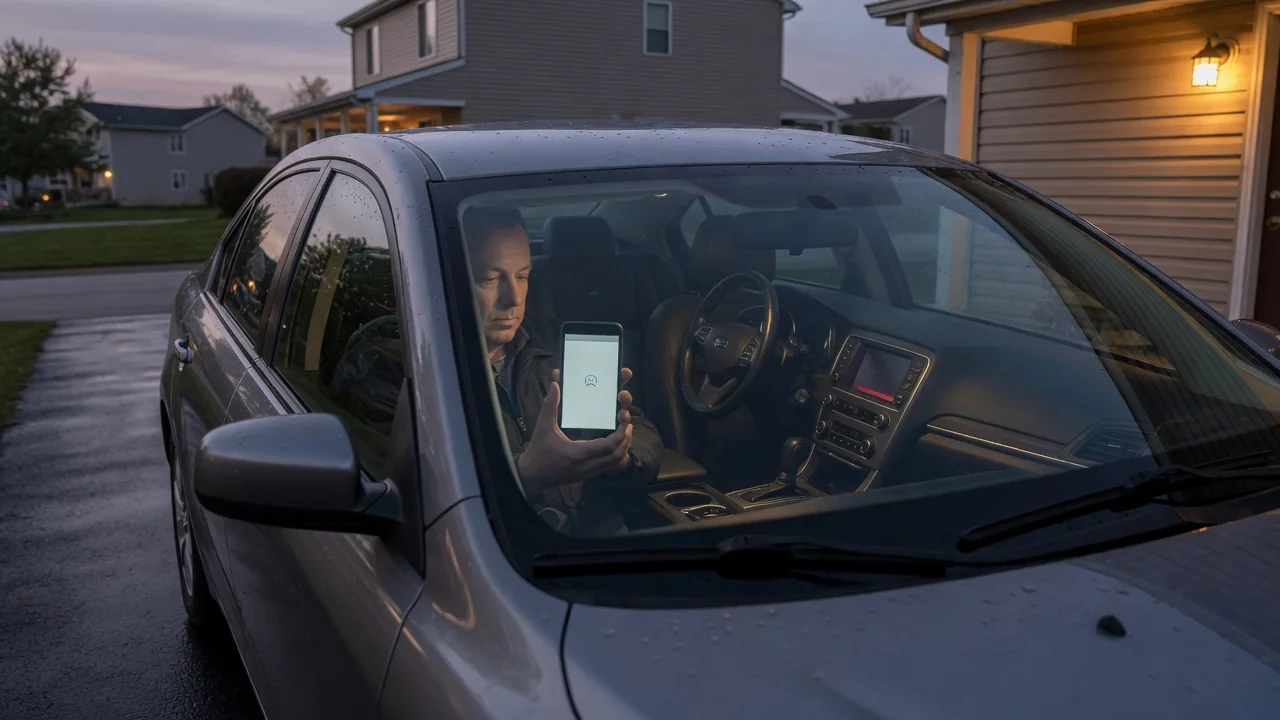
When a connected-car app subscription ends, the car keeps running, but features that depend on the automaker's online service usually stop working. What changes depends on how each function is delivered: through a remote server, through software inside the vehicle, or through physical controls. Knowing which is which helps you predict what a car app subscription expiration will actually change, and what to check before the renewal date passes.
Feature access
Most connected-car apps rely on a telematics unit in the vehicle, which is essentially a built-in cellular modem linked to the automaker's servers. When you tap a button in the phone app, the command usually travels to those servers first and is then relayed to the car. The subscription is tracked as an entitlement on the server side. When it lapses, the hardware in the car stays the same, but the service can stop accepting or relaying commands for that vehicle. Features commonly tied to this path include remote lock and unlock, remote start or cabin preconditioning, vehicle location, status readouts such as fuel level, charge state, door status or tire pressure, and app notifications. The exact list varies by manufacturer, model year, region and package.
Connected services are often split into several packages, so one ending does not necessarily affect the others. A remote-access plan, a navigation or traffic data service, a cloud-based voice assistant, streaming features and an in-car Wi-Fi hotspot may each be billed separately, and the hotspot is sometimes handled through a cellular carrier rather than the automaker. Some manufacturers also sell software-enabled features that use hardware already installed in the car. If one of those is sold as a subscription, the function can be switched off by software when the term ends, even though the physical components remain in place.
Safety-related services deserve separate attention. Automatic crash notification, an in-car SOS button and stolen vehicle assistance may be part of a paid plan, a basic tier, or a separate program, depending on the brand. Do not assume these continue after a lapse. Confirm their status in the service terms, and remember that calling 911 from your own phone is unaffected by the car's subscription.
Local controls
Anything the car does without contacting a remote server generally keeps working. The key fob, the physical key, cabin climate controls, the radio, Bluetooth audio and calling, and USB connections are handled inside the vehicle. Phone projection systems such as Apple CarPlay and Android Auto, where equipped, run on the phone and use the phone's own data, so they typically do not depend on the car's connected-services plan. Driver assistance features that rely on onboard cameras and sensors also operate locally unless the manufacturer sells them as a subscription item.
Several remote functions have local counterparts. A key fob with a remote start button, where the car offers one, does not need the app. Climate or charging timers set from the vehicle's own screen are stored in the car and can usually run without a server. Built-in navigation that stores maps onboard should still provide directions, although live traffic, online search and map updates may stop. Phone-as-key systems are harder to generalize: some use a short-range Bluetooth link that can work locally, while others require an active account, so check how your vehicle's system is described in its documentation.
An expired plan does not necessarily mean the telematics unit goes silent. The modem may remain active for embedded emergency functions or for data the manufacturer collects under its own privacy terms, independent of what you pay for. If data sharing matters to you, review the connectivity and privacy settings in the infotainment menu and in the manufacturer's privacy policy rather than assuming a lapse turns everything off.
Account check
Before the end date, sign in to the manufacturer's app or owner website and review the subscription section. Look for the exact expiration date, which services each package includes, whether auto-renewal is turned on, and which payment method is on file. New vehicles often come with a trial period that starts at delivery or activation, and that start date may differ from the date you first opened the app. On a used car, a trial offered to the original buyer may not carry over to you.
Also check the parts of the account that are not about billing. Note which drivers or family members have access, whether any digital keys have been shared, and whether the vehicle will stay linked to your profile after the plan lapses. If you do not want to renew, cancel auto-renewal through the official account page and keep the confirmation. Read the cancellation and refund terms directly instead of relying on assumptions, because they differ between providers.
Ownership changes make the account check essential. A seller should remove the vehicle from their account, revoke shared access and reset personal data in the infotainment system. A buyer should confirm that the car is registered to their own account and that no previous owner can still locate, unlock or start it remotely. If the vehicle cannot be added to a new account, the manufacturer's customer support or a dealer can usually explain the transfer process.
Practical implications and limits
Whether renewal is worth it depends on how you actually use the car. Owners who rely on preconditioning the cabin in harsh weather, checking charge status away from home, or locating the car in large parking areas may notice the loss daily. Others may rarely open the app and find the key fob and in-car settings cover their needs. Reviewing a few weeks of your own habits before the end date gives a more useful answer than the feature list alone.
Resubscribing is often possible without hardware changes, but it is not guaranteed on the same terms. Pricing, package contents and introductory offers can change, and reactivation may require identity verification or the vehicle being present. Connected services can also end for reasons unrelated to payment: when cellular carriers retired older network generations, some vehicles with older modems lost connected functions regardless of subscription status. Manufacturers may also revise or discontinue services over a vehicle's life.
This article describes general mechanisms, not the behavior of any specific vehicle. The owner's manual, the connected-services terms and the manufacturer's support channels remain the authoritative sources for your car. When something in the app or on the screen does not match what you expect after an expiration, those are the places to confirm what is supported.