What Happens During a Car Emissions Test?
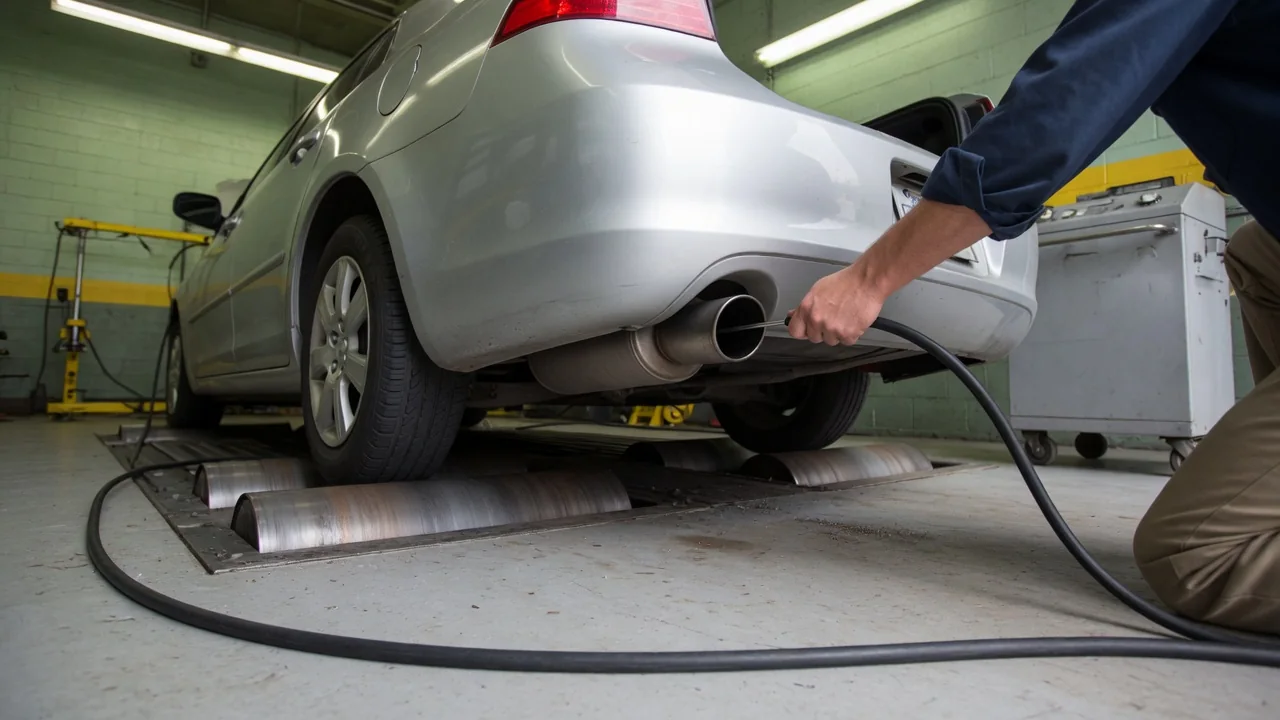
An emissions test checks whether a vehicle's engine and pollution controls are keeping exhaust and fuel vapor within the limits set where the car is registered. Drivers often ask what an emissions test is and how it actually works once the car rolls into the inspection lane. The process is usually quick, but the exact steps depend on the jurisdiction, the vehicle's age and its fuel type.
What This Topic Covers
A car emissions test is an official inspection that judges how well a vehicle controls the pollutants it produces. The main concerns are unburned hydrocarbons, carbon monoxide, oxides of nitrogen and, on diesels, visible smoke and soot. Rather than measuring fuel economy or engine power, the inspection focuses on whether the combustion process and the control hardware, such as the catalytic converter, oxygen sensors and evaporative system, are doing their jobs. Passing typically becomes a condition for registering or renewing the vehicle in areas that run a program.
What the driver sees is usually simple. An inspector confirms the vehicle's identity, often by checking the identification number and registration paperwork, then looks at the instrument cluster and connects equipment to the car. Some visits last only a few minutes with the engine idling, while others involve the car being driven on rollers. Because programs are written by states, provinces or local air-quality agencies, a vehicle emissions test in one region may look quite different from one a few hundred miles away, and some areas require none at all.
How It Works in a Vehicle
On most modern gasoline cars, the answer to how an emissions test works lies in the onboard diagnostic system. The engine computer continuously watches sensors and runs self-checks, called readiness monitors, on components like the catalytic converter, oxygen sensors, exhaust gas recirculation and the evaporative system. During the test, an inspector plugs a scan device into the diagnostic port under the dashboard and reads whether those monitors have completed, whether fault codes are stored and whether the computer is commanding the malfunction indicator lamp on.
Older vehicles, and some programs generally, rely on measuring the exhaust directly. A probe placed in the tailpipe samples the gas stream while an analyzer reports the concentration of pollutants, either at idle, at a raised engine speed, or while the drive wheels turn on a dynamometer that simulates road load. The reasoning is straightforward: a healthy engine burns its fuel mixture nearly completely, and a working catalytic converter cleans up most of what remains, so high readings point toward a combustion or aftertreatment problem worth investigating.
Common Variations
The biggest variation in an auto emissions test is the method chosen for a given vehicle. Programs commonly assign newer cars a plug-in diagnostic check and reserve tailpipe sampling for older models built before modern onboard diagnostics became standard. Some inspections add a visual check confirming that original emissions equipment is present and has not been tampered with, and some test the fuel filler cap or the evaporative system for vapor leaks, since escaping gasoline fumes count as pollution even when the engine is off.
Fuel type and vehicle class change the picture as well. Diesel vehicles may face an opacity test, which judges how much light the exhaust smoke blocks during a quick acceleration of the engine, or a diagnostic scan on later models. Hybrids are generally tested like other gasoline vehicles, though their engines may shut off during the visit, while fully electric cars have no tailpipe and are often exempt. Age cutoffs, exemptions for new or classic vehicles, and how often testing is required all depend on local rules.
Everyday Use and Observations
Everyday habits influence how smoothly the visit goes. A lit check engine light is commonly treated as a failure on diagnostic-based tests, regardless of how well the car seems to run. Readiness monitors also matter: if the battery was recently disconnected or fault codes were just cleared, the computer may not have finished its self-checks, and the car can be turned away as not ready. Ordinary mixed driving over several days, including cold starts and steady highway cruising, usually lets those monitors complete, though the exact conditions differ by manufacturer.
Drivers can also notice clues before the appointment. A fuel smell around the car, a loose or cracked gas cap, rough idling, misfires, visible smoke from the tailpipe, or a rotten-egg odor all suggest something that may affect the result. For tailpipe tests, arriving with a fully warmed engine helps, because the catalytic converter only works efficiently once it reaches operating temperature. Fresh oil, a clean air filter and properly maintained ignition parts support complete combustion, which is ultimately what the analyzer is measuring.
Limits and Next Steps
An emissions test has clear limits. It is a snapshot of pollution control, not a safety inspection or a full mechanical evaluation, and a pass says nothing about brakes, tires or suspension. A failure report likewise identifies a symptom rather than a cause. A stored fault code is evidence to interpret, not proof that a named part has failed; a catalyst efficiency code, for example, can stem from an exhaust leak, a sensor issue or an engine fault upstream. Manufacturer-specific codes need confirmation against information for that exact vehicle.
After a failure, the usual path is diagnosis by a qualified technician, repair of the underlying fault, enough driving for the monitors to reset, and a retest. Many programs set a window for retesting and some offer waivers or assistance when repair costs become substantial, but the terms vary widely. Keeping the inspection report and repair invoices is worthwhile, since they document what was found and fixed. The local motor vehicle or air-quality agency remains the authority on deadlines, exemptions and which test applies to a particular vehicle.