What Affects Emissions Test Cost?
Drivers asking how much an emissions test is usually find there is no single answer. The emissions test cost depends on where the vehicle is registered, what kind of inspection the program requires, the vehicle's age and fuel type, and who performs the work. This guide explains the general factors behind an emissions test fee without quoting figures for any particular state or program.
What This Topic Covers
The cost of an emissions test is the amount a motorist pays to have a vehicle's exhaust and emission control systems checked against the standards that apply where it is registered. That amount may be a fixed fee set by a government program, a price chosen by a privately owned station within program limits, or a charge bundled into registration. Because these arrangements differ so widely, anyone wondering how much an emissions test costs needs to start with the rules of their own jurisdiction rather than a national figure.
This article concentrates on the reasons emissions test prices vary rather than the numbers themselves. It looks at test method, vehicle type, station structure, retest policies, and the difference between the inspection fee and any repair that follows. Readers can usually observe these factors directly: a renewal notice often states which test is required, and a station's posted signage normally shows what it charges. Vehicle details such as model year, fuel type, and weight class can change which category applies.
How It Works in a Vehicle
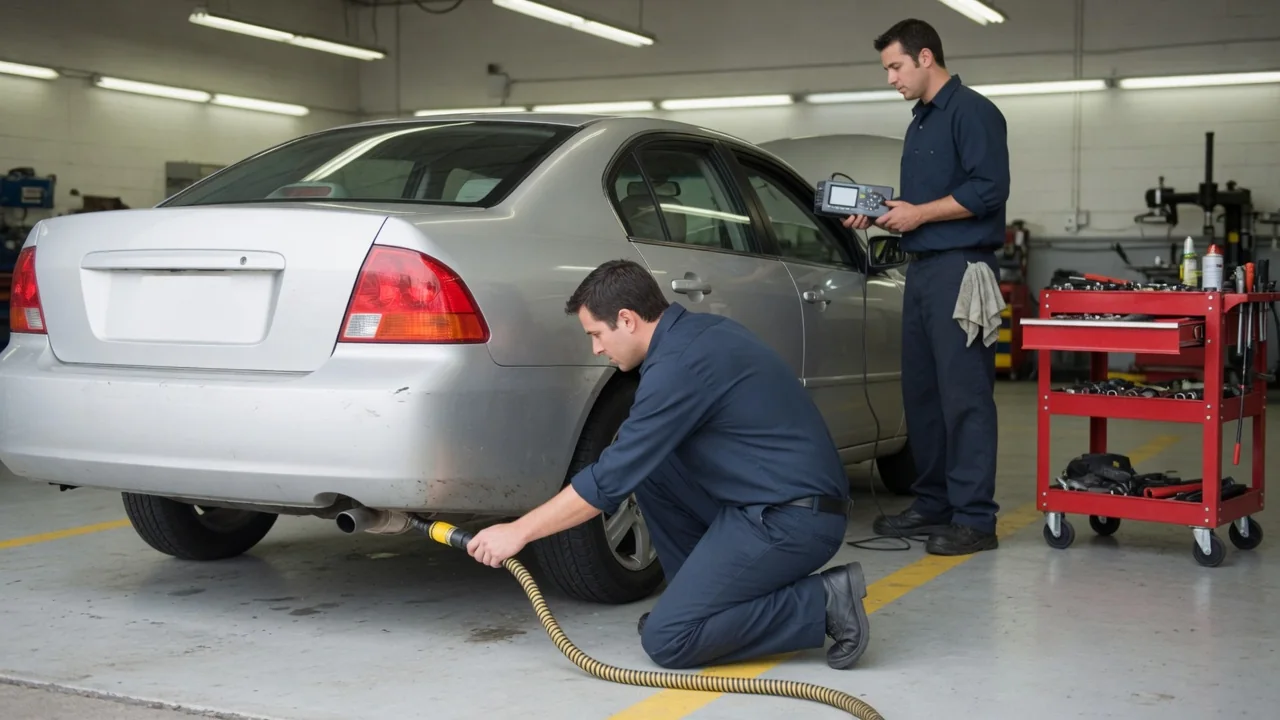
On most modern gasoline cars, the inspection centers on the onboard diagnostic system. A technician connects a scan tool to the diagnostic port and reads whether the malfunction indicator lamp is commanded on, whether fault codes are stored, and whether the readiness monitors have completed. Since the car's own computer does much of the work, this method is relatively quick and needs modest equipment, which tends to keep the emissions test fee lower than methods demanding more labor or machinery.
Older vehicles, or those in programs that require it, may undergo a tailpipe test in which a probe samples exhaust gases while the engine idles or the car runs on a dynamometer. Some programs add a gas cap pressure check, a visual inspection of the catalytic converter and related hardware, or an opacity measurement for diesel smoke. Each added step takes more time and specialized equipment, so the method your vehicle requires is one of the main influences on how much it costs for an emissions test.
Common Variations
Program structure creates the largest differences. Some regions run centralized, test-only facilities where the fee is uniform and sometimes collected with registration rather than at the lane. Others license independent repair shops and dealerships to perform inspections, either at a regulated price, under a maximum cap, or at whatever the market supports. Where competition is allowed, emissions test prices can differ between stations in the same town, and a combined safety and emissions inspection may be priced differently than either check alone.
Vehicle characteristics add another layer. Diesel trucks, heavier vehicles, and older models may fall into categories with different procedures and different charges, while new vehicles, fully electric cars, and certain classics are exempt in many programs and pay nothing for testing at all. Separate line items also appear in some areas, such as a certificate or electronic transmission fee added to the station's labor charge. Retest policy matters too: a second attempt after a failure may be free within a set window or billed again.
Everyday Use and Observations
In practice, the simplest way to learn how much to budget for an emissions test in your area is to read the renewal notice and check the station's posted rates before pulling in. Asking whether the quoted amount includes the certificate, whether a retest is covered, and whether an appointment changes the price avoids surprises at the counter. Some shops advertise discounts or pair the inspection with other services, so two drivers with identical cars may pay different amounts on the same day.
The condition of the vehicle affects what you ultimately spend more than the fee itself. An illuminated check engine light generally means a failed result on a diagnostic-based test, and a recently disconnected battery or cleared codes can leave readiness monitors incomplete, leading to a rejected attempt. Either outcome can mean paying for a visit that produces no passing certificate. A stored fault code is a clue pointing toward a system, not proof that a particular part has failed, so diagnosis should precede any parts purchase.
Limits and Next Steps
A general explanation cannot tell you the exact amount you will pay, because fees, exemptions, and testing requirements are set locally and revised over time. The official program for your registration area is the reliable source for current charges and for which vehicles must be tested. It is also worth remembering that the inspection fee covers the test only. Diagnostic time and repairs after a failure are billed separately, although some programs offer repair cost limits, waivers, or assistance for qualifying owners.
A sensible next step is to confirm the required test type and deadline, then gather the registration paperwork the station will ask for. If a warning light is on or the car runs poorly, having a qualified technician evaluate it beforehand can prevent a wasted visit. Leaving time before the deadline allows for a retest and helps avoid late registration penalties, which can exceed the test charge. Keeping receipts and inspection reports documents the work if a waiver or dispute ever arises.