What to Do After a Failed Emissions Test
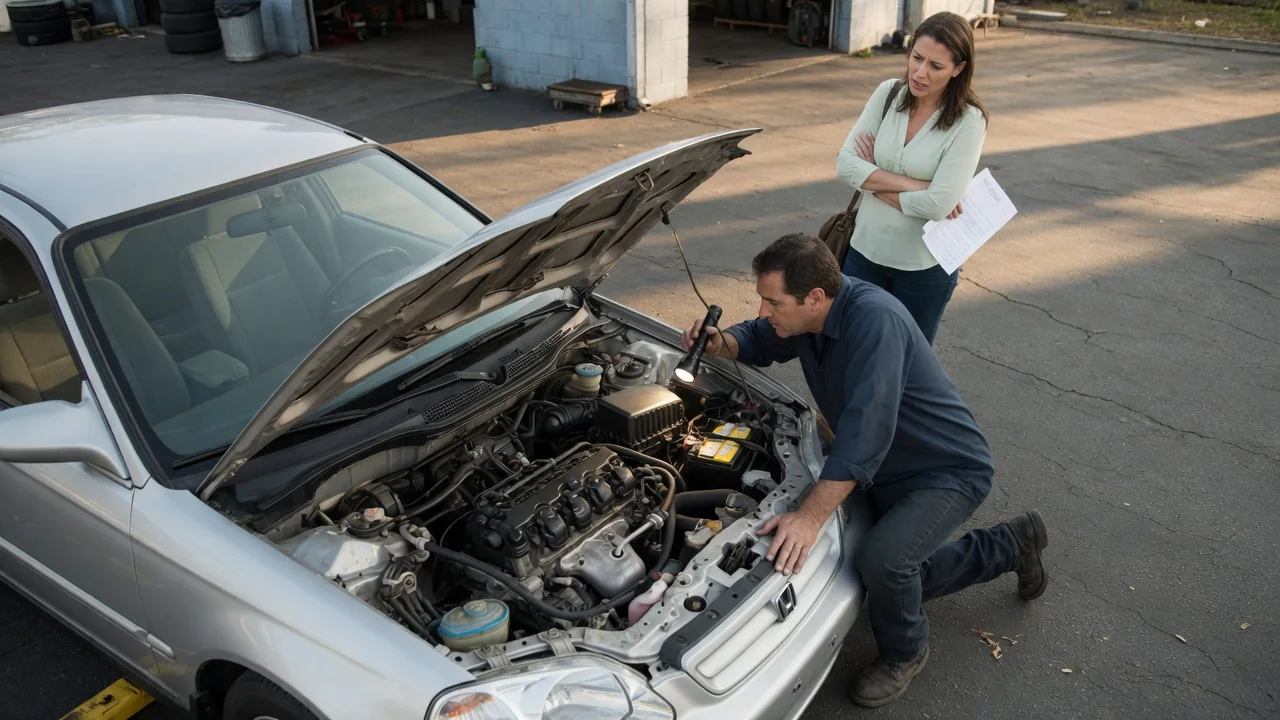
A failed emissions test is frustrating, but the report is a starting point for diagnosis rather than a verdict on any single part. Drivers who ask how to pass an emissions test are usually best served by finding out why the car did not pass, repairing the underlying cause, and returning for a retest once the vehicle is ready. No approach can guarantee a pass.
What This Topic Covers
An emissions test failure means the vehicle did not meet at least one requirement of the local inspection program. The reason is normally printed on the inspection report. It may be an illuminated check engine light, stored diagnostic trouble codes, self-tests that have not finished running, tailpipe readings above the allowed limit, or a problem found during a visual check, such as a missing fuel cap or disconnected emissions equipment. Each of these points toward a different kind of follow-up, so reading the report closely comes before any repair.
This article covers legitimate diagnostic steps after a car emissions test failure, not shortcuts. Defeat devices, sensor spacers, and software that hides faults are illegal in the United States and leave the original problem in place. Inspection rules also differ by state, county, vehicle age, and fuel type, so the test one driver takes may not match another's. The useful question is less how to pass the emissions test and more what the vehicle is reporting and whether that points to a real fault.
How It Works in a Vehicle
Most modern gasoline vehicles are checked through the onboard diagnostic system. The engine computer runs self-tests called readiness monitors on the catalytic converter, oxygen sensors, evaporative emissions system, exhaust gas recirculation, and misfire detection. When a monitor finds a result outside its expected range, the computer stores a code and may turn on the check engine light. Many programs simply plug into the diagnostic port and read that information. Older vehicles may instead have a probe measure the exhaust gases directly at the tailpipe.
Tailpipe readings reflect how well the engine burns fuel and how well the catalytic converter cleans up what remains. Misfires and incomplete combustion tend to raise hydrocarbons, an overly rich fuel mixture tends to raise carbon monoxide, and high combustion temperatures tend to raise oxides of nitrogen. A worn spark plug, a vacuum leak, a slow oxygen sensor, or a restricted recirculation passage can each push one of these readings upward. Because the systems overlap, a single elevated reading narrows the search but rarely identifies one component.
Common Variations
Not every emissions test fail has the same cause. A plug-in failure usually involves a commanded check engine light or stored codes. A tailpipe failure involves measured gas levels. A visual failure involves missing, modified, or disconnected equipment, and some programs also pressure-test the fuel cap or the evaporative system. Diesel vehicles may be judged on smoke opacity instead. Knowing which category applies tells the owner whether the next step is a scan tool reading, a mechanical inspection, or simply replacing a worn fuel cap seal.
A common variation involves no fault at all: the vehicle is rejected because its monitors are not ready. This often happens after a battery disconnect or after codes were cleared, since the computer must complete its self-tests again over a period of normal driving. The conditions required, often called a drive cycle, depend on the manufacturer and model. Codes vary as well. Generic codes share broad meanings across brands, while manufacturer-specific codes need vehicle-specific service information before anyone can interpret them with confidence.
Everyday Use and Observations
Drivers often notice clues before or after failing an emissions test. A steady or flashing check engine light, a rough idle, hesitation under acceleration, a fuel smell near the vehicle, visible exhaust smoke, or a gradual drop in fuel economy can all relate to the systems an inspection evaluates. A fuel cap that no longer clicks or seals is another simple thing to check. Noting when symptoms appear, such as on cold starts or at highway speed, gives a technician useful context for diagnosis.
Sensible preparation supports an honest result. Keeping scheduled maintenance current, repairing known faults first, and arriving with the engine fully warmed up all help the vehicle perform as designed, because a cold catalytic converter works less efficiently. Clearing codes just before the appointment usually backfires, since it resets the readiness monitors and can lead to a rejection. Fuel additives and similar products are sometimes marketed as an answer for how to pass a car emissions test, but none can correct a mechanical or electrical fault.
Limits and Next Steps
A fault code is evidence to interpret, not proof that a part has failed. A catalyst efficiency code, for example, may trace back to an exhaust leak, a sensor problem, or an engine condition that is damaging the converter, and replacing the converter alone might not solve it. A code reader shows what the computer detected, not why it happened. When the cause is unclear, a qualified technician can review live data and freeze-frame information and carry out tests suited to that specific vehicle.
After repairs, keep the original inspection report and the repair documentation, because many programs ask for them at the retest. Retest deadlines, fees, and any waiver or repair assistance options depend on the jurisdiction, so confirm the details with the local program. Allow enough normal driving for the monitors to complete before returning. Even a careful repair cannot guarantee a pass, since a second fault may surface once the first is fixed. Still, a failed emissions test followed by proper diagnosis usually leaves the vehicle running cleaner and more reliably.