What Affects Vehicle Inspection Cost?
Drivers who ask how much a vehicle inspection is rarely get a single answer, because the fee depends on what is being checked, who performs the work, and what the vehicle itself requires. This guide explains the factors that shape vehicle inspection cost, from inspection type and labor time to equipment and retesting, so the figure on a quote makes sense before the appointment.
What This Topic Covers
The phrase vehicle inspection describes several different services, and that is the first reason prices differ. A government-mandated safety inspection follows a fixed checklist, an emissions test focuses on exhaust and engine management, a pre-purchase inspection examines a used car in depth for a buyer, and a courtesy multi-point check accompanies routine service. Each has its own scope, time requirement, and paperwork, so the cost of a vehicle inspection always starts with knowing which of these is actually being requested.
This article deals with cost factors rather than current or location-specific prices, since fees are set differently from one jurisdiction and one shop to the next. What readers can observe on any quote is the inspection type, the labor time allowed, and any certificate or administrative charge. Vehicle details matter as well: age, fuel type, weight class, and registration status can each change which tests apply, and therefore how much work the inspector must complete before signing off.
How It Works in a Vehicle
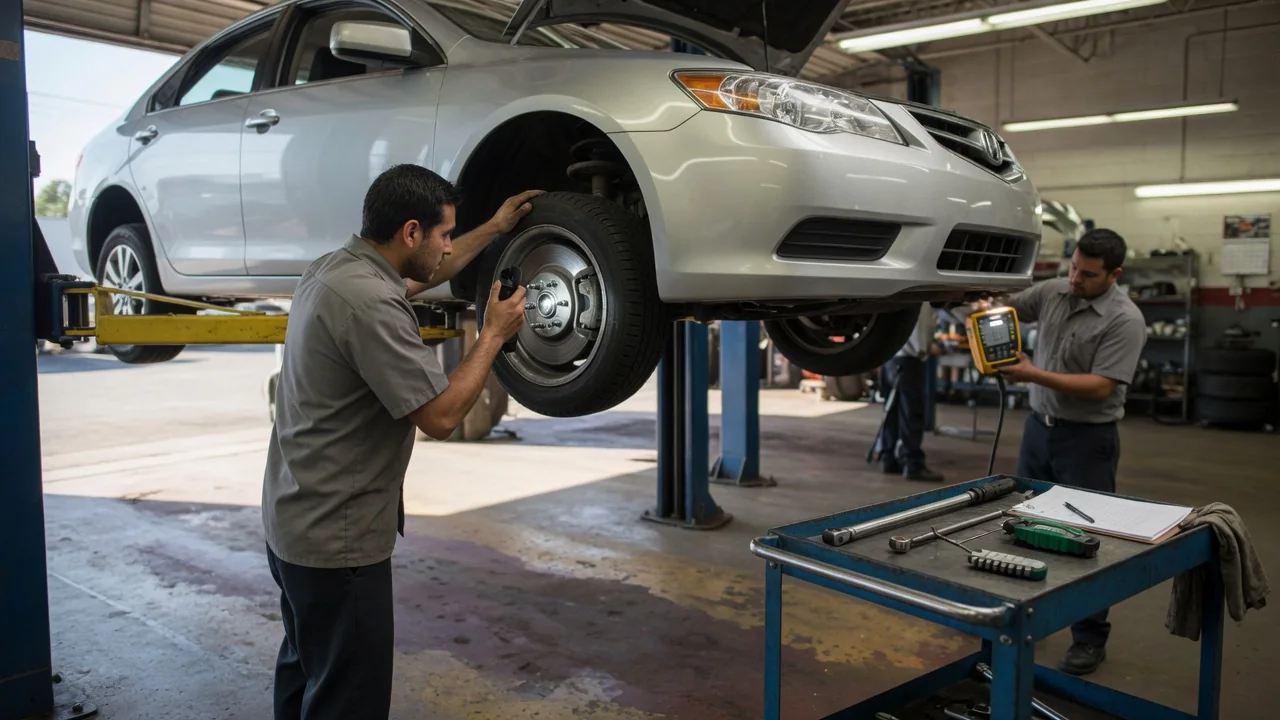
Most of what a customer pays for is technician time. A safety inspection typically moves through brakes, tires, steering, suspension, lights, glass, wipers, horn, and seat belts, and the depth of each check drives the labor involved. A visual look at brake pads through the wheel takes minutes, while removing wheels to measure friction material and examine rotors takes considerably longer. Raising the car on a lift to check ball joints, bushings, and fluid leaks adds further time to the job.
Emissions testing adds an equipment factor. On many newer vehicles the inspector connects a scan tool to the diagnostic port and reads readiness monitors and stored codes, which is relatively quick. Older vehicles may need a tailpipe measurement, sometimes on a dynamometer, which requires costlier machinery and more setup. If a fault code appears, it is evidence to interpret rather than proof that a part has failed, and the diagnosis needed to trace the cause is usually billed separately from the inspection itself.
Common Variations
Who performs the inspection is a major variable. In some places the fee for a mandated inspection is regulated or capped, so every licensed station charges a similar amount. Elsewhere shops set their own rates, and vehicle inspection costs then reflect local labor rates, overhead, and competition. Government-run test lanes, dealerships, independent garages, and mobile inspectors who travel to the car each operate under different cost structures, which is why two quotes for the same service can differ noticeably.
The vehicle itself creates further variation. Heavy trucks, commercial vehicles, motorhomes, trailers, and motorcycles often follow separate checklists with their own fee categories. Diesel engines may face different emissions procedures than gasoline engines, while electric vehicles skip tailpipe testing but may warrant battery and high-voltage system checks during a pre-purchase evaluation. Modified vehicles, rebuilt or salvage-titled cars, and vehicles arriving from another region can require enhanced inspections or identification number verification, each adding time and documentation.
Everyday Use and Observations
In practice, the inspection fee and the cost of passing are two different things. Someone wondering how much it costs for a vehicle inspection may budget only for the test and then discover worn tires, a burned-out bulb, a cracked windshield, or a leaking exhaust that must be corrected first. Those repairs appear as separate lines on the invoice. Reading the quote carefully shows whether it covers only the check, or also includes a certificate, sticker, or shop supply charge.
A few simple observations beforehand can prevent a second visit. Owners can confirm that all exterior lights work, that wiper blades clear the glass, that tire tread looks even, and that no warning lamps stay lit on the dashboard. A recently disconnected battery or cleared codes can leave readiness monitors incomplete, which may result in an inconclusive emissions result until the car has been driven normally for a while. Retest policies vary, and some stations charge again while others do not.
Limits and Next Steps
No general guide can state exactly how much a vehicle inspection costs for a particular car, because rules, fee schedules, and test methods are set locally and revised over time. An inspection is also a snapshot of condition on one day. A pass confirms that the listed items met the standard at that moment, not that the vehicle will remain trouble-free, and a mandated checklist may not cover components a thorough pre-purchase evaluation would examine, such as body repairs or transmission behavior.
The practical next step is to confirm requirements with the local motor vehicle authority and then ask the chosen station direct questions. Useful points include which inspection type applies, what the fee includes, how long the appointment takes, whether a retest carries a charge, and how repair estimates are handled if something fails. When comparing pre-purchase inspections, comparing the scope of each checklist matters more than the headline figure, since a lower price often reflects a shorter and less detailed examination.