Vehicle Inspection Checklist: What to Check Before an Appointment
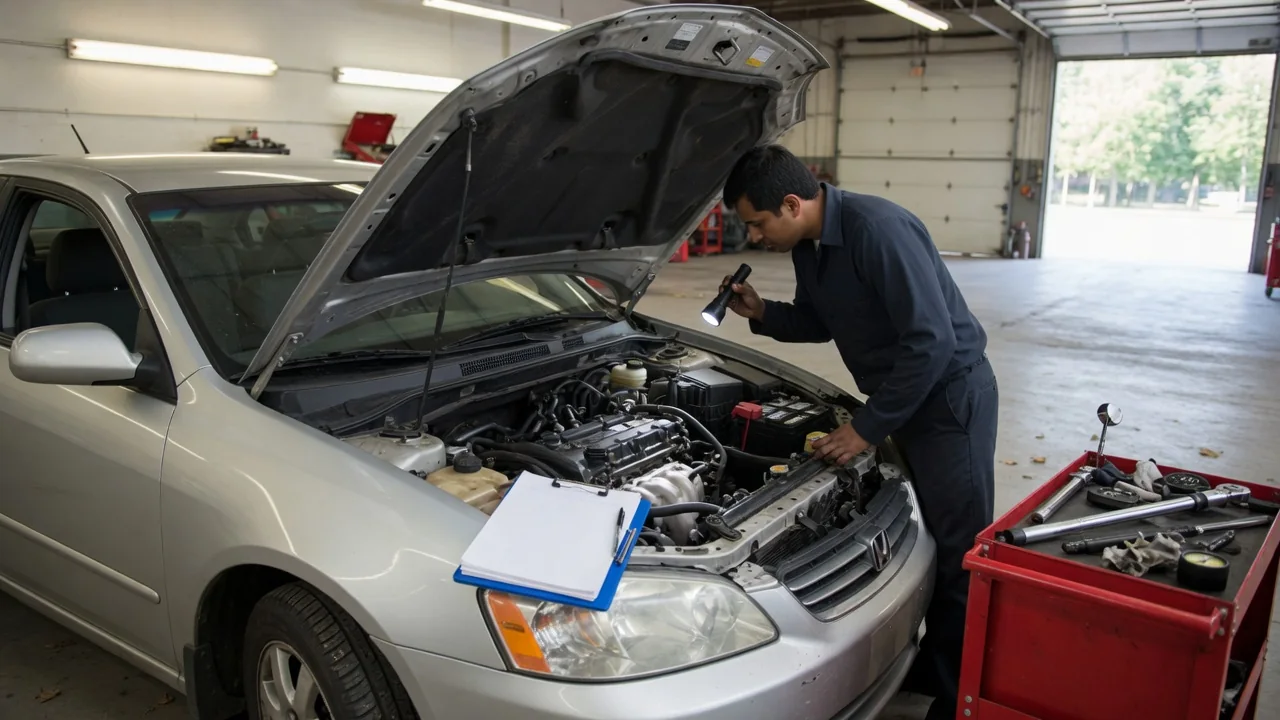
A vehicle inspection checklist turns a vague worry about passing or failing into a short series of things you can actually look at. Walking around the car a few days before an appointment reveals burned-out bulbs, worn tires and warning lights while there is still time to deal with them, and it helps the visit itself go faster and with fewer surprises.
What This Topic Covers
This guide focuses on general preparation: the condition checks any owner can do in a driveway before a scheduled inspection or service visit. It covers exterior lighting, tires, glass and wipers, fluid levels, dashboard indicators, brakes as felt from the driver's seat, and basics such as the horn and seat belts. It does not address evaluating a car you are thinking of buying, and it does not reproduce the legal requirements of any particular state or program, which differ and should be confirmed locally.
Most of what matters is visible or audible without tools. A cracked lens, a tire worn smooth across its shoulders, a wiper blade that leaves streaks, or a belt that will not latch are all plain to see. Where vehicles differ is in the details: the location of fluid reservoirs, the recommended tire pressure, the meaning of specific warning symbols, and whether the car uses a spare tire or a sealant kit. The owner's manual and the placard in the driver's door opening settle those questions.
How It Works in a Vehicle
A checklist works by following the car's systems in a logical order rather than relying on memory. Many people start outside, walking a full circle to check headlights, turn signals, brake lights, reverse lights and the license plate lamp, then move on to tires, glass and mirrors. Next comes the engine bay for fluid levels and obvious leaks, and finally the cabin for warning lights, horn, wipers, washers and seat belts. Grouping the checks this way keeps anything from being skipped.
Each check connects to how a system behaves. Brake lights depend on a switch at the pedal, so a helper or a reflective surface behind the car confirms they respond. Tire tread carries water away from the contact patch, which is why depth and even wear matter more than appearance. On the dashboard, most warning lights illuminate briefly when the ignition is switched on and then go out; one that stays lit, or never appears at all, deserves attention before the appointment.
Common Variations
Vehicle inspection checklists vary with the purpose of the appointment. A safety-focused inspection concentrates on brakes, steering, suspension, lighting, tires and visibility. An emissions-oriented test pays more attention to the check engine light, the onboard diagnostic system and the exhaust. A routine service visit or pre-trip check adds maintenance items such as oil condition, coolant level and battery terminals. Knowing which kind of visit is booked tells you where to spend your preparation time.
The vehicle itself changes the list too. An electric car has no engine oil or exhaust to consider, but it still has brake fluid, coolant on many designs, tires and cabin filters. Trucks and SUVs may add a hitch, trailer wiring or a full-size spare mounted underneath. Older cars often have dipsticks for fluids that newer models monitor electronically, and cars equipped with driver assistance cameras or sensors benefit from clean windshields and unobstructed bumpers.
Everyday Use and Observations
Daily driving supplies much of the information a checklist asks for. A steering wheel that pulls to one side, a brake pedal that feels soft or pulses, a squeal when stopping, or a clunk over bumps are observations worth writing down with the conditions in which they occur. Spots on the driveway are useful as well: noting their color and position under the car gives a technician a starting point, though a stain alone does not identify which component is leaking.
Small habits make the formal check easier. Glancing at the tires when you walk up to the car, noticing whether the headlights reflect evenly off a garage door, and checking tire pressure when the tires are cold all catch changes early. If a warning light comes on, note whether it is steady or flashing and whether the car drives differently. A stored fault code is evidence pointing toward a system, not proof that a particular part has failed, and some codes are manufacturer-specific.
Limits and Next Steps
A driveway check has real limits. Brake pad thickness, suspension bushings, exhaust integrity, steering joints and fluid leaks high on the engine are often hidden without a lift and proper lighting, and judging them takes training. Passing your own checklist therefore does not guarantee a clean result at the appointment. It is also unwise to crawl under a car supported only by a jack or to open a hot cooling system; those inspections belong to a shop with the right equipment.
The practical next step is to sort what you found. Simple items such as wiper blades, washer fluid, low tire pressure or an accessible bulb can often be handled beforehand, following the owner's manual. Anything involving brakes, steering, warning lights or leaks is better described to the shop than guessed at. Bring your notes, any service records and required documents, clear out the trunk and cabin so components are accessible, and ask the facility what its particular inspection includes.