What Does the Clutch Pedal Do?
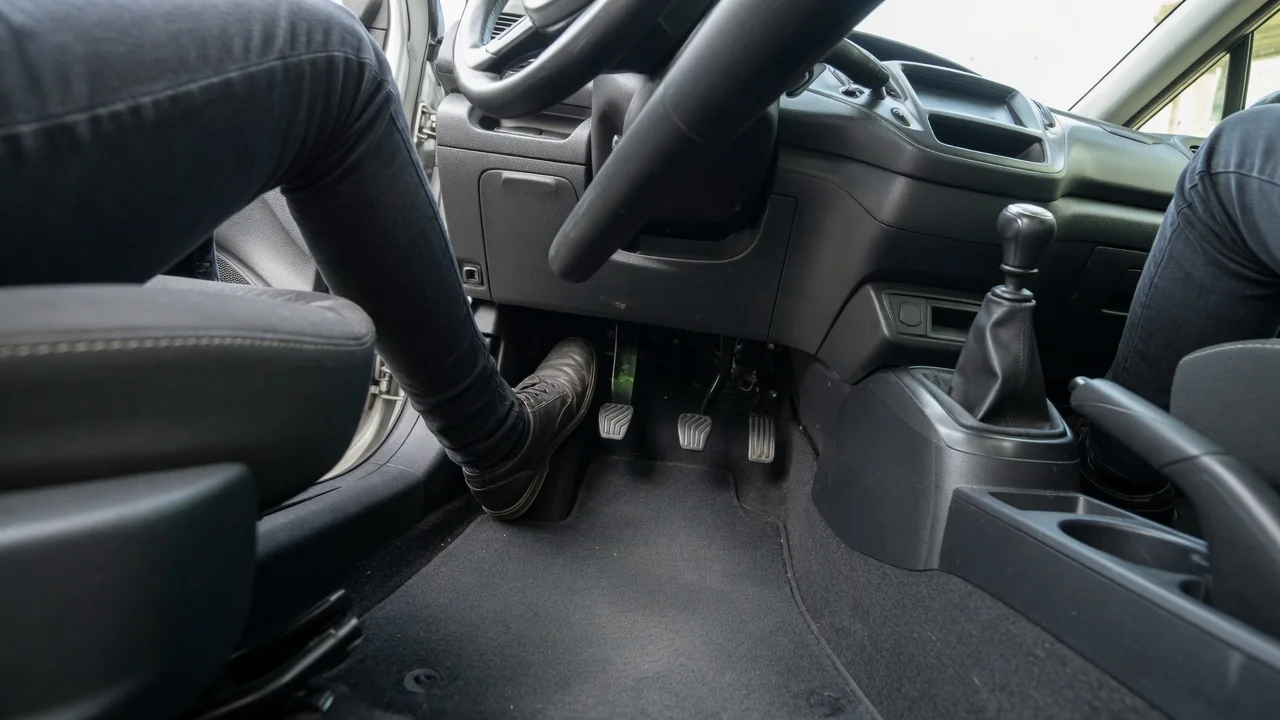
Anyone learning a manual transmission eventually asks what does the clutch pedal do. In short, it lets the driver temporarily disconnect the engine from the gearbox so gears can be changed without grinding and the car can stop without stalling. Understanding how that connection is broken and restored makes shifting smoother and helps drivers notice when something feels different.
Pedal operation
Pressing the clutch pedal sets off a chain of movement that ends at the clutch assembly sandwiched between the engine and the transmission. With the pedal up, strong springs in the pressure plate clamp a friction disc against the engine's flywheel, so the disc, which is splined to the gearbox input shaft, turns at engine speed. Pushing the pedal down moves a release bearing against the pressure plate, relieving that clamping force. The disc is then free to slow down or spin independently, and engine torque stops reaching the gears.
How the pedal's motion reaches the release bearing depends on the vehicle. Many cars use a hydraulic system, in which a master cylinder at the pedal pushes fluid to a slave cylinder near the transmission, while others rely on a cable. The driver may notice the difference as pedal weight and feel: some pedals are light with a long stroke, others firmer and shorter. Performance models with stronger pressure plates often demand more leg effort. The owner's manual describes the arrangement fitted to a particular model.
Engagement point
The engagement point, often called the bite point, is the position in the pedal's upward travel where the friction disc begins to touch the flywheel and start passing torque. Below it, the engine and gearbox are separated; above it, they are locked together. In between lies a narrow zone of controlled slip, where the disc turns slower than the engine. That slip is what lets a stationary car ease away from rest instead of lurching or stalling when the idling engine meets stopped wheels.
Drivers can find this point by feel. In first gear on level ground, lifting the pedal slowly produces a slight drop in engine speed, a change in engine note, and a gentle tug as the car tries to move. Where that happens varies: some cars bite close to the floor, others near the top of the travel, and the position can shift as the friction material wears or as an adjustable linkage settles. A noticeable change over time is worth mentioning at the next service visit.
Smooth shifts
Inside a manual gearbox, synchronizers match the speed of the next gear to its shaft before the two lock together. They can only do that work easily when the input shaft is not being driven by the engine. Pressing the pedal fully removes that load, letting the lever slide out of one gear and into another without clashing. If the pedal is only partly pressed, the disc may still drag, and the driver may feel resistance at the lever or hear a grinding protest.
Smoothness on the way back up matters just as much. After an upshift, engine speed needs to fall to suit the taller gear, so releasing the pedal at a steady pace while gently adding throttle blends the two speeds together. On a downshift, engine speed must rise, and a brief blip of the accelerator before the pedal comes up reduces the jolt. Some newer cars automate this rev matching, while older or simpler models leave the timing entirely to the driver's feet.
Everyday Use and Observations
In daily driving the pedal is used at every start, every gear change, and every stop. Approaching a red light, the driver presses it as the car slows to near idle speed so the engine keeps running once the wheels stop. Pulling away uphill demands a longer period of slip and more throttle, and many modern cars add hill start assistance that holds the brakes briefly. In slow traffic, feathering the pedal lets the car creep at speeds lower than first gear allows fully engaged.
A few habits influence how long the components last. Resting a foot on the pedal while cruising can partly load the release bearing and allow slight slip, generating heat and wear. Holding the car on a slope by balancing the pedal against the throttle does the same thing more severely. Waiting at long lights in neutral with the pedal released spares the release bearing. Many vehicles also require the pedal to be pressed before the starter will operate, a safety interlock that varies by market and model.
Limits and Next Steps
The pedal can only do its job when the parts behind it are healthy. Engine speed climbing without a matching gain in road speed, especially in higher gears under load, suggests the disc may be slipping. Difficulty selecting gears, or the car creeping with the pedal on the floor, points toward incomplete release. A pedal that feels spongy, sinks, or stays down may indicate a hydraulic or linkage concern. Shudder on takeoff and a burning smell after hard use are also worth noting.
These symptoms are clues rather than conclusions, because several faults can feel alike from the driver's seat. Low fluid, air in the hydraulic circuit, a stretched cable, a worn disc, and a contaminated friction surface each call for a different remedy. Since reaching the clutch usually means separating the transmission from the engine, diagnosis and repair are best left to a qualified technician. Describing when the symptom appears, which gear, and how the pedal feels helps the shop confirm the cause for that particular vehicle.