Water Mist Fire Extinguisher: Is It a Good Choice for a Car Fire?
The short answer
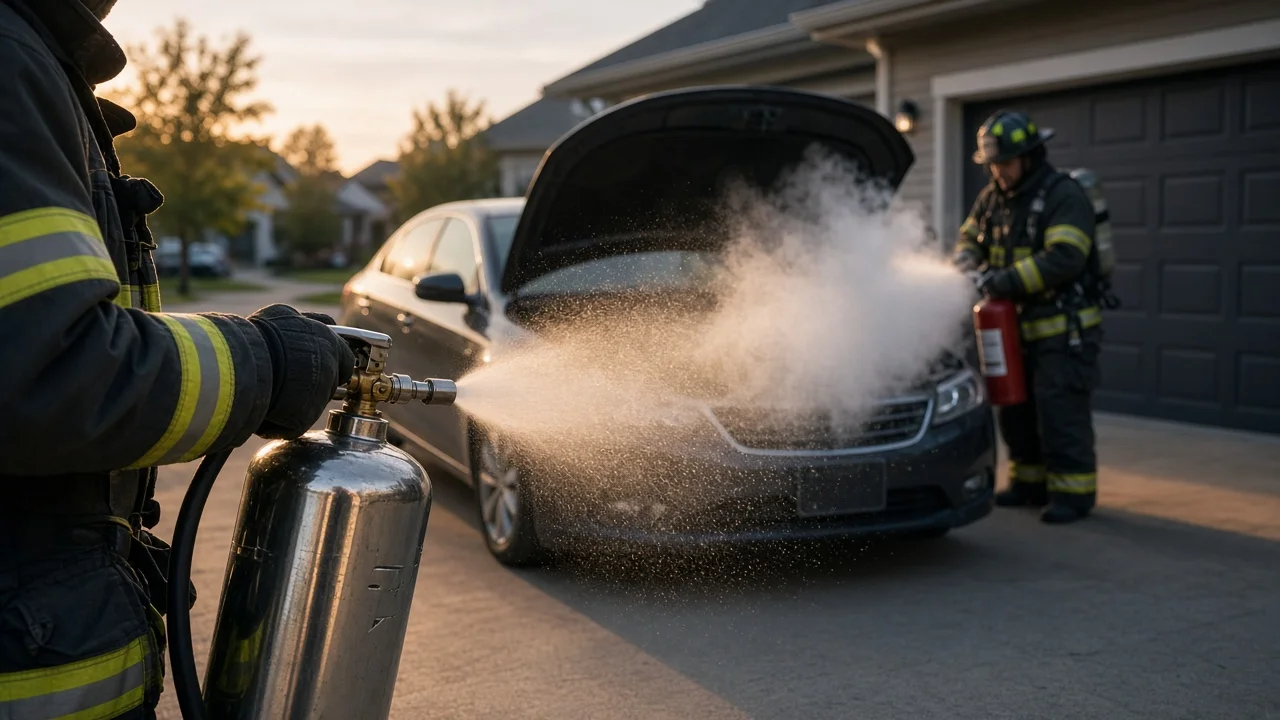
A water mist fire extinguisher is generally not the best primary choice for a car fire. It sprays very fine droplets of purified water and is designed mainly for ordinary combustibles such as paper, fabric and some plastics. Some models are also listed for fires involving energized electrical equipment. Vehicle fires, however, often involve gasoline, diesel, oil or other flammable liquids. In the US those are Class B fires, and a water mist unit is usually not listed for them. For a conventional gasoline or diesel vehicle, a multipurpose dry chemical extinguisher listed for Classes A, B and C is the more common recommendation. The one exception is a specific water mist model whose label explicitly lists Class B, so check the label rather than the product name.
Whatever extinguisher you carry, the priority in a vehicle fire is to get everyone out, move well away from the vehicle, and call 911. A portable extinguisher is only for a small fire you can fight safely from a position with a clear escape route.
What a water mist extinguisher is
A water mist extinguisher discharges water as a fine spray rather than a solid stream. Many units use de-ionized (mineral-free) water, which conducts electricity far less readily than tap water. The small droplets absorb heat quickly and turn to steam, which cools the fire and briefly displaces oxygen near the flames. Because the discharge is mostly water, cleanup is simpler than after a dry chemical extinguisher, which leaves a fine powder residue that can be corrosive and hard to remove from electronics and interiors.
How it differs from extinguishers commonly carried in vehicles
Type | Typical US class listings | Relevance to vehicle fires; Water mist | Usually Class A; some models also Class C | Weak fit for fuel or oil fires unless the label specifically lists Class B; Multipurpose dry chemical (ABC) | Classes A, B and C | The most common general-purpose choice for passenger vehicles; leaves powder residue; Dry chemical (BC) | Classes B and C | Covers fuel and electrical fires but not ordinary combustibles; Clean agent | Varies by model; often B and C, some A | Little residue; listings and capacity vary widely, so read the label
Class listings vary by manufacturer and model. The table describes typical patterns, not guarantees. The label on the extinguisher, which shows its UL listing and class ratings, is the authority for any specific unit.
Why vehicle fires are a poor match
Fuel and fluids: Leaking gasoline, diesel, engine oil, transmission fluid and some coolants can burn. Water-based agents can scatter burning liquid rather than smother it. Mixed fuel load: A single car fire can involve plastics and upholstery (Class A), fuel and oil (Class B) and wiring or the 12-volt system (Class C) at the same time. A unit that covers only some of those classes leaves gaps. Engine bay access: Fires under the hood are hard to reach. Opening the hood can feed the fire a sudden rush of air, so fire safety guidance generally advises against it. Storage conditions: Water-based extinguishers can be vulnerable to freezing, and the inside of a parked car can get very hot or very cold. Check the operating temperature range printed on the label against your climate.
Electric and hybrid vehicles
Fires involving the high-voltage battery in an electric or hybrid vehicle are a separate case. A damaged lithium-ion battery can go into thermal runaway, a self-sustaining chemical reaction that generates its own heat. Hand-held extinguishers of any type, including water mist, are not expected to put this out. Firefighters typically need very large volumes of water, and these batteries can reignite hours or even days later. If smoke or fire appears to come from the battery area, evacuate, keep your distance, call 911, and tell the dispatcher the vehicle is electric or hybrid. A water mist extinguisher may still help with a small cabin fire in such a vehicle before the battery is involved, but it is not a tool for battery fires.
Where water mist can make sense
Water mist suits places where most fuel is ordinary combustibles and where avoiding powder residue matters. Examples include homes, offices, and areas with electronics, provided the model is listed for Class C. As an extra unit for the living area of an RV or camper, it can complement a multipurpose extinguisher. For the vehicle's own fuel and engine fire risk, it should not replace one.
Choosing an extinguisher for your vehicle
Read the label first: confirm the class letters it is listed for, the UL listing and the operating temperature range. For a gasoline or diesel vehicle, prioritize Class B coverage; an ABC dry chemical unit covers the broadest range of typical car fire fuels. Mount it securely within the driver's reach. A loose extinguisher can become a projectile in a crash. Inspect the pressure gauge regularly and follow the manufacturer's service and replacement schedule. Any portable extinguisher is a first-response tool only. If the fire grows, spreads or involves the fuel tank or battery pack, leave it to firefighters.
Gaps in the available information
No product-specific evidence was available for this guide: no tested models, discharge times, capacities, prices or independent test results. Class listings, temperature limits and suitability for vehicle use differ between manufacturers and models. Confirm these details from the label and the manufacturer's documentation for any extinguisher you are considering.