Water Filtration vs Water Softening in a Motorhome

The short answer
A water filter and a water softener solve different problems, so one cannot replace the other. A filter improves water by trapping or adsorbing unwanted material, such as sediment and chlorine taste and odor, depending on the filter media. A softener reduces water hardness by removing calcium and magnesium, the minerals that leave scale. Most motorhome owners benefit from at least basic filtration. A softener earns its place mainly if you regularly fill up with hard water and want to limit scale in the water heater, faucets, shower and other fixtures.
One qualification matters. Neither device automatically makes water safe to drink. A softener is not designed to remove microbes or most health-related contaminants. A filter only addresses the contaminants its media and certification cover. If drinking-water safety is your main concern, choose a filter certified for the specific contaminants you are worried about. Do not rely on a softener for this.
What a motorhome water filter does
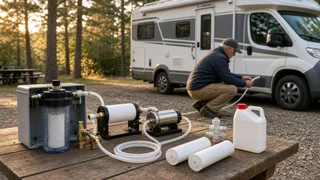
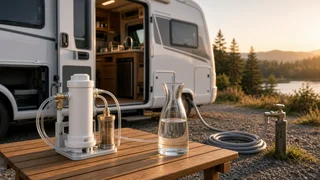
A filter removes or reduces material as water passes through a cartridge or other media. RV setups commonly use a sediment filter, which catches sand, rust and other particles, and an activated carbon filter, which adsorbs chlorine and many compounds that affect taste and smell. Some systems add finer stages, and some owners fit a separate drinking-water filter at the galley tap. Filters can be mounted outside on the fill hose or inside the coach in the plumbing.
Filters vary widely in what they remove. In the US, NSF/ANSI 42 covers aesthetic effects such as chlorine taste and odor, and NSF/ANSI 53 covers certain health-related contaminants. Check which standards and contaminant claims a filter is certified for. The product category alone does not tell you.
What a motorhome water softener does
Most portable RV softeners use ion exchange, a process in which a resin bed swaps the hardness minerals calcium and magnesium for sodium ions. Softer water is less likely to leave scale deposits. It also tends to lather more easily with soap and leave fewer spots on fixtures. When the resin's capacity is used up, it is regenerated by flushing it with a salt solution, following the manufacturer's procedure.
Softening adds a small amount of sodium to the water. Anyone on a sodium-restricted diet may want to ask a doctor about drinking softened water, or drink from a separate source.
Side-by-side comparison
Aspect | Water filter | Water softener; Main job | Removes particles and, depending on media, chlorine and other contaminants | Reduces hardness minerals (calcium and magnesium); Effect on scale | Little or none for dissolved hardness | Primary benefit; Effect on taste and odor | Carbon media can improve both | Not its purpose; Drinking-water safety | Only for contaminants it is certified to reduce | Not designed for this; Upkeep | Replace cartridges on schedule | Regenerate the resin with salt when capacity is used
Choosing by situation
Mostly municipal hookups, with water that tastes of chlorine or carries some sediment: start with a sediment filter and a carbon filter. Frequent stays where the water is hard, or visible scale on fixtures or in the water heater: add a softener alongside filtration. Well water or unfamiliar sources: use filtration certified for the contaminants you are concerned about. Add a softener only if testing shows the water is hard. Not sure whether you need softening: test hardness at each fill with inexpensive test strips before deciding. Hardness varies widely by region and water source.
Using both together
Many owners run filtration and softening together. A sediment pre-filter ahead of the softener is a common arrangement because it helps keep particles out of the resin bed. Placement of a carbon filter relative to the softener varies between setups. Follow the softener and filter manufacturers' guidance on order and connections.
Ownership points to keep in mind
Before sanitizing the fresh tank with chlorine, bypass or remove carbon filter cartridges. Carbon removes the chlorine and can be spent by it. Before winterizing, drain filter housings and the softener and protect them from freezing. Follow the manufacturer's instructions on whether cartridges should be removed before you add RV antifreeze. Check your water heater's manual for maintenance related to scale and, where fitted, the anode rod. Requirements differ by water heater brand and model.
Information gaps
No confirmed product data was available for this article. That means no specific capacities, flow rates, cartridge lifespans, prices or model comparisons. Before buying, check the manufacturer's specifications, certifications and maintenance requirements for the exact filter or softener. Also confirm compatibility with your motorhome's plumbing and water heater.