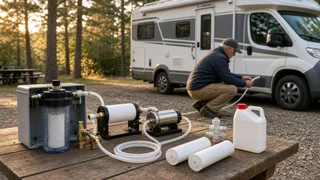
Waterdrop Filtration Systems for Motorhomes
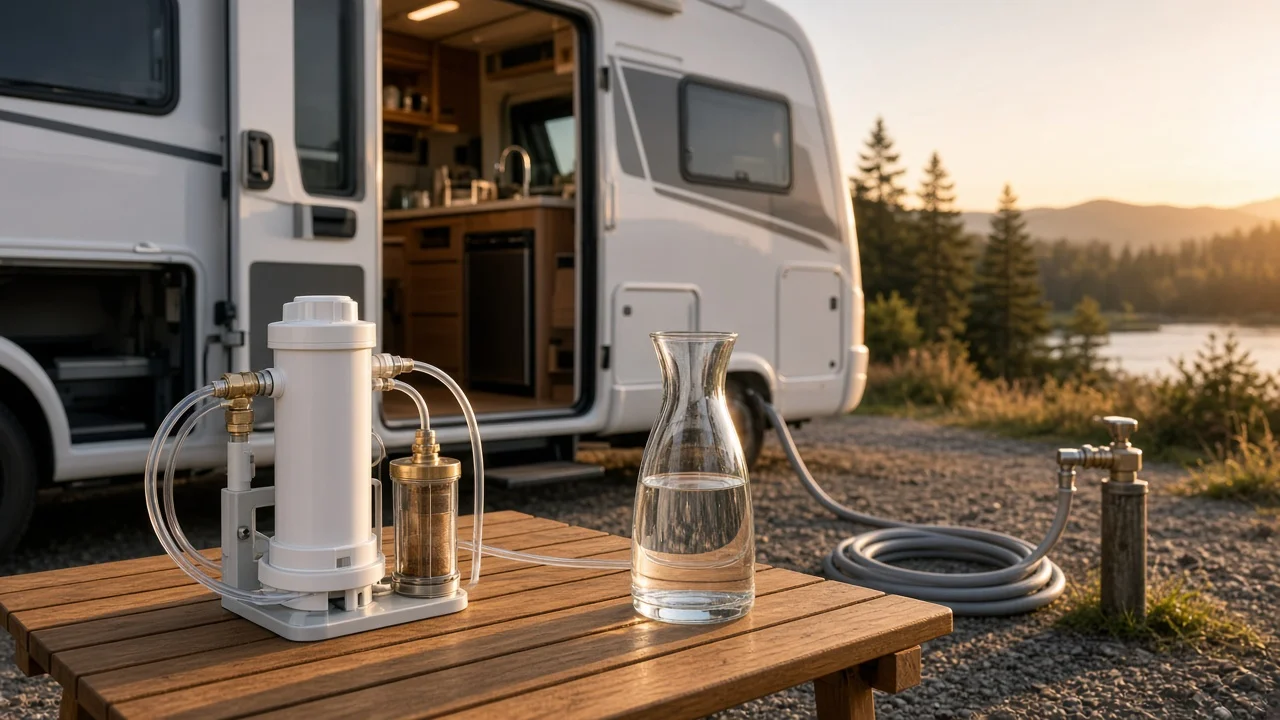
The short answer
A Waterdrop filtration system can be a reasonable choice for a motorhome, but only if the specific model suits life on the road. Waterdrop is primarily a household brand, so most of its systems are designed for a fixed kitchen with steady mains pressure, constant electricity and unlimited drainage. A motorhome has none of those guarantees. The simplest point-of-use filters, such as compact under-sink or countertop units with no pump and no drain line, are the easiest fit. Reverse osmosis models are the hardest, because they typically depend on stable pressure, may need mains power and send part of the incoming water to drain.
Two conditions change the answer most. First, whether you mainly use campground city water or your onboard fresh tank and 12-volt pump, since the two supply water very differently. Second, whether you boondock (camp without hookups), where every gallon of fresh water and every bit of grey tank space counts.
What the available information does and does not cover
No confirmed product evidence was available for this guide: no verified model specifications, flow ratings, certifications, cartridge lifespans, prices or fitting sizes for any Waterdrop system. Waterdrop also does not appear to list specific motorhome makes, model years or floor plans as compatible, so nothing here should be read as confirming fit for a particular vehicle. The guidance below is based on general principles of RV plumbing and water filtration. Check every figure against the current product listing, manual and certification documents before buying.
How motorhome water systems differ from a house
Most motorhomes have two ways of getting water to the taps. The city water inlet connects to a campground hose bib, and pressure there can vary widely from site to site. The fresh water tank feeds the taps through a 12-volt demand pump, which switches on when a tap opens. Pump output is usually lower and less steady than mains pressure, and it can pulse.
Used water drains to the grey tank, which has a fixed capacity. Anything a filter sends to drain fills that tank and empties the fresh tank faster. The plumbing also has to cope with road vibration, temperature swings, freezing in winter storage and the tight cabinets typical of RV kitchens.
Filter types and how they suit motorhome use
Filter type | Motorhome considerations; Pitcher or dispenser | No plumbing changes or power. Needs secure storage while driving. Treats drinking water only. Countertop or faucet-connected | Little or no installation. Must be stowed or secured for travel. Check that the connection fits the RV faucet. Under-sink, no pump or drain (carbon or similar media) | Usually the most practical plumbed option. Needs cabinet space, secure mounting and fittings that match the RV lines. Under-sink reverse osmosis | Most demanding. May need mains power, stable pressure and a drain connection, and produces waste water that fills the grey tank.
What to check before buying
Operating pressure range: compare the minimum and maximum pressure in the manual with what your demand pump and typical campground supply deliver. A pressure regulator at the city water inlet is standard practice to protect RV plumbing and filter housings. Power requirements: some reverse osmosis units use a built-in booster pump that runs on 120-volt AC. Off shore power that means running an inverter or generator, so check the stated power draw. Waste water: if a model sends water to drain, find its stated pure-to-drain ratio and decide whether your fresh and grey tank capacities can absorb it, especially when boondocking. Physical size and mounting: measure the cabinet, including access for cartridge changes, and make sure the unit can be fixed so it won't shift on the road. Fittings: RV plumbing commonly uses PEX or other plastic lines with push-fit or threaded connectors. Confirm that the included adapters match your lines and faucet, or budget for the right adapters. Flow rate: a restrictive filter on a modest pump can give a slow trickle at the tap. Compare the rated flow with your pump's output. Certification claims: look for the specific NSF/ANSI standard the model is certified to, and what it is certified to reduce. Marketing terms alone do not show what a filter removes. Replacement cartridges: note the stated replacement interval and how easy cartridges are to get while traveling. Plan to carry spares. Winterizing: find out whether cartridges can be removed or bypassed before antifreeze goes into the system and whether the housing tolerates freezing. A bypass valve makes this easier.
Where to put the filter in the system
A point-of-use filter at the kitchen tap treats only the water you drink and cook with. It also leaves the rest of the system unchanged. A filter on the hose before the city water inlet or tank fill protects the whole system from sediment. Many owners use both: an inline hose filter for sediment and general taste, plus a point-of-use filter for drinking water.
Avoid running carbon-filtered water into the fresh tank for storage. Carbon removes the chlorine that municipal water relies on to slow bacterial growth, so dechlorinated water left in a warm tank can deteriorate faster. Filtering at the tap, after storage, avoids this.
Filtration is not tank sanitation
Unless a model is specifically certified for microbiological reduction, don't assume it makes water from an unknown source safe to drink. Even with a certified system, regular sanitizing of the fresh tank and lines remains part of normal motorhome maintenance. A filter downstream of a contaminated tank will also need cartridge changes sooner.
Choosing your next step
Start by deciding how you use water on the road. If you mostly stay at hookup sites and want better-tasting drinking water, a compact non-reverse-osmosis under-sink or countertop Waterdrop unit is the most straightforward option to research. If you specifically want reverse osmosis, first confirm its power, pressure and drain needs against your motorhome's electrical setup and tank capacities. If you often camp off-grid, weigh the waste water carefully. For any model, check the manual for operating pressure, fittings, certifications and winterizing guidance, and measure the installation space before ordering.