Off-Grid Water Filtration System for Motorhomes: What to Check Before You Buy
The right off-grid water filtration system for a motorhome is usually not a single filter but a combination: a sediment and carbon stage to protect the plumbing and improve taste, plus a dedicated drinking-water stage, such as a fine-micron filter, a UV unit or both, if you plan to drink from the onboard tank. The main condition that changes this answer is your water source. If you fill only from treated municipal water at campgrounds, a simpler setup is often enough. If you plan to fill from wells, springs, streams or any source of uncertain quality, you need a system rated to reduce microbiological contaminants, not just one that improves taste and clarity.
What "off-grid" changes about water filtration
At a full-hookup campground, the motorhome is connected to a pressurized city water supply, and filtration mainly deals with sediment, chlorine taste and odor. Off grid, the situation is different. The coach runs from its own fresh water tank through a 12-volt pump, so the filter has to work at the pressure and flow your pump delivers. Water may come from sources that are not treated, the same tank may hold water for days, and there may be no electrical hookup to power treatment equipment. A system that works well on city water is not automatically suitable for these conditions.
Where the filtration goes: fill-side, whole-coach or point-of-use
Motorhome water filtration is commonly installed in one or more of three places, and the location determines what the filter protects.
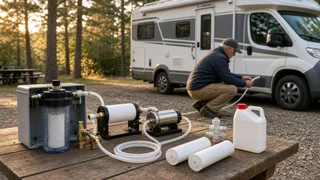
Fill-side (inlet) filter: connects to the hose before water enters the tank or the city water inlet. It keeps sediment and some contaminants out of the tank and plumbing, but it does nothing for water already in the tank, and it is typically used only while filling. Whole-coach filter after the pump: installed in the pressurized line between the pump and the fixtures. It treats everything you draw from the tank, including shower and toilet water, and protects faucets, the water heater and fittings from sediment. Point-of-use drinking filter: a separate filter, often with its own faucet at the galley sink, dedicated to drinking and cooking water. Because it handles a small volume, it can use finer filtration without restricting flow to the rest of the coach.
For off-grid use, many owners combine a fill-side sediment filter, a whole-coach sediment or carbon filter after the pump, and a finer point-of-use stage for drinking water. Treating only at the fill point leaves you relying on the cleanliness of the tank and lines, which is why a post-tank stage matters if you drink from the system.
Filter types and what each one actually does
Filter type | Mainly addresses | Limitations to know; Sediment cartridge | Sand, rust, silt and visible particles | Does not reduce dissolved chemicals or reliably remove microorganisms; clogs faster with dirty sources; Activated carbon (granular or block) | Chlorine taste and odor; some chemicals depending on certification | Not a disinfection method on its own; spent carbon can harbor bacterial growth if left unchanged; Fine-micron or hollow-fiber membrane | Bacteria and protozoa when rated for it | Usually lower flow; needs pre-filtration to avoid clogging; most do not reduce viruses unless specifically rated; Ultraviolet (UV) sterilizer | Inactivates bacteria, viruses and protozoa in clear water | Needs electrical power; ineffective on cloudy water, so it requires sediment pre-filtration; does not remove chemicals or particles; Reverse osmosis (RO) | Dissolved solids and a wide range of contaminants | Produces waste water, which is costly when tank capacity is limited; slower; often needs higher pressure than an RV pump provides
A common off-grid approach is staged filtration: sediment first to protect the finer stages, carbon for taste and chemical reduction, then either a microbiological filter or UV for drinking water. The order matters, because finer filters and UV both depend on the water being reasonably clear by the time it reaches them.
How to read a filter specification
Filter specifications are where many purchase decisions go wrong, because marketing terms like "purifier" or "removes 99% of contaminants" are not standardized. Look for these details instead.
Micron rating: the size of particle the filter is designed to capture. A lower number means finer filtration, but also more flow restriction and faster clogging. Nominal versus absolute rating: a nominal rating means the filter captures a large share of particles at that size; an absolute rating means it is designed to capture essentially all of them. For microbiological protection, an absolute rating is the more meaningful figure. Independent certification: in the US, look for certification by a recognized testing body against NSF/ANSI standards. Standard 42 covers aesthetic effects such as chlorine taste and odor, while Standard 53 covers specific health-related contaminants. Check which contaminants the certification actually lists rather than assuming a certification covers everything. Microbiological claims: if you plan to treat untreated sources, confirm the product is specifically rated for bacteria, protozoa and, if relevant, viruses. Many carbon and sediment filters make no such claim. Rated capacity: the volume of water a cartridge is designed to treat before replacement. This determines how often you will buy cartridges, which affects long-term cost more than the purchase price of the housing. Operating pressure range: the minimum and maximum pressure the housing and media are designed for. This matters both for your 12-volt pump and for campground connections where pressure can be high.
Flow rate and your water pump
Every filter stage adds resistance, which lowers flow at the faucet and shower. Off grid, your pump is the only source of pressure, so the combined restriction of all stages has to stay within what the pump can overcome. Compare the filter's rated flow rate with your pump's rated output, and remember that a filter's flow drops as the cartridge loads up with sediment. If you want very fine filtration, putting it on a point-of-use drinking faucet rather than the whole-coach line avoids starving the shower and water heater of flow. A noticeable drop in pressure over time is usually the first sign that a cartridge needs changing.
Hose connections and fittings
Fill-side filters in the US typically use standard garden hose threads, which makes them easy to connect between a drinking-water hose and the coach inlet. For under-sink or in-line installation, check the thread or push-fit size of the housing against your existing plumbing, which may be PEX, flexible hose or another system depending on the motorhome. Adapters are widely available, but every extra joint is a possible leak point in a vehicle that vibrates on the road. Use a hose intended for drinking water for filling, and keep it separate from any hose used for flushing or waste tasks.
Tank capacity and how it affects the choice
Fresh water tank capacity shapes which filtration methods make sense. Reverse osmosis sends part of the incoming water to waste, which may be acceptable at a hookup but is a real cost when every gallon in the tank has to last until the next fill. A small tank also means water is refilled more often, possibly from more varied sources, which increases the value of good fill-side filtration. A large tank means water sits longer, which makes tank sanitation and a post-tank drinking-water stage more important. Gray water tank capacity matters too: anything that generates extra waste water, such as RO reject water, fills the gray tank faster.
Power requirements off grid
Sediment, carbon and membrane filters need no power beyond what the pump already uses. UV sterilizers need electricity to run the lamp, and some units also require a ballast or controller. Before choosing UV for boondocking, confirm that it runs on 12 volts DC or that you have an inverter and enough battery and solar capacity to support it whenever you draw water. Also check whether the unit needs to warm up, whether it has a lamp failure indicator, and how often the lamp needs replacing according to the manufacturer.
Sanitation and maintenance
Filtration does not replace sanitation of the water system. Bacteria and biofilm can grow inside tanks, lines and even filter housings, especially when water sits warm and unused. Plan to sanitize the fresh water tank and plumbing periodically, following the motorhome manufacturer's procedure, and remove or bypass carbon and membrane cartridges during sanitizing if the filter maker advises it, since disinfectants can damage some media or be absorbed by carbon. Replace cartridges on schedule even if flow still seems fine, because a carbon filter that has been sitting with stagnant water can become a source of contamination rather than a barrier.
Cold weather adds another consideration. Water left in filter housings can freeze and crack them, so check how the system drains and whether the housings can be bypassed or removed when winterizing the coach.
Buying checklist
Identify your typical water sources: treated municipal water only, or untreated sources as well. Decide which water you need to make drinkable: all of it, or just galley water for drinking and cooking. Confirm the filter specification includes the contaminants that matter for your sources, backed by independent certification rather than marketing claims. Check that the combined flow restriction suits your 12-volt pump and still gives acceptable shower and faucet pressure. Match hose connections and plumbing fittings to your motorhome, keeping adapters to a minimum. Consider tank capacity before choosing any method that wastes water, such as reverse osmosis. Verify power needs for UV units against your battery, solar and inverter setup. Check physical space for housings, plus access for cartridge changes and draining. Estimate ongoing costs from cartridge rated capacity and replacement intervals, not just the upfront price. Plan a routine for tank sanitation, cartridge replacement and winterizing.
Common mistakes to avoid
Assuming a taste-and-odor carbon filter makes untreated water safe to drink. Installing UV without sediment pre-filtration, which reduces its effectiveness in cloudy water. Putting very fine filtration on the whole-coach line and then struggling with low pressure everywhere. Filtering only at the fill point and drinking from a tank and lines that have not been sanitized. Leaving old cartridges in place through storage or winter, which risks bacterial growth or cracked housings. Choosing reverse osmosis for boondocking without accounting for waste water and gray tank capacity.
Next step
Start by writing down where you expect to fill your tank and whether you intend to drink from it. That single decision narrows the choice: campground-only users can usually rely on sediment and carbon filtration with good tank sanitation, while those filling from untreated sources should prioritize a certified microbiological stage or a properly pre-filtered UV system for drinking water. From there, check the filter specifications against your pump, fittings, tank capacity and power supply before buying.