Water Damage in a Car: How to Spot a Flooded Vehicle Before You Buy
The short answer
A car with serious water damage usually leaves physical traces that cleaning cannot fully remove. These include a musty or mildew smell, damp or replaced carpeting, silt or mud in hidden areas, rust on parts that should not rust inside a cabin, and corrosion on electrical connectors. A clean vehicle history report does not prove a car was never flooded, because damage that was never reported to an insurer or a state agency may not appear in any database. The reliable approach combines three things: a title and history check, a hands-on inspection of the areas flood water reaches, and an independent pre-purchase inspection by a mechanic who did not sell you the car.
In this guide, "flood damage" means water that rose into the vehicle, typically above the floor and often into the engine, wiring and seats. That is different from a minor leak, such as a blocked sunroof drain or a worn door seal, which can also soak a carpet but is usually more limited and repairable. Saltwater flooding is generally more harmful than fresh water because salt speeds up corrosion of metal and electronics.
Why flood damage matters
Modern vehicles depend on electronic control modules, sensors and wiring harnesses, many of which sit low in the cabin or under the seats. Water and the dirt it carries can cause corrosion that develops slowly, so a flooded car may drive normally at first and develop electrical faults later. Flooding can also affect airbag systems, brakes, wheel bearings, the transmission and the engine if water was drawn in. Mold growth in carpet padding and seat foam can be a health concern as well as an odor problem.
Step 1: Check the title and vehicle history
Start with paperwork before spending time on an inspection. Look at the physical title for a brand such as flood, salvage, rebuilt or similar wording. Title branding rules differ from state to state in the US, so the exact terms and the conditions that trigger a brand vary by jurisdiction. Some flood-damaged vehicles are moved and retitled in another state, which can make the history harder to follow.
Get the 17-character vehicle identification number (VIN) and confirm it matches the title, the dashboard plate visible through the windshield and the sticker on the driver's door jamb. Run the VIN through a National Motor Vehicle Title Information System (NMVTIS) provider, the federal database that collects title and brand data from states, insurers and salvage yards. Check the National Insurance Crime Bureau's free VINCheck service, which can show whether an insurer reported the vehicle as a total loss or stolen. Consider a commercial vehicle history report for registration locations, ownership changes and reported damage. Note whether the car was registered in or recently moved from an area that experienced flooding.
Treat a clean result as one piece of evidence, not a guarantee. An uninsured car, or one whose owner paid for repairs privately, may have no reported flood record at all.
Step 2: Use your nose and eyes in the cabin
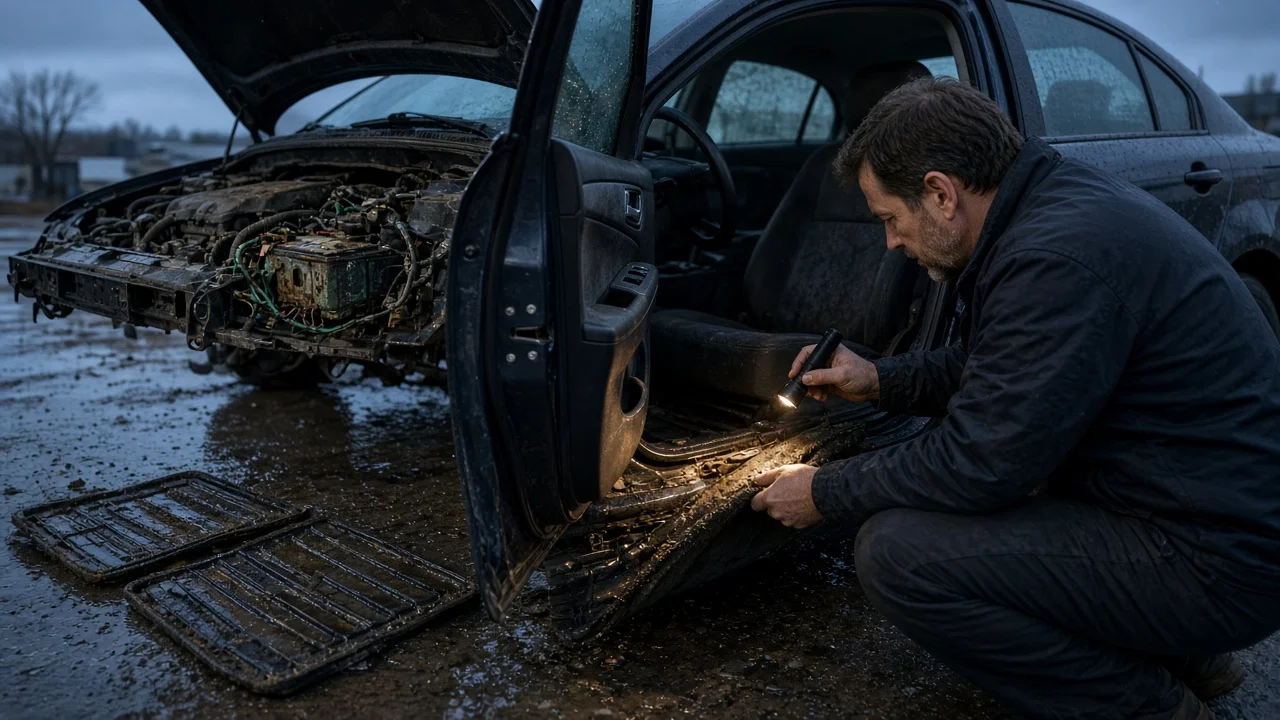
Smell: a persistent musty, mildew or damp odor, especially after the car has been closed up in warm weather. A very strong air freshener or fresh shampoo scent can be an attempt to mask it. Carpet: feel for dampness, look for stains, water lines or stiffness, and check whether the carpet looks newer than the rest of an older interior or fits poorly. Under the carpet and mats: lift a corner where possible and look for silt, sand, mud or rust on the floor pan. Under the seats: inspect seat rails, mounting bolts and springs for rust or fine debris. Seat belts: pull each belt all the way out and look for water stains, grit or mildew near the end of the webbing that normally stays rolled up. Upholstery: look for mismatched or replaced seat covers, discoloration or tide marks on fabric and door panels. Under the dashboard: shine a flashlight on unpainted metal brackets, screws and wiring for rust or corrosion that would be unusual for the car's age. Interior lights and gauges: check for moisture or fogging inside the instrument cluster and dome lights.
Step 3: Inspect the trunk, exterior and engine bay
Trunk and spare tire well: remove the floor cover and spare if possible; standing water, mud, rust or a waterline here is a strong warning sign. Headlights and taillights: look for condensation, a fogged interior or a visible waterline inside the lens. Engine bay: check for dried mud or debris in crevices, around the radiator and in the air filter housing, and look for a line of residue on components. Electrical connectors and wiring: look for green or white corrosion on terminals, brittle or discolored wiring and connectors that appear to have been replaced in bulk. Underside: if you can safely look underneath, check for heavy rust on brake lines, fasteners and the exhaust that seems out of proportion to the car's age and region. Fluids: milky or cloudy engine oil or transmission fluid can indicate water contamination, though it can also have other causes, so it calls for further diagnosis rather than a conclusion.
Step 4: Test the electrical systems
Flood damage often shows up as electrical trouble. With the engine running, operate every electrical feature you can find and watch for anything that is slow, intermittent or dead.
Watch for warning lights at start-up, including airbag, ABS and check-engine lights, and note any that stay on. Test power windows, locks, mirrors and seats in every position. Test the infotainment system, speakers, climate controls, blower fan and all lights, including turn signals and hazard lights. Check the horn, wipers and washers. Drive the car and note any hesitation, rough running, flickering displays or warning messages that appear after the car warms up.
Step 5: Get an independent pre-purchase inspection
Have a mechanic you choose, not one recommended by the seller, inspect the vehicle on a lift. Tell them you are specifically concerned about flood damage. A shop can scan the control modules for stored fault codes, look inside areas you cannot easily reach, and check for corrosion in wiring harnesses and connectors. If a seller refuses to allow an independent inspection, treat that refusal as a reason to walk away.
Telling a flood car from a minor leak
Not every damp carpet means a flood. Water confined to one footwell, the area under a sunroof or the trunk alone may come from a clogged drain, a failed door or trunk seal, a leaking windshield or a heater core leak, which can leave a sweet smell and a film on the inside of the glass. The difference is the pattern. Flood water tends to leave evidence at a consistent height across the vehicle, along with silt in low and hidden areas, rust under the seats and dash, and electrical faults. A localized leak usually does not. A mechanic can confirm the source.
Deciding what to do
Walk away if the title carries a flood or salvage brand you were not told about, if the VIN does not match across documents, or if you find silt, waterlines or widespread corrosion. Pause and get a professional opinion if you find a single sign, such as a musty smell or replaced carpet, without other evidence. If you still want a branded or known flood-damaged car, understand that future reliability is hard to predict, resale value and insurance options may be limited, and repair records should be reviewed carefully. Get any representations about the car's history from the seller in writing.
Limits of this guide
No specific figures, repair costs or model-specific data were available for this article, so it does not estimate prices or failure rates. Where components such as control modules and wiring sit varies by make, model, year and powertrain, so the most vulnerable areas on a particular car may differ from the general locations described here. Title branding definitions, disclosure duties and buyer remedies depend on the state where the car is sold and titled; check with that state's motor vehicle agency or consumer protection office for the rules that apply to your purchase.