Water-Based Fire Extinguisher: What It Puts Out, What It Makes Worse, and Whether It Belongs in a Vehicle
A water-based fire extinguisher is rated for Class A fires: ordinary combustible materials such as wood, paper, cloth, rubber and many plastics. Plain water is unsafe on burning fuel, cooking grease, energized electrical equipment and combustible metals, and it can make those fires worse. Because a vehicle fire can involve fuel, wiring and plastics at the same time, a plain water extinguisher is not a good primary choice for a car, truck or RV. Some water-based variants, such as water mist and foam units, cover more fire classes. The label on the specific extinguisher is what tells you where it can be used.
What a water-based fire extinguisher is
Most people picture the classic pressurized water extinguisher when they hear the term. It is a tall metal cylinder, often stainless steel, filled with water and pressurized with air. It is sometimes called a "water can" or an air-pressurized water (APW) extinguisher. Squeezing the handle releases a solid stream of water through a hose and nozzle. These units are common in warehouses, schools and other places where the main fire risk is ordinary combustibles.
"Water-based" also covers several related types that use water as the main ingredient but behave differently:
Pressurized water (APW): a plain water stream for Class A fires only. Water mist: deionized water discharged as a fine spray. Some models are rated for Class A and Class C fires, because the mist does not form a continuous conductive stream and the water has low conductivity. Check the label of the individual unit. Foam (for example AFFF or similar film-forming foams): water mixed with a foaming agent. These are typically rated for Class A and Class B fires, because the foam blankets the surface of a burning liquid. Wet chemical: a water-based solution designed for Class K fires involving cooking oils and fats in commercial kitchens. Loaded-stream or antifreeze water: water with additives that lower the freezing point or improve wetting. The rating depends on the product.
How water extinguishes fire
Fire needs heat, fuel and oxygen. Water works mainly by removing heat. It absorbs a large amount of energy as it warms up and turns to steam, which cools the burning combustible material below the temperature at which it keeps giving off flammable vapors. Water also soaks into porous materials like wood, fabric and upholstery foam, which helps prevent deep-seated embers from reigniting. The steam produced can briefly displace some oxygen near the fire, but cooling is the dominant effect.
Cooling is why water is effective on solid fuels. It is also why water fails on fires where the fuel floats, reacts with water, or conducts electricity.
Which class of fire water puts out
US extinguishers are labeled by fire class. A plain water extinguisher carries an A rating, usually shown as a number followed by the letter A. The number indicates relative firefighting capacity compared with other Class A units. Pictogram labels typically show the trash-can-and-woodpile symbol for Class A. The symbols for the other classes are crossed out.
Fire class | Typical fuel | Plain water? Class A | Wood, paper, cloth, rubber, many plastics, upholstery | Yes, this is what water is designed for; Class B | Gasoline, diesel, oil, solvents, flammable gases | No, it can spread burning liquid; Class C | Energized electrical equipment and wiring | No, it creates a shock hazard (some water mist units are C-rated); Class D | Combustible metals such as magnesium or sodium | No, it can react violently; Class K | Cooking oils and fats | No, it can cause a violent flare-up (wet chemical units are designed for this)
What fires water makes worse
Using plain water on the wrong fire can turn a small incident into a dangerous one. The main hazards are:
Flammable liquids such as gasoline and oil: most fuels are lighter than water and do not mix with it. A water stream can float the burning liquid and carry it across the ground or under a vehicle, which enlarges the fire. Cooking grease and hot oil: water sinks below the hot oil, flashes into steam and throws burning oil upward and outward. Energized electrical equipment: an ordinary water stream conducts electricity back toward the person holding the nozzle. Electrical isolation (cutting power) has to come first. Even then, a de-energized electrical fire is often better handled with a C-rated agent. Combustible metals: burning metals such as magnesium can react with water and intensify, sometimes explosively.
Why plain water is a poor fit for vehicle fires
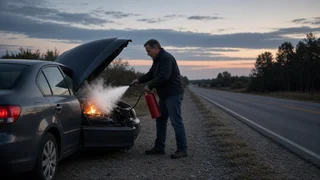
Vehicle fires rarely involve only one class of fuel. The ignition source might be a fuel leak onto a hot exhaust component, an electrical short, an overheated catalytic converter, or a failed battery. Once a fire starts, it can involve gasoline or diesel (Class B), live 12-volt or high-voltage wiring (Class C), and interior plastics, carpet and seat foam (Class A) at the same time. A plain water extinguisher handles only the last of these and creates hazards with the first two.
There are practical problems too. Pressurized water extinguishers are large and heavy for the amount of protection they give. Plain water can freeze inside a parked vehicle in cold climates, which can damage the unit or leave it unusable. For these reasons, vehicle extinguishers are commonly multipurpose dry chemical units rated for A, B and C fires, or clean-agent units. Some owners also carry a compact foam or water mist extinguisher whose label shows ratings that match vehicle risks.
Electric and hybrid vehicles
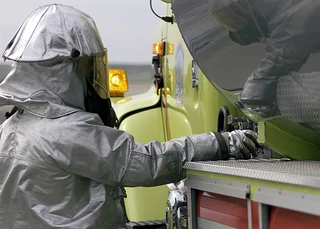
High-voltage lithium-ion battery packs add another complication. A battery in thermal runaway can keep generating its own heat and flammable gases, and it may reignite after the flames appear to be out. Firefighters commonly fight these fires with sustained, very large volumes of water applied by trained crews with proper equipment. That is a different task from discharging a small handheld extinguisher. A portable unit of any type should not be expected to stop a high-voltage battery fire. Evacuation and calling emergency services are the priority.
What to do if your vehicle catches fire
Any extinguisher is only for a small fire, and only when you have a clear escape path. Safe evacuation comes before anything else.
Signal, pull over to a safe spot away from buildings, other vehicles and dry vegetation, and stop. Turn off the ignition if you can do so immediately. This begins electrical isolation and stops the fuel pump on many vehicles. Get everyone out and move well away, upwind if possible. Do not go back for belongings. Call 911 and give your location and the type of vehicle, including whether it is electric or hybrid. Do not open the hood or trunk to reach a fire inside. The rush of air can make it flare. Use an extinguisher only if the fire is small and you are not trapped. Use one rated for the fuel involved, aim at the base of the flames, and back away if it is not working.
Choosing the right extinguisher
Read the fire extinguisher rating on the label before buying or storing one, and match it to the place it will be used. A plain water-based fire extinguisher is a sound choice for areas where the realistic risk is ordinary combustibles, such as a workshop with wood and paper and no fuel or live equipment nearby. For a vehicle, garage or anywhere fuel and electricity are present, choose a unit whose label covers Classes B and C as well as A. Also check that the unit is approved for vehicle mounting if it will ride in a car or truck.