Vehicles for Extreme Off-Road Terrain: What to Look For Before You Buy
The short answer
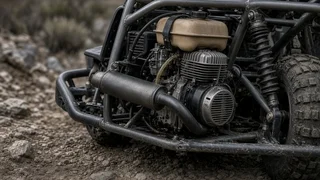
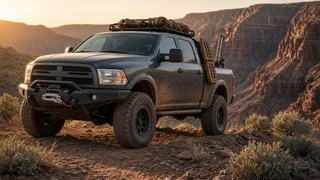
For extreme off-road terrain, the strongest starting point is usually a body-on-frame four-wheel-drive SUV or pickup in an off-road-focused trim. It should have a two-speed transfer case with a low range, at least one locking differential, generous ground clearance and approach and departure angles, factory underbody protection, and tires suited to the terrain. Purpose-built side-by-sides (UTVs) can outperform road vehicles on trails, but they are generally not street-legal without state-specific equipment and registration, so they suit buyers who will trailer to the trailhead.
Two conditions change this answer most. The first is the kind of terrain: rock crawling, deep mud, sand, and snow reward different features. The second is how much the vehicle will be driven on pavement. The traits that help most off-road, such as aggressive tires, solid axles, and lifted suspension, usually cost ride comfort, handling, braking distance, and fuel economy on the road.
This guide does not include verified specifications, prices, or test results for specific models. Equipment and capability figures vary by model year, trim, market, and powertrain. Confirm every figure for the exact vehicle using the manufacturer's specifications or the window sticker.
Match the vehicle to the terrain
"Extreme off-road" covers very different conditions. Decide which ones you will actually face before you compare vehicles.
Terrain | What matters most | Why; Rocks and ledges | Low-range gearing, locking differentials, suspension articulation, underbody protection, short overhangs | Slow, controlled crawling keeps wheels in contact with uneven ground and protects the underside from impacts; Deep mud | Tire tread that clears mud, ground clearance, locking differentials, recovery points | Traction depends on tires that shed mud, and getting stuck is likely, so recovery must be possible; Sand and dunes | Flotation (wide tires run at lower pressure), steady power, cooling capacity | Momentum and a large tire footprint keep the vehicle on top of soft sand instead of digging in; Snow and ice | Tires rated for winter conditions, ground clearance, controlled traction delivery | Grip is limited, so tires matter more than raw power; Water crossings | Rated fording depth, a high air intake, sealed electrical components, differential breather routing | Water entering the engine or drivetrain can cause severe damage
Drivetrain: 4WD with low range versus AWD
All-wheel drive (AWD) sends power to all four wheels automatically and works well on slippery roads and mild trails. Most AWD systems lack a low-range gear, however, and are not built for sustained crawling or heavy recovery situations.
A traditional four-wheel-drive (4WD) system with a two-speed transfer case adds a low-range gear set. Low range multiplies torque and lets the vehicle creep over obstacles at walking pace without slipping the clutch or overheating the transmission. Manufacturers sometimes express this as a crawl ratio, the overall gear reduction in the lowest gear. A higher number means slower, more controlled crawling. Compare published crawl ratios only between vehicles whose figures you have confirmed for the same transmission and axle-ratio configuration.
Traction aids: lockers and electronic systems
A standard open differential sends power to the wheel with the least resistance. When one wheel lifts off the ground or sits on mud or ice, the vehicle can stop moving. A locking differential, or locker, forces both wheels on an axle to turn together, so the wheel with grip keeps pulling. Rear lockers are common on off-road trims. Front lockers are less common and add capability on rocks and steep climbs.
Many vehicles use brake-based traction control or terrain modes that imitate some of a locker's effect by braking a spinning wheel. These systems help, but on extreme terrain they are generally less decisive than mechanical lockers. Check exactly which lockers, terrain modes, and hill-descent features come on the trim you are considering. These often differ between trims of the same model and between model years.
Clearance and geometry
Ground clearance: the distance from the lowest point of the underbody to the ground. Find out which component is the lowest point, because a low differential or exhaust can matter more than the headline number. Approach angle: the steepest slope the front can climb before the bumper hits. Departure angle: the same measure at the rear, which affects coming off ledges and climbing out of ditches. Breakover angle: how sharp a crest the vehicle can cross without grounding its middle. Shorter wheelbases usually do better here. Wheelbase trade-off: a short wheelbase turns tighter and clears crests more easily, while a longer wheelbase is generally more stable on steep climbs and at highway speed.
Suspension and articulation
Articulation is how far the wheels can move up and down independently while staying in contact with uneven ground. Solid axles are widely used in rock crawling because they are durable and articulate well, though they generally ride and handle less precisely on pavement. Independent suspension usually gives a better on-road ride and better high-speed control over rough desert terrain. Some off-road trims add a disconnecting front sway bar, which increases articulation at low speed. Check whether the trim you want has one.
Tires, protection, and recovery
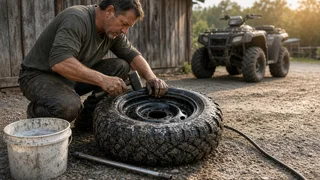
Tires often matter more than any other single feature. All-terrain tires balance on-road manners with trail grip. Mud-terrain tires grip better in mud and rock but are usually noisier and wear differently on pavement. Look for a light-truck construction with reinforced sidewalls, and confirm the load rating suits the vehicle. A full-size spare matters on remote trails.
Factory skid plates protect the engine, transmission, transfer case, and fuel tank. Rock rails protect the sills. Front and rear recovery points rated for recovery loads are essential, because tie-down loops are not the same thing. Also check cooling capacity if you plan slow climbs in heat or towing, and confirm the rated fording depth before attempting water crossings.
Ownership trade-offs to weigh
On-road compromise: off-road equipment usually brings more noise, slower steering response, longer braking distances, and higher fuel use. Aftermarket support: popular off-road platforms have wide parts availability for lifts, bumpers, and armor, which makes them easier to repair and upgrade. Warranty: modifications can affect warranty coverage for related components. Ask the manufacturer or dealer before modifying a new vehicle. Legal limits: rules on lift height, tire coverage, lighting, and UTV street use vary by state. Check your state's rules before buying or modifying. Insurance: tell your insurer about modifications, since undisclosed changes can complicate claims.
Checks before buying, especially used
Confirm the exact model year, trim, powertrain, axle ratio, and factory off-road equipment using the VIN, window sticker, or build sheet. Inspect the frame, crossmembers, and body mounts for rust, cracks, bends, or weld repairs. Look underneath for dents, scrapes, or crushed skid plates, differential covers, and fuel tank shields. Test engagement of 4WD high, 4WD low, and each locker, and confirm the dashboard indicators respond. Check CV joints, boots, ball joints, and steering components for wear or leaks, particularly on lifted vehicles. Ask for receipts for any modifications, and judge whether lift kits and re-gearing were done professionally and matched to the tire size. Look for signs of water entry, such as silt or corrosion in the cabin or electrical connectors, or milky fluid in the differentials. Review the service records for fluid changes in the transfer case and differentials. Have an independent mechanic familiar with off-road vehicles do a pre-purchase inspection.
Next step
Write down the terrain you expect to drive most and how many miles you will cover on pavement. Then shortlist body-on-frame 4WD SUVs or pickups whose off-road trims include low range, the lockers you need, and factory protection, and confirm each feature for the specific model year and trim. If you plan to trailer to trails and want maximum trail capability, consider a side-by-side, but check your state's registration and street-use rules first.