Gas Off-Road Go-Karts: What to Check Before You Buy
A gas off-road go-kart is a good fit if you want a simple, relatively affordable machine for trails, fields and backyard tracks, and you have private land or a permitted riding area to use it on. It is a poor fit if you need street-legal transport, regularly face deep mud, rocks or steep climbs, or are buying for a rider who will outgrow a small frame quickly. In those cases a youth ATV, side-by-side or a larger kart class may serve better. The right choice depends less on the brand than on matching the engine, drivetrain, suspension, tires and safety equipment to who will drive it and where.
Start With the Rider and the Terrain
Two questions narrow the field faster than any specification sheet: who will drive the kart, and what ground it will cover. Off-road gas-powered go-karts are sold in youth, teen and adult sizes, and manufacturers typically state a recommended minimum age, a maximum rider weight and sometimes a height range. Treat these as limits, not suggestions. An undersized rider may not reach the pedals or control the steering properly, and an oversized one can overload the frame and suspension.
Terrain matters just as much. Mowed grass and packed dirt paths ask very little of a kart. Loose gravel, sand, ruts, roots, mud and hills demand more power, better traction, longer suspension travel and more ground clearance. Be honest about the worst conditions you expect, because a kart that struggles there will be frustrating no matter how well it handles easy ground.
Engine: Displacement, Power and Speed Control
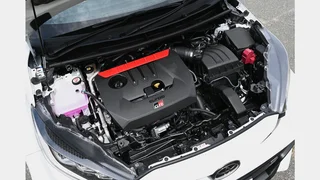
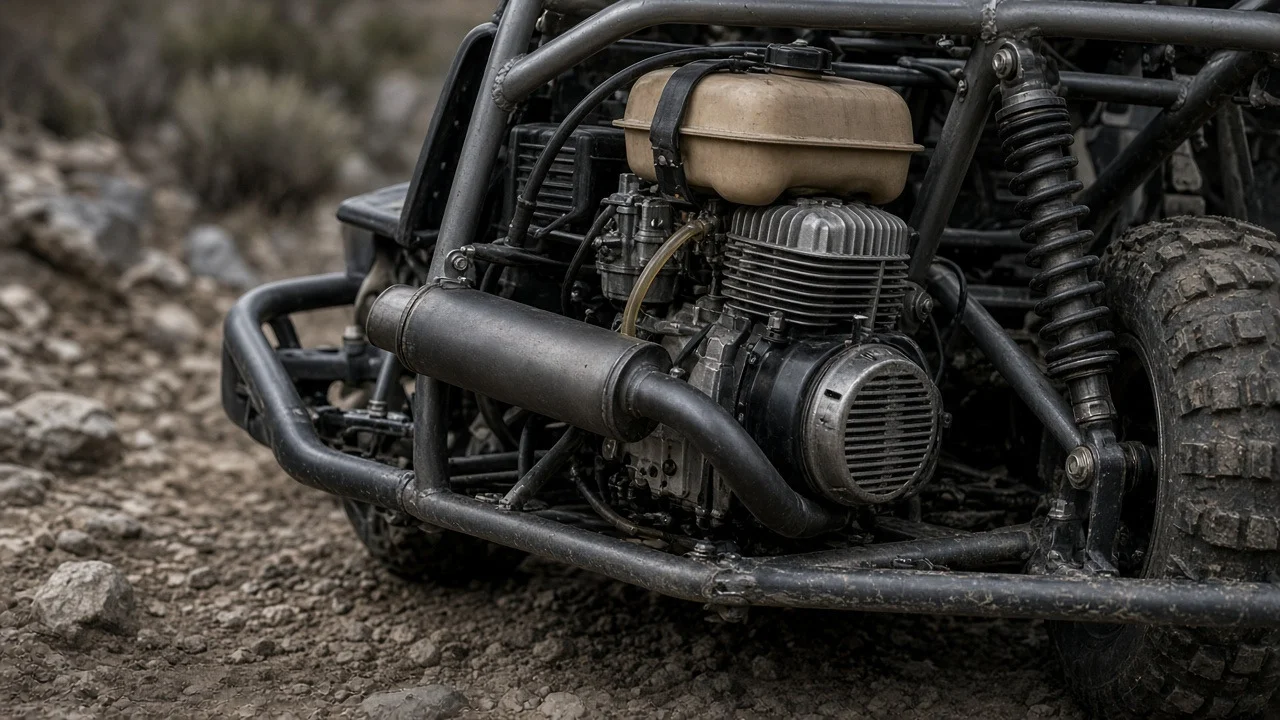
Most gas off-road go-karts use a single-cylinder, air-cooled four-stroke engine. Size is usually stated as displacement in cubic centimeters (cc). Larger displacement generally means more torque for climbing and pulling through soft ground, but also more weight, more speed potential and more fuel use. Compare engines within the same kart category rather than assuming a higher number is always better, especially for younger drivers.
What to check on the engine: • Displacement and the stated power output, if listed, for the exact model year and trim you are considering; • Starting method: recoil (pull) start, electric start, or both; • Speed governor or adjustable throttle limiter, which is useful for new or young drivers; • Remote or parental kill switch, available on many youth models; • Spark arrestor, often required for riding on public land in the US; • Fuel tank location and how easy it is to refuel and check oil
Published top speeds are typically measured under favorable conditions with a lighter rider. Expect lower real-world speeds on rough ground, uphill or with a heavier driver, and do not choose a kart on top speed alone.
Drive Configuration and Transmission
Drive configuration describes which wheels receive power and how. The large majority of off-road karts are rear-wheel drive, with the engine sending power to the rear axle through a chain. Four-wheel drive is rare in this category and is more typical of side-by-sides. That limitation is one of the main reasons karts are less capable than UTVs in mud and on steep, loose climbs.
Many karts use a solid (live) rear axle, meaning both rear wheels turn at the same speed. This is simple and durable and helps both wheels push in loose dirt, but it can make tight turns on firm ground feel draggy and wear tires faster. Some higher-end models use a differential, which lets the rear wheels turn at different speeds for smoother cornering, though an open differential can lose traction when one wheel spins freely.
Transmissions are usually automatic. Smaller karts often use a centrifugal clutch, while many larger ones use a continuously variable transmission (CVT) or torque converter, which keeps the engine in a stronger part of its power band and helps with hills. Check whether the kart has a reverse gear. On anything larger than a small youth model, reverse makes it far easier to back out of tight spots or a stuck position.
Suspension and Ground Clearance
Ground clearance is the distance from the lowest point of the chassis to the ground. It decides whether the kart clears rocks, logs and ruts or gets hung up on them. Look at what actually sits lowest, such as the frame rails, engine mount, skid plate or rear axle, not only the advertised figure.
Suspension design affects comfort, control and traction over bumps. Entry-level karts may have limited or no rear suspension, which is acceptable on smooth ground but harsh on rough trails. Independent front suspension with coil-over shocks is common on trail-oriented models, and some include rear shocks or a swing-arm setup. Adjustable shocks let you tune for rider weight. More suspension travel generally keeps tires in contact with uneven ground longer, which improves traction and reduces the jolts transmitted to the driver.
Tires and Traction
Traction is the grip between tires and terrain, and on a rear-wheel-drive kart it depends heavily on tire choice. Off-road karts use low-pressure knobby tires. Deeper, more widely spaced lugs bite into mud and loose soil and shed debris, while shallower, closer tread suits hardpack and grass and causes less lawn damage.
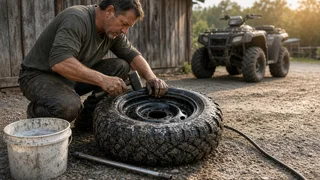
Tire specification is usually written as overall height by width, followed by rim diameter, all in inches, for example a format like 19x7-8. Larger diameter rolls over obstacles more easily and adds a little ground clearance. Wider tires spread weight over soft ground. Before buying, confirm that replacement tires in that size are easy to find and that the rims are a common size, since unusual sizes can make future replacement harder.
Terrain | Priorities | Watch out for; Grass and packed dirt | Comfortable seating, moderate tread, speed limiter for beginners | Aggressive tread can tear up lawns; Gravel and dry trails | Front and rear suspension, good brakes, durable tires | Solid axle can push wide in tight turns; Sand | Wider tires, adequate power, lower tire pressure within the maker's range | Small engines bog down easily; Mud and wet ground | Deep-lug tires, higher clearance, reverse gear | Rear-wheel drive limits recovery when stuck; Hills and rough terrain | Strong engine torque, CVT or torque converter, long suspension travel, rollover protection | Steep side slopes increase rollover risk
Brakes, Steering and Chassis
Check what type of brakes the kart has and where they act. Many karts use a single rear brake, either mechanical or hydraulic disc, while larger models may add front brakes. Hydraulic discs generally give more consistent stopping power and need less adjustment than mechanical or band brakes. A parking brake is useful on slopes.
For the chassis, look at the frame tubing, weld quality, protection for the engine and chain, and whether the seat and pedals adjust. Adjustable seating extends the time a growing rider can use the same kart. Rack-and-pinion steering usually feels more precise than simpler linkage designs.
Safety Equipment to Expect
• Roll cage or rollover protection structure that extends above the driver's helmet; • Seat belt or multi-point harness, ideally a shoulder harness rather than a lap belt alone; • Side nets or guards to keep arms inside the cage; • Chain guard and heat shielding around the exhaust; • Front and rear bumpers; • Headlights and taillights if you might ride near dusk; • Safety flag, often required at riding areas and helpful in dunes or tall grass; • Kill switch within easy reach of the driver
Riders should still wear a properly fitted helmet, eye protection, gloves, long sleeves and sturdy closed footwear. A roll cage protects the driver only when they are belted in and keep their limbs inside it.
Recovery Points and Getting Unstuck
Recovery points are designated, reinforced places on a vehicle's frame where a tow strap or winch line can be attached safely. Few go-karts come with them, and most are light enough to push or lift out of trouble. If you plan to ride in mud or sand, look for solid bumper mounts or a frame section designed to take a pulling load, and avoid attaching straps to steering parts, suspension arms or the axle. A front or rear hitch point, where offered, can serve this purpose and also lets you tow a small utility trailer.
Where You Can Legally Ride
Off-road go-karts are generally not street legal in the US and are intended for private property or designated off-highway vehicle areas. Rules for public land, age limits, required equipment such as spark arrestors and flags, and any registration or permit requirements vary by state and by individual riding area. Check those rules before buying, especially if you do not have private land of your own, because they can determine which kart, if any, you can actually use where you plan to ride.
Ownership: Maintenance and Parts
A gas kart needs routine engine oil changes, air filter cleaning or replacement, chain cleaning, lubrication and tension adjustment, tire pressure checks and periodic inspection of brakes, steering joints and fasteners loosened by vibration. Dusty riding wears air filters quickly. Fuel left sitting for long periods can cause hard starting, so plan for proper storage.
Parts support is one of the most important and most overlooked buying factors. Before choosing a model, find out whether the seller or manufacturer has a US parts supply and service network, whether the engine is a widely used design with easily found filters, carburetor parts and spark plugs, and whether common wear items such as belts, chains, sprockets, brake pads and tires are standard sizes. Keep in mind that specifications and parts can change between model years and trims even when the name stays the same. Confirm compatibility against your exact kart rather than a similar-looking version.
Quick Pre-Purchase Checklist
• Rider's age, height and weight fall within the stated limits, with room to grow if needed; • Engine size and speed controls suit the driver's experience; • Drivetrain, including any differential, reverse gear and transmission type, fits your terrain; • Suspension travel and ground clearance match the roughest ground you expect; • Tire tread and size suit the surface, and replacements are easy to source; • Brakes, roll cage, harness and kill switch meet your safety expectations; • Local riding rules and required equipment are confirmed; • Parts, service and warranty support are available for the specific model year; • For a used kart: frame welds intact, no cracked mounts, engine starts and idles cleanly, brakes hold, chain and sprockets not badly worn, steering free of excessive play