Best Off-Road Go-Karts: Choosing the Right Type for How You Will Ride
The best off-road go-kart is the one that matches who will drive it, where it will be driven and how much supervision and maintenance the household can provide. This guide is a selection organized by use case, not an exhaustive inventory of every kart on the US market. Verified specifications, prices and independent test results for individual models were not available when it was prepared, so it does not rank named products. Instead, it identifies the kart types that belong on a shortlist, explains why each one matters and lists what to confirm on any specific model before buying.
What counts as an off-road go-kart
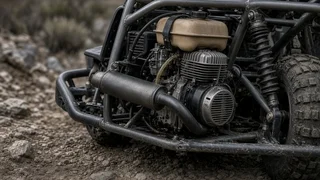
An off-road go-kart is a small, open-cockpit vehicle built for dirt, grass, gravel or trails rather than pavement. Compared with a pavement or racing kart, it typically has suspension, more ground clearance (the space between the lowest part of the frame and the ground), knobby or treaded tires and a tubular frame with rollover protection around the seat. Several related terms are often used loosely, and the differences affect what you are actually buying.
Racing kart or track kart: a low, unsuspended kart for smooth paved tracks. It is not suited to off-road use. Off-road go-kart: a recreational kart with suspension, a protective frame and off-road tires, sold in youth and adult sizes. Dune buggy or buggy-style kart: a term sellers often use for larger off-road karts with longer suspension travel and a more enclosed cage. The label is used inconsistently, so compare specifications rather than names. UTV or side-by-side: a larger utility or sport vehicle with side-by-side seating. Some two-seat karts look similar, but UTVs are generally a separate, larger vehicle class with different capability, cost and rules.
How this selection was put together
Each entry below is a category of off-road go-kart that serves a distinct buyer need. The entries are ordered by rider size and intended use, starting with karts for young drivers and moving to karts for adults, passengers and quieter electric operation. The order is a way to find your starting point, not a quality ranking, because comparable evidence for ranking individual models was not available.
The selection
1) Youth off-road go-karts
Youth karts are scaled for children and younger teens, with a smaller frame and seat and lower performance. They are relevant because putting a child in an adult-size kart is a common and avoidable safety mistake. Many youth models include a speed limiter or governor, a device that caps engine speed and can often be adjusted by an adult, and some offer a remote engine shut-off. When comparing models, check the manufacturer's stated age and rider weight range, whether the speed limit is adjustable, the type of seat restraint and whether the frame fully surrounds the driver.
2) Mid-size karts for teens and smaller adults
Mid-size karts bridge the gap between youth and full-size adult models. They suit families who want one kart that a teen can grow into, or smaller adults who do not need full-size performance. The key point to verify is fit: adjustable seats or pedals, the maximum rider weight and whether the manufacturer recommends the kart for the intended age. A kart that is too large or too fast for the driver undermines the reason for choosing this category.
3) Adult single-seat off-road karts
Full-size single-seat karts are built for adult drivers on private land or permitted trails. They are relevant for buyers who want more power, stronger suspension and a frame sized for an adult body. Most gasoline models in this class use a CVT, or continuously variable transmission, which works like an automatic and needs no manual shifting. Compare engine type and displacement, suspension design at each wheel, brake type, ground clearance and the strength of the roll cage, using the manufacturer's spec sheet for the exact model year.
4) Two-seat off-road go-karts
Two-seat karts place a passenger beside the driver, which makes them relevant for parents riding with a child or for couples who want shared rides. The extra seat adds weight and width, so confirm that both seats have their own restraints, that the stated load capacity covers both occupants and that the kart's width suits the trails or property where it will be used. Do not assume a two-seater is a substitute for a UTV; check what terrain and load the manufacturer rates it for.
5) Buggy-style karts for rough terrain
Larger buggy-style karts are designed for rougher ground such as ruts, sand or uneven trails. They are relevant for experienced adult drivers whose terrain would overwhelm a basic kart. What usually distinguishes them is longer suspension travel, meaning how far each wheel can move up and down to absorb bumps, along with higher clearance and a more substantial cage. Because the buggy label is a marketing term rather than a standard, judge these karts on stated suspension, clearance and frame details, and expect higher demands on maintenance and transport.
6) Electric off-road go-karts
Electric karts use a battery and motor instead of a gasoline engine. They are relevant for buyers who want quieter operation, which can matter with close neighbors, and fewer engine maintenance tasks such as oil changes and fuel storage. The trade-off is that ride time depends on battery capacity and recharging takes longer than refueling. Check the manufacturer's stated run time and charge time, battery type and replacement availability, and whether performance settings can be limited for younger drivers.
Quick comparison by use case
Kart type | Best suited to | Most important checks; Youth off-road kart | Children and younger teens with adult supervision | Age and weight rating, adjustable speed limiter, restraint, full frame; Mid-size kart | Teens and smaller adults | Adjustable fit, rider weight limit, recommended age; Adult single-seat kart | Adult drivers on private land or permitted trails | Engine and transmission, suspension, brakes, roll cage; Two-seat kart | Driver with passenger | Restraints for both seats, load capacity, overall width; Buggy-style kart | Experienced adults on rough terrain | Suspension travel, ground clearance, cage strength; Electric kart | Noise-sensitive locations, lower engine upkeep | Run time, charge time, battery replacement
Features to compare on any model
Frame and rollover protection: a fully welded tubular frame that surrounds the occupants. Restraints: a seat belt or harness for every seat. Suspension: independent suspension at each wheel generally handles uneven ground better than a rigid setup. Brakes: the brake type and whether it acts on one axle or all wheels. Speed control: an adjustable governor or limiter if less experienced drivers will use the kart. Lighting and flags: lights and a safety flag help visibility on shared trails. Parts and service: whether replacement parts and service are available in the US for that brand.
What to verify before buying
The manufacturer's age, height and weight recommendations for the exact model and model year. Warranty length, what it covers and whether a local dealer will perform warranty work. How much assembly is required on delivery and whether a dealer pre-delivery inspection is offered. State and local rules: off-road go-karts are generally not street-legal, and trail or park access rules vary, so confirm where you can legally ride. Required protective gear, starting with a properly fitted helmet for every rider. Storage, transport and the vehicle needed to tow or haul the kart.
Evidence gaps in this guide
No confirmed model-specific evidence, such as top speeds, engine sizes, prices, weight limits or independent test results, was available for this guide, which is why it names kart types rather than ranking specific products. Before committing to a purchase, compare current manufacturer specifications for the exact model year and trim side by side, and treat any listing that omits age ratings, restraint details or warranty terms as incomplete.