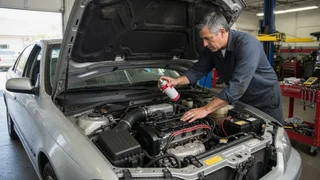
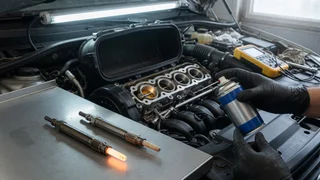
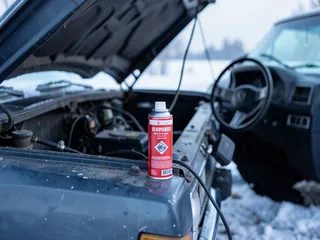
Use engine starting fluid for a no-start
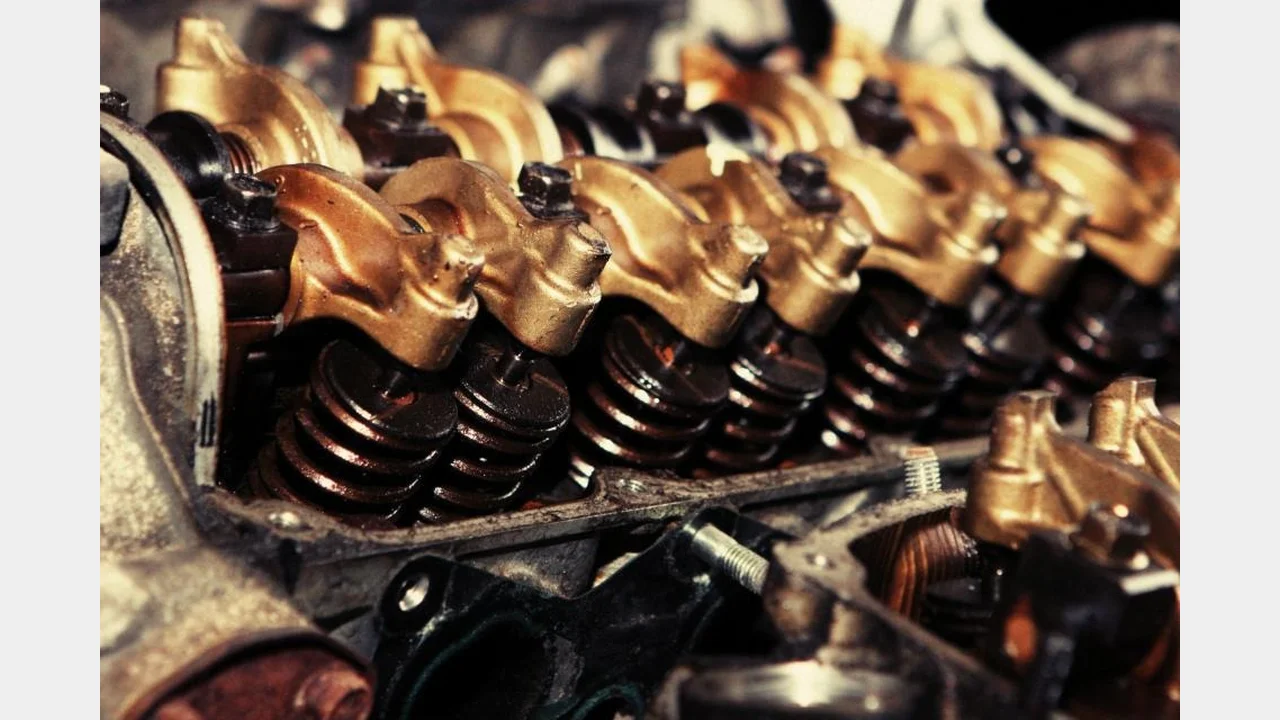
A no-start condition often narrows quickly to fuel, spark, or cranking speed. When a cold engine cranks normally but will not catch, engine start fluid can serve as a temporary diagnostic aid. The product introduces a highly volatile combustible mist into the intake so the engine can fire without normal fuel delivery. That simple result helps separate a fueling fault from an ignition or compression problem. However, the method has sharp limitations. On some engines, especially diesels with glow systems or intake heaters, the fluid can create a severe hazard. The following answer explains its proper role in a controlled automotive diagnosis.
Essential answer
Engine start fluid may help identify a no-start caused by absent fuel delivery, but it is not a universal cure. The product works by supplying an easily ignited vapor through the air intake while the starter motor spins the engine. If the engine then fires briefly, the starter circuit, battery state of charge, ignition switch, and basic cranking speed are generally proving themselves. The short run also suggests the ignition event and mechanical compression are present. The result points toward a fuel delivery issue such as a pump, injector signal, or fuel pressure problem rather than a dead battery or failed starter.
Before using the product, confirm the cranking speed sounds normal. A slow crank usually indicates a low battery state of charge, high resistance in the starter circuit, or an engine oil condition that increases rotational drag. Those faults are not addressed by adding a combustible spray. Additionally, the ignition switch must be able to hold the key in the start position while a brief spray is introduced. Diagnostic checks should always prioritize basics first: battery voltage, terminal connections, and whether the fuel pump primes when the key is turned. The fluid is a narrow test, not a substitute for those observations.