Starting Fluid: What It Is, When to Use It, and the Risks
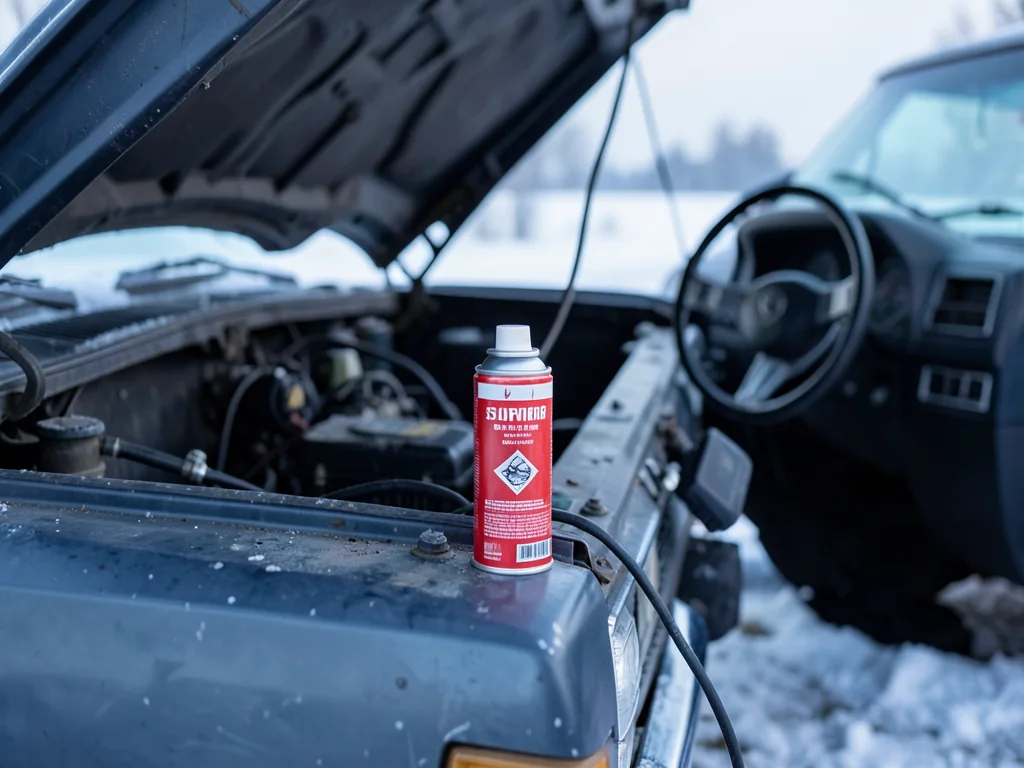
A can of starter fluid can coax a stubborn engine to life on a frozen morning, but it can also crack a piston or hide a fault that needs real diagnosis. Knowing what the spray actually does, which engines tolerate it, and where the dangers lie lets you use it sparingly and recognize when a hard start calls for proper testing instead.
What starting fluid is and how it makes a reluctant engine fire
Starting fluid is an aerosol of highly volatile compounds, typically ether based and carried by a propellant. Its key property is that it evaporates and ignites far more easily than gasoline or diesel, even in a cold cylinder where liquid fuel condenses on metal surfaces instead of forming a burnable mixture. Sprayed into the air intake, it arrives as vapor ready to burn, which lowers the temperature and energy needed to start combustion during the first few revolutions of cranking.
That quick ignition helps an engine with weak fuel delivery or sluggish cranking catch and begin producing its own heat and intake vacuum. Once it runs, the normal fuel system has to take over. Starter fluid is not a fuel additive, an intake cleaner, or a repair; it simply supplies a few combustion events. You will see it sold as ether spray or engine starter under many labels, and formulations differ slightly, so the directions on the specific can matter.
Situations where a brief use is reasonable
The most defensible uses involve older carbureted gasoline engines and small equipment such as mowers, generators, and snow throwers. After months of storage, fuel can evaporate from the carburetor bowl or drain back from the intake, leaving the engine to crank a long time before fresh fuel arrives. A brief shot can fire the engine while the bowl refills. Extreme cold creates a similar gap, because gasoline vaporizes poorly at low temperatures, and a healthy engine may need only one short burst.
Starting fluid can also serve as a rough diagnostic clue when an engine cranks but won't start. If it fires briefly on the spray and then stalls, the engine has spark and enough compression to run, which points toward a fuel delivery problem such as a dead pump, clogged filter, or empty carburetor. In every case the goal is one quick start followed by steady running on the engine's own fuel. Needing repeated doses means something else is wrong.
Why diesels with glow plugs and intake heaters are a special hazard
Many diesels rely on glow plugs or an intake grid heater to warm the combustion chamber or incoming air before and during cranking. Those surfaces can be hot enough to ignite ether the moment it enters, well before the piston reaches the point where combustion should occur. Instead of a controlled burn pushing the piston down, pressure rises while the piston is still traveling upward, loading the connecting rod, bearings, and crankshaft in exactly the wrong direction.
Diesel compression ratios are far higher than those of gasoline engines, so ether that survives toward the top of the stroke can detonate early and violently. There are reports of bent connecting rods, cracked pistons, and damaged intake components after aggressive use. Check the owner's manual or a vehicle-specific service source first, since some manufacturers prohibit starting fluid outright and others warn against it only while heaters are active. A diesel that won't start usually has a fuel, air, glow plug, or compression problem needing proper testing.
Risks on modern fuel-injected gasoline engines
A modern fuel-injected gasoline engine places a mass airflow sensor, an electronic throttle body, and often a plastic intake manifold between the air filter and the cylinders. Spraying solvent through that path can foul the sensor's delicate element, leave residue on the throttle, and harm seals or coatings. Ether also provides no meaningful lubrication and can wash oil from cylinder walls, so repeated use may contribute to scuffing of rings and bores, particularly after the engine has sat and the oil film is minimal.
Electronic fuel injection rarely fails to deliver fuel for cold-start reasons alone, because the engine computer enriches the mixture automatically. A no-start on a modern car more often traces to a failed pump, relay, sensor, weak battery, or immobilizer lockout, and a chemical start can mask those clues. Turbocharged and supercharged engines add another concern: long intake paths through intercoolers and piping give vapor places to pool, where it can ignite unexpectedly and damage ducts or couplers.
Safety limits and what to observe before reaching for the can
Treat the can as the extremely flammable aerosol it is. Keep it away from open flames, sparks, hot exhaust parts, and any live electrical work, and use it only in a well-ventilated space. Inhaling the vapor is harmful, and the spray can irritate skin and eyes, so gloves and eye protection are sensible. Never use it to try to free a seized or hydrolocked engine, and skip it entirely on an engine that has been backfiring, where extra vapor can turn a pop into an intake fire.
Before reaching for it, make a few basic observations. Does the starter crank at normal speed or drag? Is there fuel in the tank, and can you hear the pump prime when the key is switched on? Are warning lights or a security indicator showing, and is there any smell of raw fuel? If use is appropriate and the manufacturer allows it, a very short burst with the engine fully assembled and the air filter housing in place is the limit, never a prolonged spray.
When starting fluid is a symptom, not a solution
An engine that needs starting fluid every cold morning is signaling a fault. Common culprits include a weak fuel pump, injectors or check valves that let pressure leak away overnight, a failed cold-start enrichment component, and on diesels, worn glow plugs or a faulty heater circuit. The spray also cannot reveal low compression, a jumped timing belt, or a failed crank sensor. Those require a compression test, scan tool data, or a timing check performed by a qualified technician.
Stop after one or two attempts and arrange a proper evaluation. Each ether start adds risk, and diagnostic testing usually costs far less than rebuilding an engine damaged by early ignition. Keep simple notes for the shop: which mornings the problem appears, the outside temperature, how long the vehicle sat, how long it cranked, and whether it ran normally once started. That history helps a technician separate fuel pressure loss from electrical or mechanical faults and reach the real cause quickly.