Using Engine Starting Fluid for a No-Start: What It Can and Cannot Tell You
The short answer
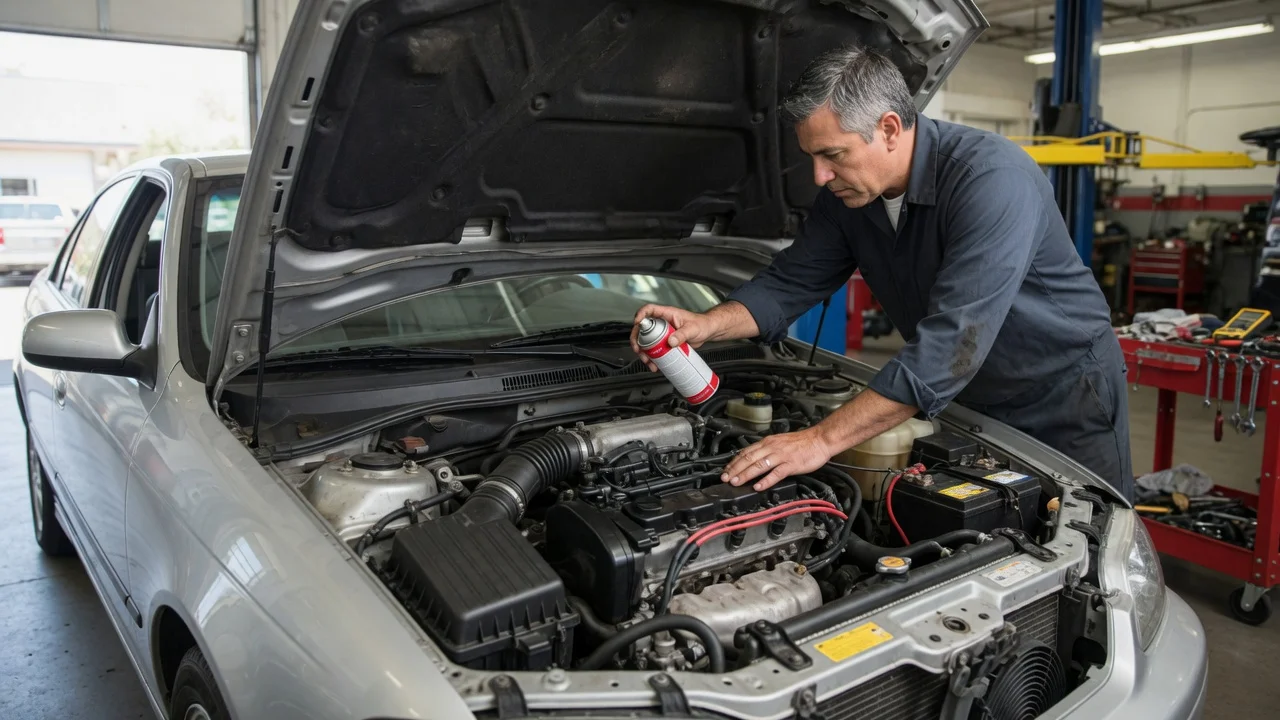
Starting fluid is an aerosol, typically based on highly volatile diethyl ether, that ignites far more easily than gasoline or diesel. Sprayed into an engine's air intake, it can make a cranking engine fire even when the fuel system is not delivering fuel. That makes it useful mainly as a diagnostic aid and an occasional cold-weather assist. It does not repair the cause of a no-start, and it is not appropriate for every engine.
The most important qualification is engine type. On many conventional spark-ignition gasoline engines it can be used sparingly. On diesels equipped with glow plugs or an intake grid heater, it can ignite early against the hot element and cause serious engine damage, so it should not be used unless the engine manufacturer specifically permits it. The owner's manual is the deciding reference for any specific model.
What the result tells you
Starting fluid substitutes for fuel only. How the engine responds narrows down the likely cause:
Engine fires or runs briefly, then dies: the engine has spark and compression, which points toward a fuel-delivery problem such as a failed fuel pump, a clogged filter, faulty injectors or a fuel-pressure fault. Engine shows no sign of firing at all: fuel is less likely to be the primary problem. Ignition (spark), compression, timing or an engine-management fault become more likely suspects. Engine starts and keeps running normally: the issue may be intermittent or related to cold-start fuelling, and still warrants diagnosis.
These are general diagnostic inferences, not a definitive diagnosis. Modern engines can refuse to start for reasons such as immobiliser faults or sensor failures, which starting fluid will not reveal.
General approach on a gasoline engine
Exact directions vary by product, so the label on the can takes priority. The commonly described method is:
Locate the air intake after the air filter, usually the intake duct or throttle body opening. Apply a short burst only; more is not better. Replace any removed parts so loose components are not left near the intake, then crank the engine. If the engine does not respond after a brief attempt, stop rather than repeatedly spraying and cranking.
When to avoid it or use extra caution
Diesels with glow plugs or intake grid heaters: risk of premature ignition and engine damage; follow manufacturer guidance. Two-stroke engines: ether can strip lubrication from the cylinder walls. Some products are formulated with added lubricant, but suitability depends on the product label. Repeated or heavy use: ether ignites aggressively and can cause harsh, uncontrolled combustion that stresses pistons, rings and other internal parts. Habitual reliance on it to start an engine is a sign that the underlying fault needs repair.
Safety basics
Starting fluid is extremely flammable, and a backfire through the intake is possible. Use it outdoors or in a well-ventilated area, keep it away from sparks, flames and hot surfaces, keep your face and hands clear of the intake while cranking, and avoid breathing the vapour. Having a suitable fire extinguisher nearby is a sensible precaution.
Gaps in this guidance
No product-specific data, spray quantities or model-specific manufacturer instructions were available for this guide. Whether starting fluid is acceptable for a particular vehicle, model year or powertrain should be confirmed in the owner's manual or with the manufacturer, and the product label should govern how much to use and how to apply it.