USAA RV Insurance: Eligibility, Coverage Questions and What to Check Before You Buy
The short answer
USAA is generally limited to members, which means current and former U.S. military members and certain eligible family members. If you are not eligible for membership, USAA is unlikely to be an option for your RV, and comparing other insurers is the practical next step. If you are eligible, the decision comes down to whether USAA can insure your specific RV type, in your state, with the coverage features your travel pattern needs, and at a price that compares well with specialist RV insurers.
No confirmed details were available for this guide on current USAA RV prices, discounts, coverage limits, state availability or which company underwrites the policy. Treat the points below as a checklist to verify directly with USAA rather than as a description of its current product.
Confirm eligibility first
Membership eligibility is the condition that most changes the answer. Before spending time on quotes, confirm whether you qualify through your own service or through a qualifying family relationship. Existing members should also check whether adding an RV policy affects any multi-policy arrangement they already have, such as auto or home coverage.
Ask who writes the policy
Specialty lines such as RV coverage are sometimes placed with a partner insurer rather than written by the brand you contacted. Ask whether the RV policy would be underwritten by USAA itself or by another company. This matters because the underwriting company handles claims, sets policy terms and may have different repair-shop and adjuster arrangements than you expect from your other USAA policies.
Match the policy to your RV type
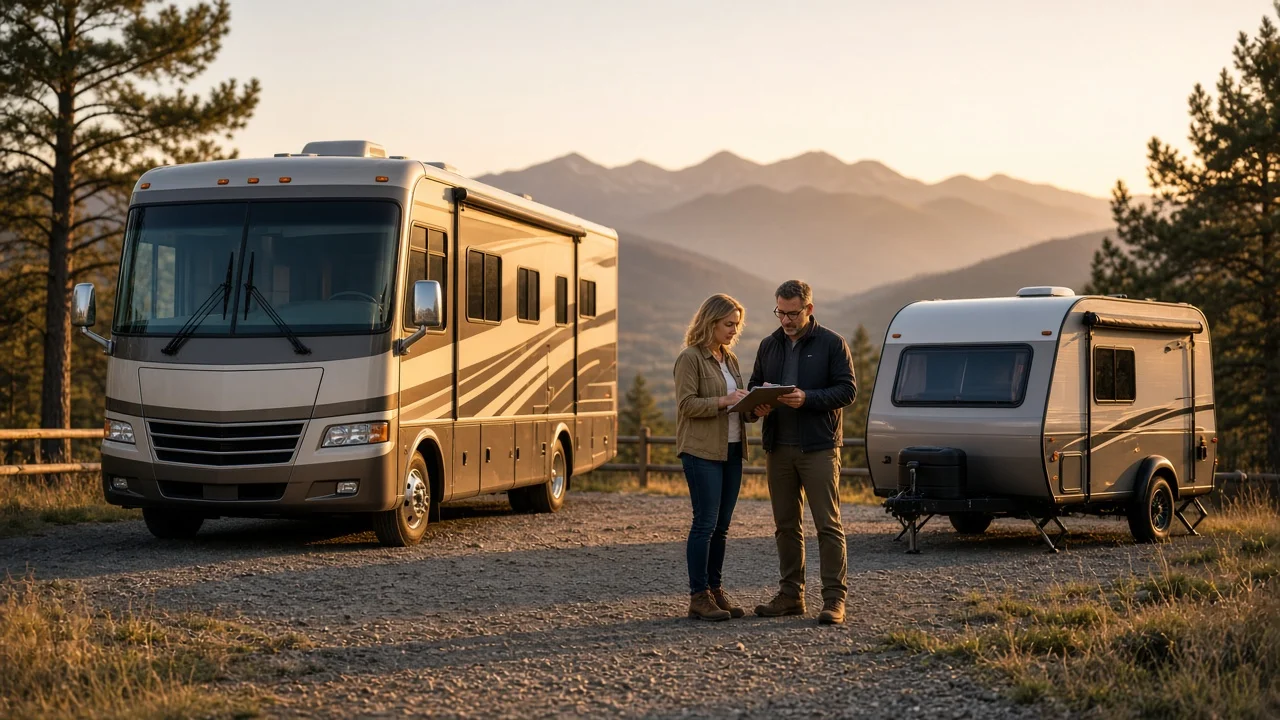
RV insurance needs differ by vehicle type, so state exactly what you own when requesting a quote. In general terms, motorized RVs are driven on public roads and typically need their own liability coverage to meet state requirements, while towable RVs often rely on the tow vehicle's policy for liability while being towed but may need separate coverage for damage to the trailer itself. Confirm how any quote treats your setup rather than assuming.
RV type | Common examples | Coverage point to confirm; Motorized | Class A, Class B and Class C motorhomes | Liability, collision and comprehensive on the RV itself, plus any state minimums; Towable | Travel trailers, fifth-wheels, pop-up campers | Whether liability extends from the tow vehicle policy and how physical damage to the trailer is covered; Other units | Truck campers, toy haulers | Whether the unit is accepted at all and how it is classified
Coverage questions worth asking
The options below are common across the RV insurance market. Ask whether each is available on a USAA policy for your RV and state, and get the answer in writing before you buy.
Liability limits, and whether they cover you when the RV is parked at a campsite as well as on the road; Collision and comprehensive coverage, with the deductible for each; How a total loss is valued: actual cash value (market value after depreciation) versus agreed value or replacement options; Coverage for personal belongings carried inside the RV, and any per-item or total limits; Full-time living coverage if the RV is your primary residence; Roadside assistance and towing suited to a large vehicle; Emergency expenses such as lodging and transport if a breakdown or covered loss strands you away from home; Coverage for attached accessories such as awnings, satellite dishes, solar panels or aftermarket equipment; Storage or seasonal options that reduce coverage while the RV is laid up; Uninsured and underinsured motorist coverage
Details to have ready for a quote
RV year, make, model and vehicle identification number; RV type and length; Purchase price and any loan or lease details, since lenders may require specific coverage; How you use it: occasional trips, extended travel or full-time living; Where it is stored when not in use; Driver history for anyone who will drive or tow it; Any modifications or added equipment
How to compare USAA with other options
Request quotes from USAA and at least one insurer that specializes in RVs, using the same coverage limits, deductibles and valuation method so the prices are comparable. A lower premium on a policy that pays only depreciated value after a total loss may leave you short, especially on a newer or financed RV. Read the claims process for each quote as well: who handles the claim, whether you can choose the repair facility, and how out-of-state breakdowns are handled.
Information gaps to close with USAA directly
This guide could not confirm current premiums, discounts, specific coverage limits, state-by-state availability or the underwriting company for USAA RV policies. Get those details from USAA or a licensed agent before deciding, and check them against your lender's requirements and your state's minimum insurance rules.