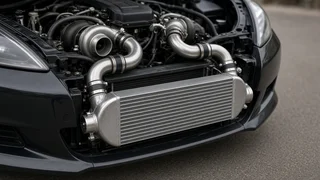
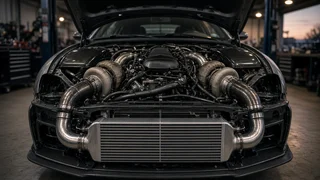
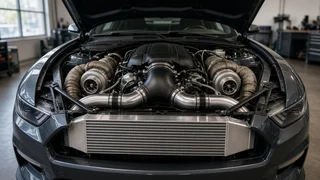
Twin turbo air-to-water intercooler
A twin turbo air-to-water intercooler reduces the heat created by compressing intake air before it reaches the engine. In a twin turbo setup, two compressors feed pressurized air through plumbing, and each compressor outlet raises charge-air temperature. The air-to-water, or a2w, core uses liquid coolant to pull that heat away. It works well where airflow is limited or where short plumbing is valued. This overview explains why a water-to-air charge cooler is different from a conventional air-to-air unit and what basic trade-offs shape the design.
Essential answer
The essential answer is that a twin turbo air-to-water intercooler is a charge-air cooler that uses liquid instead of outside air as the main heat sink for boosted intake air. Both turbochargers compress air, and compression adds heat that can reduce air density and encourage detonation. Circulating coolant through the intercooler core lowers the boosted air temperature. The goal is to preserve the increased oxygen density from boost pressure while removing enough heat to keep combustion stable.
In a typical installation, the air-to-water core sits between the compressor outlets and the throttle body. Compressed intake air passes through internal finned passages while coolant flows through separate passages in the core. A small heat exchanger, often mounted at the front of the vehicle, then sheds heat from the coolant to ambient air. This arrangement is sometimes called a water-to-air intercooler or a twin turbo a2w intercooler. It is a packaging choice as much as a thermal choice.