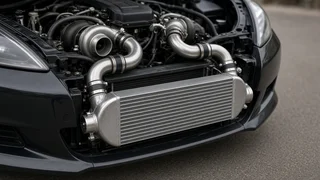
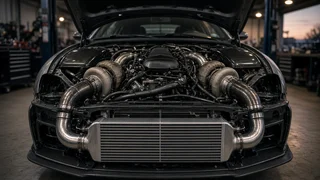
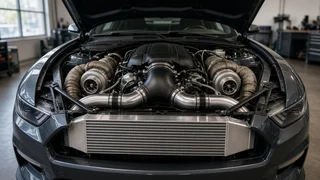
Intercooler for twin turbo
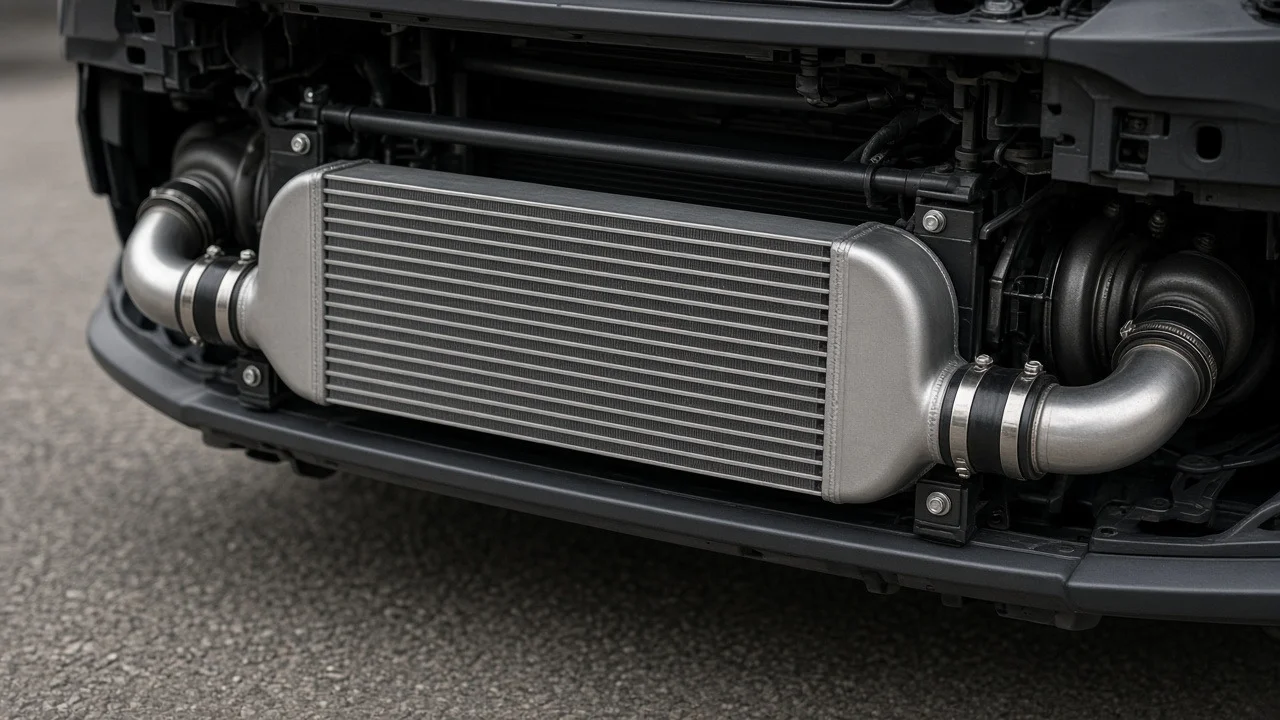
An intercooler for a twin turbo system works as a heat exchanger that lowers charge-air temperature after compression and before the air reaches the intake manifold. Twin turbocharging can raise compressor outlet temperatures substantially, and cooling the charge restores density while reducing the risk of detonation. In a twin turbo layout, the intercooler may be a shared air-to-air core, a dual-inlet unit, or separate coolers depending on packaging and airflow goals. This overview explains how the component fits the boost path, why pressure loss and hose connections matter, and what a twin turbo intercooler setup changes in real driving.
Essential answer
A twin turbo intercooler is a charge cooler placed between the compressor outlets and the intake manifold so the two turbochargers feed air through a heat exchanger before it enters the engine. The core uses ambient airflow to strip heat from the compressed charge, which improves air density and helps the engine make consistent power. Twin turbo plumbing can be arranged as a common intercooler with paired inlets, a front mount intercooler fed by merged piping, or dedicated cores for each turbo.
Selecting or diagnosing a twin turbo intercooler depends on the intended operating conditions and the existing charge piping. An air-to-air intercooler twin turbo layout relies on vehicle movement and airflow through the core, while a front mount arrangement may offer more direct ambient air than a top-mounted cooler. Pressure loss across the core and interruptions in boost hoses are important because twin turbo systems can produce higher airflow, and air-to air intercooler plumbing that does not match the compressor outlets can restrict response or create a weak point at a hose connection.