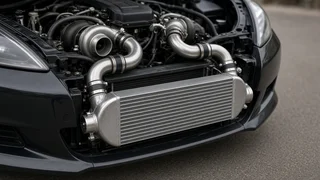
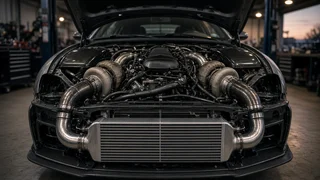
Mustang twin turbo intercooler
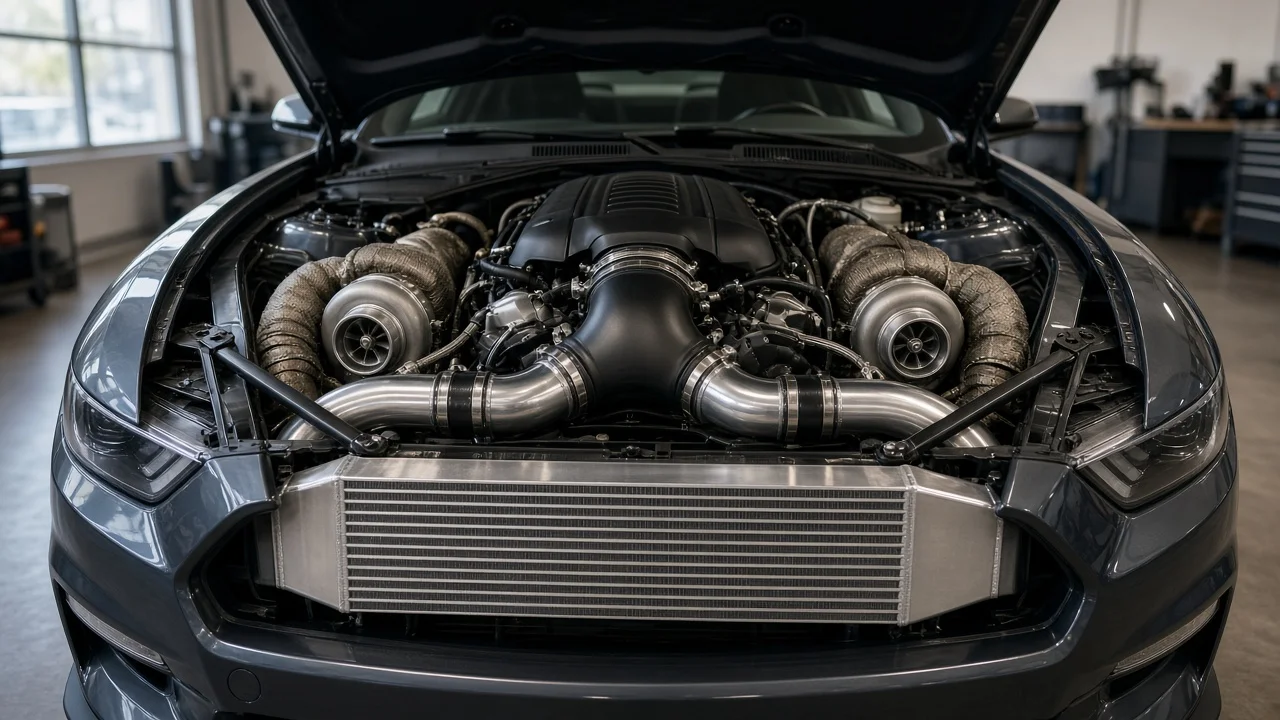
Choosing a Mustang twin turbo intercooler starts with matching the core to your forced induction setup, chassis packaging, and intended use. The intercooler sits between the compressor outlets and the throttle body, rejecting heat from compressed intake air before it reaches the cylinders. On turbocharged Mustang builds, charge air temperature directly affects timing, knock resistance, and repeatable power. A core that is too small becomes a restriction, while an oversized unit may add lag and complicate airflow through the front bumper. Factors such as model generation, body style, trim level, powertrain variant, and market specification can influence fitment, end tank routing, and available airflow. The right selection balances charge cooling, pressure drop, and how the car is actually driven.
The direct answer
The best Mustang twin turbo intercooler is usually the largest front-mount or air-to-water core that fits your specific model generation and body style without blocking radiator airflow, cutting required structure, or requiring piping that adds excessive volume. Fitment depends heavily on the powertrain variant and whether the car was originally a naturally aspirated, supercharged, or EcoBoost platform. A front-mount air-to-air intercooler is practical for street and roll-race use because it rejects heat steadily. An air-to-water system can package better in tight engine bays and works well for drag applications where ice water provides a short burst of low intake temperatures.
The immediate purchase decision should be based on the space ahead of the radiator support, the turbocharger compressor outlet locations, and the available piping path. For example, an S197 chassis accepts a different core width and depth than an S550, and a convertible may have bracing that changes clearance. Market specification also matters because some export models use different crash structures or bumper foam. Before choosing a specific intercooler, measure the available core area behind the grille and confirm that the end tanks can be clocked or ordered to match the compressor discharge orientation. A correctly matched core reduces intake air temperature without turning the charge pipes into a maze.
The intercooler should also suit the boost level and turbocharger pair. Twins mounted low on each side often route hot-side piping upward, while a single large turbo may use a different discharge path. The core's internal flow design influences both cooling and pressure drop. Bar-and-plate construction generally tolerates higher boost and road debris better than tube-and-fin, though both work when sized properly. Avoid selecting purely by advertised horsepower because a core that cools well on a dyno pull may heat-soak during sustained driving if ambient airflow is poor. The correct choice preserves throttle response and supports the tuning strategy.
For street-driven cars, give priority to a core that leaves room for the factory cooling module and does not require deleting the front crash bar without a proper replacement. An intercooler that covers the entire radiator can raise engine coolant temperature, especially in traffic or during summer highway pulls. Air-to-water intercoolers avoid some of that packaging trade-off but add a pump, heat exchanger, and coolant circuit that must be monitored. The direct answer, then, is not a single part number but a core configuration matched to your engine bay, turbo system, and cooling demands.