Transmission Repair in Plano: Choosing a Local Shop
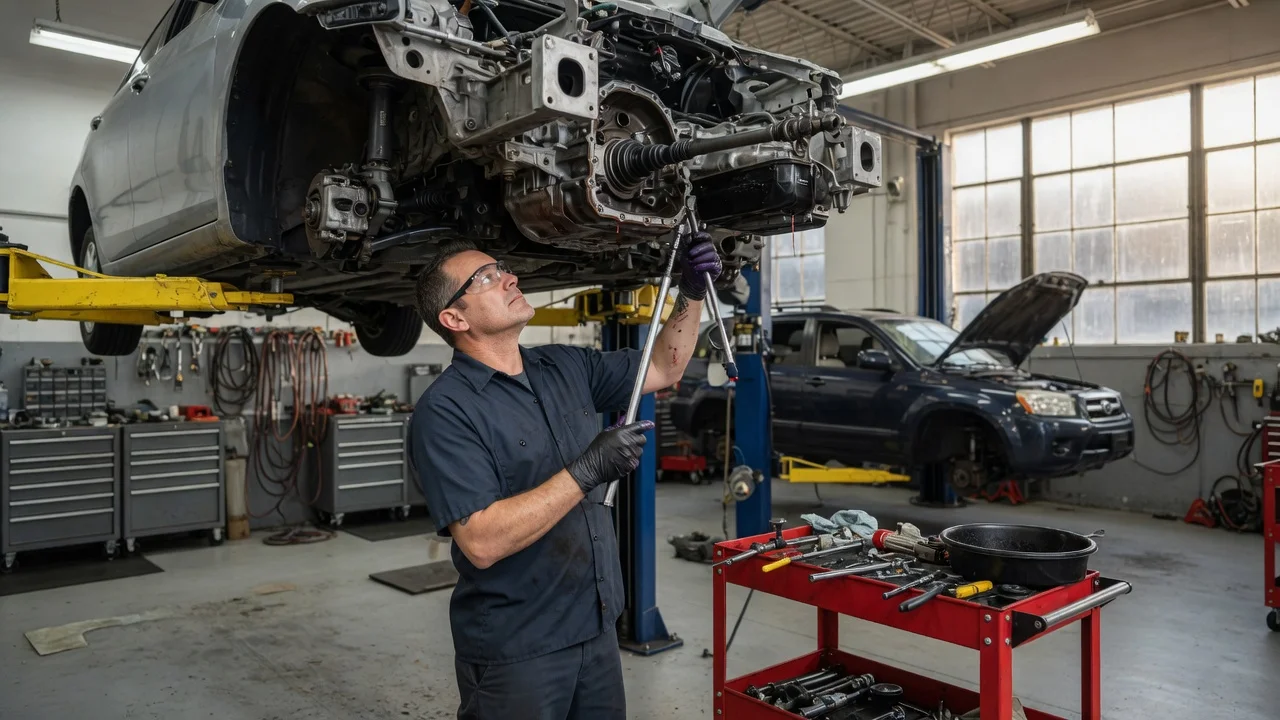
Choose the shop that can diagnose your unit before it quotes a rebuild
A local Plano shop is a sound next step when a transmission is slipping, delaying shifts, leaking, overheating, refusing a gear, or setting a related warning, and you want drop-off, a road test, and a written estimate. The shop that fits is one that identifies the exact transmission in your vehicle, separates fluid, electronic, and internal mechanical problems, and quotes a defined repair only after those checks. Two conditions change that advice: if a factory powertrain or extended warranty is still in force, start with a franchised dealer for that brand so coverage is not put at risk; if the unit is a hybrid e-CVT, dual-clutch, or another sealed design, you need a shop with the matching scan tools and procedures, even if a general garage is closer.
Match the shop to the transmission you actually have
Transmission work does not transfer across designs. A conventional automatic, a continuously variable transmission (CVT), a dual-clutch unit, a manual gearbox, and a hybrid e-CVT use different fluids, clutches, and control software. Ask the shop to tie the inspection to your model year, market, trim, engine, and drive type. Two-wheel-drive and all-wheel-drive variants, and U.S.-market versus other-market units, can change the parts list; treat those differences as unresolved until the shop documents them from the vehicle identification number (VIN) and build data. If the advisor cannot name the transmission family or the required fluid specification, keep looking.
What a useful inspection includes
A diagnostic trouble code is a clue about a circuit, sensor, or observed fault. It is not proof that the gearbox must be rebuilt or replaced. A competent inspection typically includes fluid level and condition, a leak check, a scan of the transmission and engine modules, a road test of shift quality, and, when the pan can be dropped, an inspection for clutch material or metal. Ask which of those steps they will perform, whether the diagnostic fee is credited toward the repair, and at what point they will stop driving the vehicle if burnt fluid, metal, or a no-drive condition makes further operation a risk.
Repair paths the shop should be able to explain
No current Plano-area prices, wait times, or shop names are included here, so this article cannot tell you what a rebuild should cost or which business to book. You are choosing a shop that can explain, for your vehicle, which path is actually on the table and what that quote includes.
Path When it is on the table What to confirm with the shop; Fluid and filter service Shifts are still correct and the concern is overdue or specified fluid work Correct fluid specification, filter and pan gasket, cooler inspection; Targeted component repair Diagnosis isolates a solenoid, sensor, leak, torque converter, or valve body The test that ruled out internal clutch or hard-part failure; Rebuild of the original unit Internal wear with a reusable case Clutches, hard parts, converter, valve body, fluid, and programming included; Remanufactured or new assembly Damaged case, or no in-house rebuild for that design Supplier, cooler flush, software, and installer warranty rules; Used or salvage assembly Lower parts cost is the main constraint Any known mileage, warranty length, and cooler flush
A quote that says only “rebuild” or “used trans” is incomplete. Confirm whether the torque converter, valve body, solenoids, cooler flush, new fluid, four-wheel-drive transfer-case work if applicable, programming or clutch adaptation, and a post-repair road test are in the price. Advertised package prices and completed invoices are not the same thing; without a dated local survey, treat any dollar figure you hear on the phone as unverified until it is itemized in writing for your VIN.
Questions that separate a suitable shop from a convenient one
Do you specialize in transmissions, or is this one bay in a general repair shop? Which scan tools and factory-level procedures do you use for this make and transmission family? Will I get a written diagnosis before you recommend a rebuild or replacement? Is the warranty in writing, for how long or how many miles, and does it cover parts and labor at your location? If a remanufactured unit is used, who supplies it and what does the warranty require of the installer, such as a cooler flush, a specific fluid, or programming? How do you handle a vehicle that will not move, including towing to your bay?
A shop that cannot answer those points, or that quotes a full rebuild from a phone description of a symptom, is a weaker choice than one that inspects first.
When to stop driving, and when a dealer is the better first stop
Park the vehicle if it will not engage a gear, the fluid is burnt or metallic, the transmission is overheating, or there is a loud mechanical noise under load. Further driving can turn a repairable unit into a case that must be replaced. For an intermittent slip or delayed engagement with fluid that still looks and smells normal, a short, gentle trip to the shop is often still reasonable; confirm that when you book.
Use a dealer first when a powertrain or extended warranty is in force, when a software update is a known fix for the shift complaint, or when the independent shop says it does not service that sealed dual-clutch or hybrid unit. An independent transmission specialist remains a strong option for many out-of-warranty conventional automatics and CVTs, provided the unit and the repair are documented.
What you still need to settle in person
This guide cannot rank Plano shops or assign a fair price. Bring the VIN, mileage, and a description of when the problem happens (cold start, fully warm, upshift, downshift, reverse, or under load) to more than one shop and compare written diagnostic plans. If you already have a scan report, take it along and treat it as a starting clue, not as proof that the gearbox must come out.