How to Choose a Transmission Repair Service Center
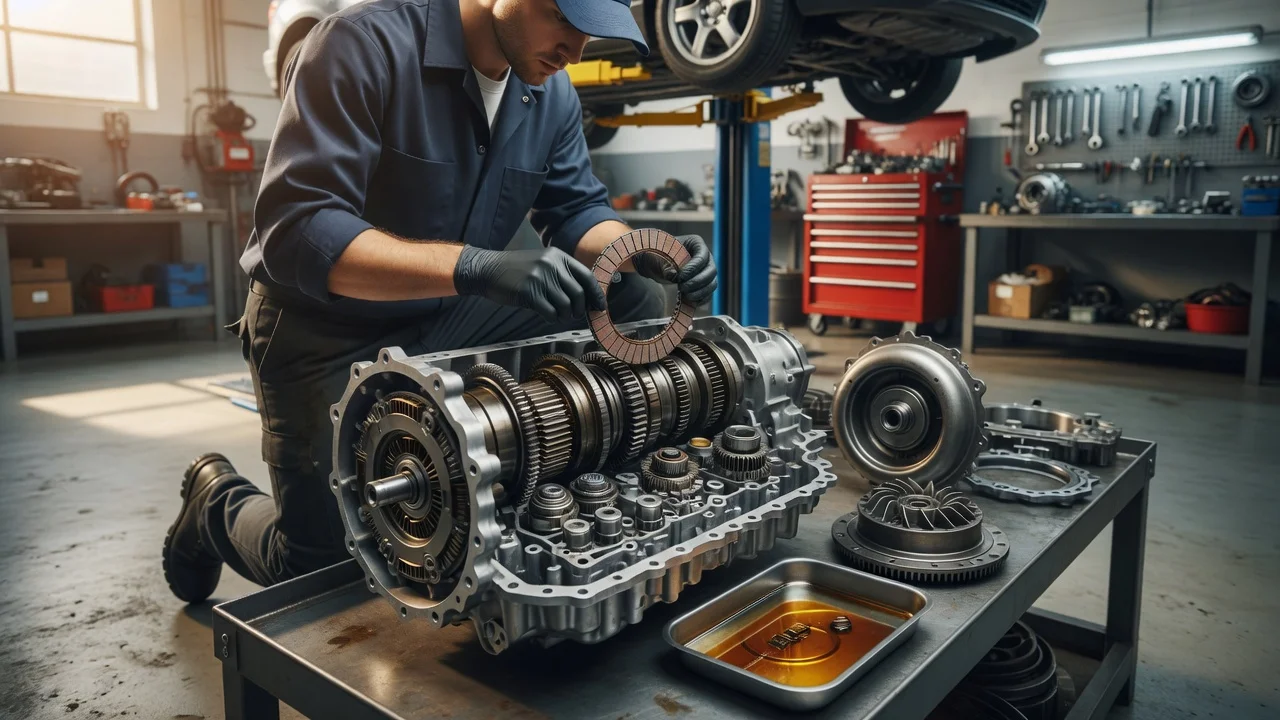
What the right shop actually is
A transmission repair service center is a shop that can diagnose, service, rebuild, or replace the gearbox that sends engine power to the wheels. Choosing well means matching that shop’s tools, transmission-specific experience, written estimates, and warranty to your vehicle’s make, model year, and transmission design, and to the job you actually need: fluid service, leak or electrical repair, a rebuild, or a replacement unit.
The essential filter is diagnosis before a rebuild or replacement is sold. A suitable center explains what it found, what it has not yet confirmed, what work it recommends, and what that work will cost, in writing, before it disassembles or swaps the unit. That answer changes if the vehicle is still under a factory or powertrain warranty, if the transmission is a continuously variable (CVT), dual-clutch, or hybrid-specific design that needs factory software, or if a related failure (cooler, mounts, electrical) is the real problem.
Shop types on the same decision criteria
Most drivers choose among a new-vehicle dealer, an independent transmission specialist, a general independent repair shop, and a franchise or chain. Compare them on diagnosis, experience with your transmission family, warranty, and how they handle estimates—not on a single advertised price. Comparable dollar figures, wait times, and quality scores were not supplied for this guide, so the comparison below is qualitative. Labor rates, parts prices, and turnaround vary by market, vehicle, and whether the job is a service, a repair, a rebuild, or a unit replacement.
Shop type Typical strengths Typical trade-offs Often a fit when; New-vehicle dealer Factory scan tools and software, technical service bulletins, original-equipment parts, warranty and recall work May prefer replacing a complete unit over rebuilding; diagnostic and labor rates are often higher The vehicle is under factory, certified, or extended powertrain coverage, or the unit needs dealer-only programming; Independent transmission specialist Focused rebuild and hard-parts experience, road testing, and a clearer rebuild-versus-replace discussion Quality and equipment vary widely from shop to shop; unrelated vehicle systems may be outside their scope Internal wear or damage is likely and you need a shop that inspects the unit rather than only swapping it; General independent repair shop Convenient for mixed work (leaks, mounts, cooling, electronics) and often a lower first diagnostic visit May subcontract internal transmission work; rebuild capability and transmission-specific software can be limited The issue may be fluid, leaks, mounts, or an electrical fault, and you want one shop to sort related systems first; Franchise or chain Documented process, multiple locations, and sometimes a warranty that transfers if you move or sell the vehicle Technician experience is uneven; some locations push complete replacement more readily than a targeted repair You want a standardized process and a transferable parts-and-labor warranty more than a custom rebuild
A specialist is not automatically better than a dealer, and a lower diagnostic fee is not automatically a better shop. Dealers and well-equipped independents can both be the right choice when the transmission is electronically controlled and needs current software. A general shop can be the right first stop when the complaint may not be the gearbox at all. The constraint that should decide it is whether that location can complete the diagnosis and the repair it proposes, or whether it will send the unit out and still own the warranty.
Match the shop to the work, not to a generic rebuild
Transmission work is not one job. Ask the center to name the service it is quoting and to tie that quote to findings, not to a symptom. Fluid color, a scan-tool code, or a slip on takeoff is a clue, not a confirmed internal failure.
Fluid and filter service, including a drain-and-fill or a manufacturer-specified exchange. Method and fluid specification are vehicle- and transmission-specific; using the wrong fluid can damage some units. Follow the procedure for that model year and gearbox, and treat “flush versus drop the pan” as a procedure question, not a shop slogan. External repairs: pans, gaskets, seals, coolers, lines, mounts, and shift linkage or cables. These do not require a full rebuild if diagnosis shows the internals are healthy. Electrical and control repairs: solenoids, sensors, valve-body controls, wiring, and modules. These need a scan tool that talks to your transmission, a road test, and sometimes factory-level programming. Rebuild or overhaul: the unit is disassembled, inspected, and worn or damaged parts are replaced. This is appropriate when inspection confirms internal wear or breakage, not as a first response to a code. Remanufactured or new replacement unit: a complete gearbox is installed, then adapted or programmed as required. This can be faster than a custom rebuild and may carry a different warranty, but it still requires correct installation, cooling, fluid, and electronics. Used or salvage unit: lower upfront cost with unknown remaining life and often a shorter warranty. Treat remaining mileage and prior use as unknown unless the seller documents them.
If the shop cannot say which of those jobs it is selling, keep looking. A center that only quotes “rebuild the transmission” before a diagnostic road test and a scan of stored and pending codes is selling a package, not a finding.
Criteria that should drive the choice
Use the same checklist at every shop you contact. The goal is a shop that can prove it is set up for your gearbox and that will put authorization, findings, and price in writing.
Transmission family experience: automatic, manual, CVT, dual-clutch, or hybrid transaxle, plus your make and approximate model year. A shop strong on older hydraulic automatics may not be equipped for a late-model dual-clutch or CVT. Diagnostic process: scan data, fluid inspection, leak check, road test, and cooler-flow or contamination check before teardown. Ask what they will do if the first tests do not confirm an internal failure. Written estimate and teardown rules: a diagnostic fee, a range for likely repairs, and a requirement that they call you before extra parts or a full rebuild. Authorize inspection separately from authorizing the repair. Warranty on parts and labor: what is covered, for how long or how many miles, whether it is nationwide, and whether related damage (cooler contamination, failed programming, leaks from reused parts) is included. Get the warranty document before you pay. Parts policy: original-equipment, aftermarket, remanufactured, or used, and whether updates or revised parts are included on a rebuild. Software and adaptations: many modern units need programming, clutch or shift adaptations, or a relearn after repair. Confirm the shop can perform that step or has a documented partner who will. Related systems: cooling, engine performance, four-wheel-drive transfer case, and mounts. A transmission that overheats or is shocked by engine misfires will fail again if those causes are ignored. Communication: a named advisor, a clear timeline, and an explanation you can repeat back. You should know whether the vehicle will be undrivable, how long the diagnosis takes, and when a decision is required.
Voluntary technician credentials such as ASE certifications, and membership in trade groups, can be useful signals of training. They are not a substitute for asking how this shop diagnoses your transmission, and they are not proof of a legal license. Shop licensing, bonding, and invoice rules are set by jurisdiction; this guide cannot name a requirement that applies everywhere.
How to run the comparison in practice
Call or visit at least two shops that actually work on your transmission type. Give the same facts each time: year, make, model, engine, two- or four-wheel drive if relevant, automatic or manual, mileage, recent fluid work, and the exact complaint (when it happens, whether it is worse hot or cold, and whether a warning lamp is on). Do not start with “I need a rebuild.”
Ask what the diagnostic visit includes and what it costs if you decline further work. Ask whether they will road-test and scan before recommending teardown. Ask whether they rebuild in house, install remanufactured units, or sublet the job—and who warrants the result. Ask which fluid specification they will use and how they will confirm it for your vehicle. Ask for a written estimate that separates diagnosis, parts, labor, programming, and shop supplies. Ask what would make them stop and call you, including extra damage found after teardown. Compare the answers, not only the bottom-line number. A low quote that omits a torque converter, four-wheel-drive transfer components, cooler flush, or programming is not the same job as a complete quote.
A completion check for the choice itself is simple: you have a shop that named the transmission, described a diagnostic sequence, put a price and a warranty in writing, and can do or fully own the programming and road test after the repair. If any of those pieces is missing, you have not finished choosing.
When your options are already limited
If a factory, certified pre-owned, or extended warranty is in force, using an unauthorized shop can void coverage for that failure. Start with the warranty administrator’s rules before you authorize independent work. Recalls and technical service campaigns are also handled through the dealer network for many brands.
Late-model CVT, dual-clutch, and hybrid units often need manufacturer software, special tools, and specified fluids. A general shop that cannot access that software is a poor fit even if its hourly rate is lower. Manual transmissions and older automatics give you a wider independent-shop field, provided the shop still inspects for clutch, synchro, hydraulic, and cooler issues instead of quoting a unit swap first.
If the vehicle barely moves, will not engage a gear, overheats the fluid, or has been driven with the fluid badly burnt or low, treat it as possibly unsafe to continue driving and have it towed to the shop you select. Continued driving with severe slip or no lubrication can turn a repairable unit into a replacement. This guide does not have a diagnostic threshold, temperature, or mileage figure that says driving is still acceptable; that call is vehicle-specific and belongs to a qualified inspection.
What this guide cannot settle for you
No price band, typical rebuild cost, or “fair” labor hours are included here because those numbers were not supplied and they are not interchangeable across vehicles, markets, or job types. A quote for a solenoid and gasket is not comparable to a quote for a remanufactured automatic with converter and cooler service. Licensing, estimate, and lien rules depend on where the shop operates. Manufacturer fluid, torque, programming, and break-in procedures depend on the exact transmission and model year; do not copy a procedure from a different vehicle.
The next step is to identify the transmission in your vehicle (from the owner information, a dealer or parts inquiry, or the shop’s inspection), list two centers that work on that design, and run the same diagnostic and warranty questions at both before you authorize teardown or a replacement unit.