Transmission Repair in NYC: Choosing a Local Shop
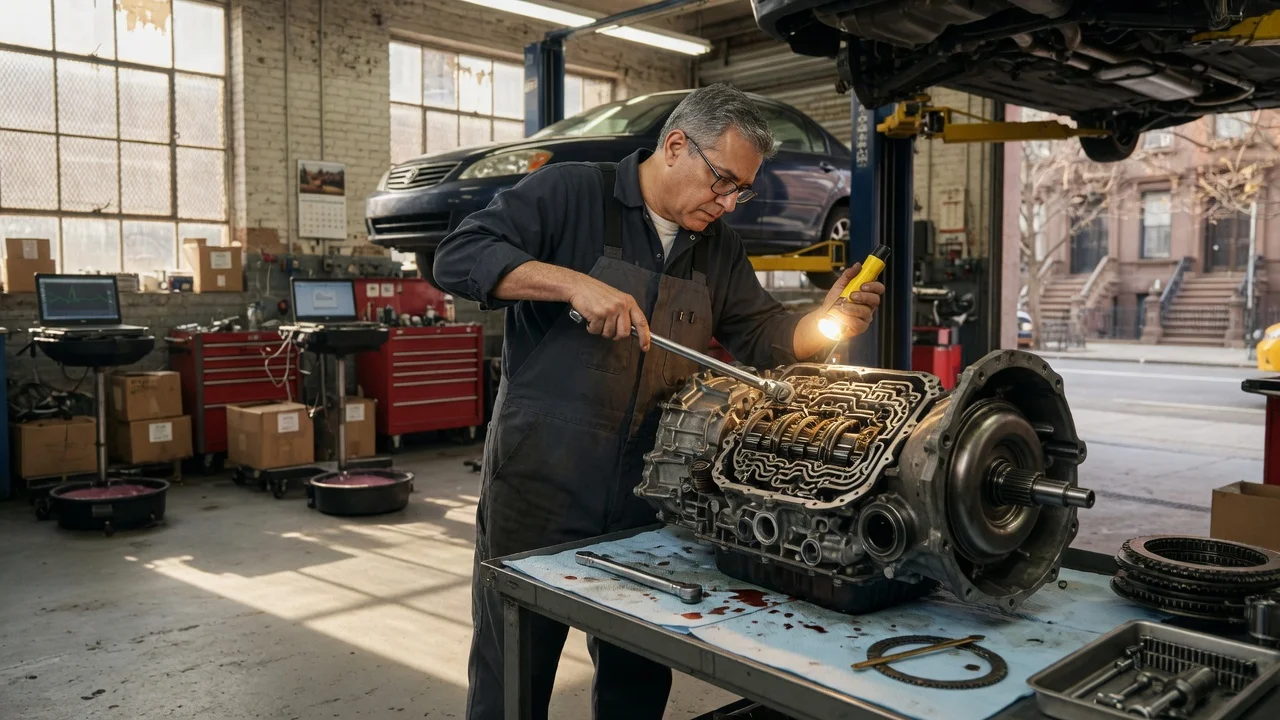
Start with a shop that will diagnose the transmission before quoting a rebuild, put findings in writing, and has documented experience with your vehicle’s transmission type. In New York City that usually means a transmission specialist or a well-equipped independent shop, plus a towing plan if the car is no longer safe to drive. If the vehicle is still under a powertrain warranty, certified pre-owned coverage, or an extended service contract, the dealer or an authorized facility may be required, and going elsewhere can void that coverage.
What “transmission repair” actually covers
A transmission is the assembly that converts engine power into wheel speed and, on many vehicles, also houses the differential. Traditional automatics use a torque converter and hydraulic clutches. A continuously variable transmission (CVT) uses a belt or chain and pulleys instead of fixed gears. A dual-clutch transmission (DCT) uses two automated clutches. Manual gearboxes use a driver-operated clutch. Hybrids often combine a transaxle with electric motors. Those designs fail in different ways and need different tools, software, and parts, so a shop that is strong on one type is not automatically qualified for another.
Shops typically offer three paths after diagnosis. A repair replaces a failed component, such as a solenoid, sensor, valve body, cooler line, or external seal, while leaving the rest of the unit intact. A rebuild (sometimes called a remanufacture when done to a published specification) disassembles the unit, replaces worn internals, and reassembles it. A replacement installs a used, rebuilt, or new unit. The right path depends on what failed, how the rest of the unit looks once opened, parts availability for your model year and powertrain, and whether the vehicle is worth the work. A quote that jumps straight to a full rebuild without a diagnostic report is a reason to pause.
When a general shop is enough, and when it is not
Fluid service, a leaking cooler line, a failed speed sensor, or a software update can often be handled by a competent independent shop or dealer with the correct scan tool and fluid specification. Internal clutch, gear, pump, or valve-body failure, CVT belt or pulley damage, and most hybrid transaxle work belong with a transmission specialist or a dealer that stocks the required procedures for that unit. If the shop cannot name your transmission family, pull manufacturer diagnostic trouble codes with a capable scan tool, and check fluid type against the exact specification for your model year, trim, and drivetrain, keep looking.
How to shortlist a local shop
Ask what the shop actually does in-house. Some NYC locations diagnose and then send the unit to a rebuild facility; others rebuild on site. Either model can be sound if the shop owns the diagnosis, the teardown inspection, and the warranty. Confirm they work on your transmission type, not only “automatics” in general. Ask whether they road-test, scan for codes, check fluid condition and level with the engine at the specified temperature, and inspect mounts, axles, the cooler, and the engine or hybrid system before blaming the gearbox. Those checks matter because a slipping clutch pedal, a failing engine mount, a restricted cooler, contaminated fluid from an overheating engine, or a hybrid inverter fault can imitate a bad transmission.
Written estimate that separates diagnosis, labor, hard parts, fluids, programming, and towing or storage. Clear statement of what is included if they open the case: inspection photos or a list of measured wear, and whether you approve the next step before they proceed. Warranty in writing: duration, mileage, what parts and labor it covers, whether it is honored at that location only, and what maintenance you must follow. Experience with your specific unit (for example a particular CVT, DCT, or hybrid transaxle), not only the vehicle brand. Ability to flash or initialize modules after a unit is replaced, which many late-model vehicles require before they shift correctly.
City logistics that affect the job
Street parking, loading-zone rules, and limited shop yards make drop-off and towing part of the decision in New York City. If the vehicle will not move under its own power, or if it lurches, will not engage a gear, overheats, or loses drive while moving, stop driving it and arrange a tow. Continued driving after those symptoms can turn a repairable failure into a full rebuild. Ask how long the shop will need the car, whether they provide or coordinate towing, and how they will contact you if the teardown changes the estimate. A second opinion is easier to get if you have the diagnostic printout, fluid photos, and a description of when the problem happens (cold start, highway, reverse, after sitting in traffic).
Questions that should change the estimate
Before you authorize work, confirm the fluid specification and interval for your exact vehicle; the wrong fluid can damage a CVT or dual-clutch unit even when the volume looks correct. Ask whether a software update or adaptive-shift relearn is part of the job. Ask if the cooler and lines will be flushed or replaced, because debris from a failed unit can destroy a new or rebuilt transmission. On all-wheel-drive and hybrid models, ask whether related modules, the transfer case, or the high-voltage system need to be checked so the shop is not replacing a transaxle for a fault that sits elsewhere. If the car is leased, financed, or still under a powertrain warranty, ask who must approve the repair and what documentation the warranty administrator requires.
Repair, rebuild, or replace
A targeted repair is the better first choice when diagnosis points to an external or serviceable part and the unit otherwise shifts and holds pressure as specified. A rebuild is the usual path when clutches, steels, bushings, or the valve body are worn and the case and hard parts are still usable. Replacement is often chosen when the case is cracked, hard parts are damaged, a CVT belt or pulley set is scored, or a quality rebuilt or remanufactured unit is available faster than an in-house rebuild. Used units can be a fit on older vehicles if the shop inspects and warrants them; they carry more unknown wear. There is no single ranking that fits every car: a low-mileage late-model vehicle with a confirmed internal failure often justifies a quality rebuild or remanufactured unit, while a high-mileage car with unrelated rust or engine issues may not. Ask the shop to explain which path they recommend for your mileage, condition, and how you use the car, and to show the evidence that supports it.
Red flags
A firm rebuild price given over the phone with no scan, road test, or fluid inspection. Pressure to authorize a teardown the same day without a written diagnostic summary. No mention of cooler service, programming, or a post-repair road test. Warranty terms that exclude the converter, valve body, or electrical parts without explaining why. A shop that cannot identify whether you have a conventional automatic, CVT, DCT, manual, or hybrid transaxle.
A practical next step
If the car still drives without slipping, harsh engagement, warning lights, or overheating, book a diagnostic visit at a transmission-capable shop or the selling dealer and arrive with a timeline of symptoms. If it does not drive, or if drive comes and goes, have it towed and authorize diagnosis only until you have a written finding. Compare at least two shops on the same criteria: transmission type experience, in-house versus sent-out rebuild, warranty terms, and what the estimate includes after the unit is opened. Prices and wait times vary by borough, unit type, and parts supply; treat any figure that is not tied to an inspection of your vehicle as a placeholder, not a commitment.