Transmission Rebuild Cost: What Affects Your Quote
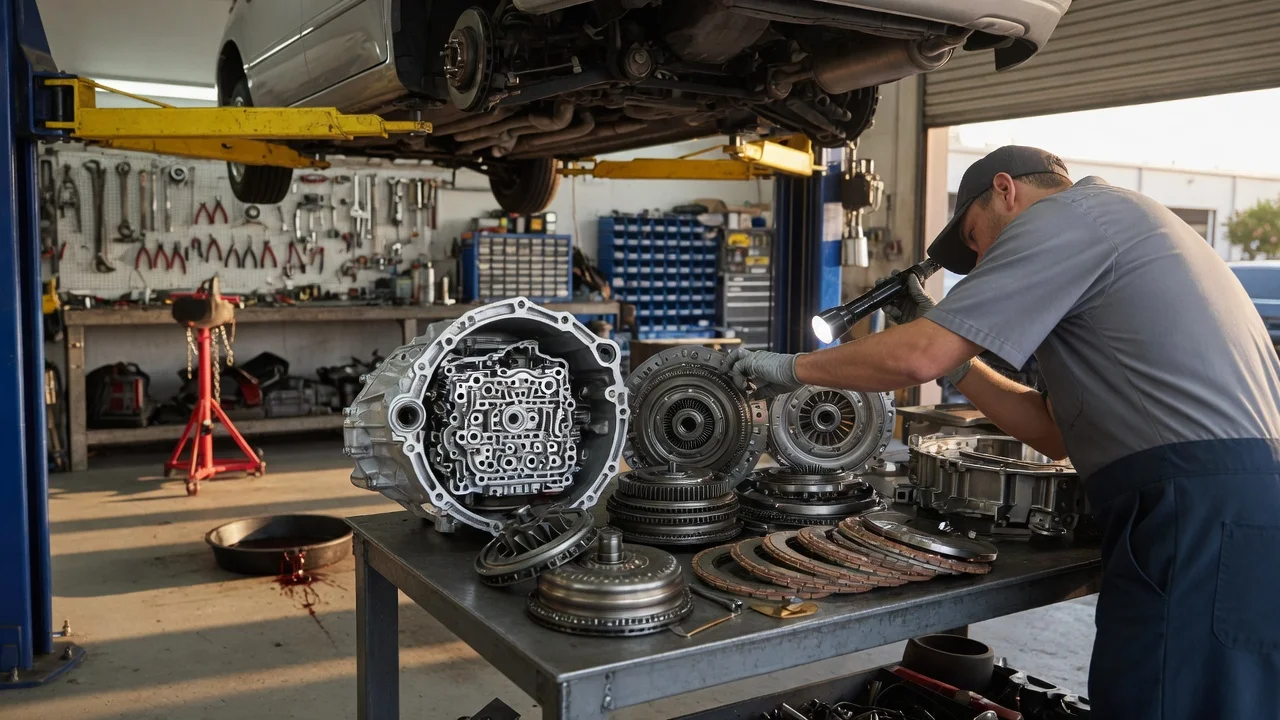
What changes a rebuild quote
A transmission rebuild quote is driven by the unit in the vehicle, how far the damage has gone, and how much labor it takes to remove, overhaul, and reinstall it. Without a specific year, make, model, powertrain, and a teardown inspection, no shop can give a firm number. Quotes that skip those details are placeholders, not prices you can treat as final.
A rebuild, sometimes called an overhaul, means the transmission is taken apart, inspected, and put back together with a mix of new wear parts and any hard parts that failed. That is different from replacing one sensor or seal, swapping in a used unit, or installing a remanufactured assembly built to a plant specification. The quote should say which of those jobs you are actually buying.
The vehicle and the gearbox
Compatibility and parts cost follow the exact transmission family, not just the nameplate. Two trims of the same model year can use different gearboxes. The shop needs the VIN and, where the manufacturer uses one, the transmission code stamped on the case or listed on the build data. Unresolved differences between markets, engine options, and two-wheel versus all-wheel drive are a reason to pause, not to guess.
Automatic, dual-clutch, continuously variable (CVT), and hybrid eCVT units typically involve more internal parts, electronics, and programming than a conventional manual gearbox. Front-wheel-drive transaxles, rear-wheel-drive transmissions, and all-wheel-drive layouts change how long removal takes and whether a transfer case, axles, or a subframe come out with the unit. Heavy-duty truck, performance, and some luxury gearboxes use harder-to-source parts and may need a specialist rather than a general repair shop. Torque converter, valve body or mechatronic unit, solenoids, pump, clutch packs, bands, bushings, seals, and planetary or chain hardware are not all replaced on every job. Which of them are in the quote is a major price swing.
Labor, inspection, and work found after teardown
Most of the bill is labor in two blocks: getting the transmission out and back in, then the rebuild itself. Removal time depends on exhaust, crossmember, axles, mounts, cooler lines, and whether the engine or subframe has to move. The rebuild time depends on what the inspection finds once the case is open.
A quote written before teardown is an estimate. Burned clutches and a contaminated filter are one job. A cracked case, scored pump, damaged drums, or metal throughout the unit is another. Shops often collect an inspection or diagnostic fee, then revise the quote after they measure wear and look for hard-part failure. Ask in writing what happens if extra damage appears: whether you can decline the extra work, whether the unit is reassembled as found, and who owns the core if you walk away.
What the line items should include
Compare quotes only when the same work is on the page. Advertised package prices and a completed invoice are not the same thing; the package may omit fluid, cooler service, programming, or hard parts. Currency, local labor rates, and taxes also differ by market, so a figure from another region is not a substitute for a local written estimate.
Line item Why it belongs on the quote; Remove and reinstall (R&R) Hours to drop and refit the unit, including related parts that must come off. Rebuild or overhaul labor Disassembly, inspection, machining if needed, and reassembly. Soft parts / overhaul kit Clutches, steels, seals, gaskets, filter, and similar wear items. Hard parts Drums, pump, planets, shafts, case, or other components that failed inspection. Torque converter Often rebuilt or replaced with the automatic; confirm it is in the price. Valve body, solenoids, mechatronics Electronic and hydraulic control parts; not always in a basic kit. Fluid, cooler flush, lines Old fluid and a dirty cooler can ruin a fresh rebuild. Programming and adaptations Many modern automatics need scan-tool setup after install. Warranty terms Parts, labor, duration, mileage, and who does the warranty work.
What to check before you approve the work
Treat this as a purchase of a major repair, not a parts-only order. Suitability depends on the vehicle’s overall condition, how you use it, and whether a rebuild, a remanufactured exchange, or a used unit is the better fit for remaining life and risk.
Confirm the quote is tied to your VIN, engine, and transmission code, and that it states rebuild, remanufactured exchange, or used replacement. Ask whether the price is firm after teardown or an estimate that can rise when hard parts are found. Get the overhaul kit, torque converter, valve body, fluid type and volume, cooler flush, mounts, and programming listed as included or extra. Read the warranty for term, mileage, towing or commercial-use exclusions, and whether it covers both parts and the R&R labor if the unit fails again. Ask who performs the work: an in-house builder, a specialist rebuilder, or a shipped reman unit, and how a warranty claim is handled. Check whether the cooler, lines, and any auxiliary cooler will be flushed or replaced. Debris left in the cooler is a common reason a new rebuild fails early. Weigh the rest of the vehicle: engine health, rust, accident damage, and upcoming repairs can make a sound used car with a lesser gearbox the worse financial choice, or the opposite. If the unit is still in the car and already slipping, overheating, or showing metal in the pan, continued driving can turn a clutch job into hard-part damage and a higher quote. Stop and have it inspected rather than driving to “see if it clears.”
A cheaper quote that leaves out the converter, cooler service, or programming is not comparable to a complete job. A higher quote from a shop that regularly rebuilds your specific family of gearbox can still be the lower-risk choice if hard parts, updates, and warranty labor are actually included.
Rebuild, reman, or used unit
An in-vehicle rebuild keeps your original case and gear set when those parts are sound, and it lets the builder replace only what failed. A remanufactured exchange is a unit rebuilt off-site to a defined spec, often with updates, and you typically pay a core charge until the old unit is returned. A used or salvage transmission is a lower upfront cost with unknown remaining clutch and bearing life and a shorter or narrower warranty.
Which path fits depends on parts availability for that model year, how rare the gearbox is, and how long you plan to keep the vehicle. If the shop cannot source hard parts for your exact unit, a rebuild quote may stall even when labor is available. That availability gap should be settled before you authorize teardown.
Questions that should have written answers
What inspection findings is this price based on, and what would change it? Is the torque converter, valve body, and factory-specified fluid included? Will the transmission cooler and lines be flushed or replaced? What scan-tool programming or clutch adaptations are required after install? What is the warranty in time and miles, and does it cover R&R labor? If I decline extra hard-part work after teardown, what do I owe and what happens to the unit?
If those answers are missing, the quote is not complete enough to choose a shop or to choose rebuild over replacement. Specific dollar ranges are omitted here because they vary by market, date, currency, labor rate, and what the inspection actually finds; use a written estimate for your vehicle rather than a generic figure.