Choosing a Transmission Valve Body Rebuild Kit
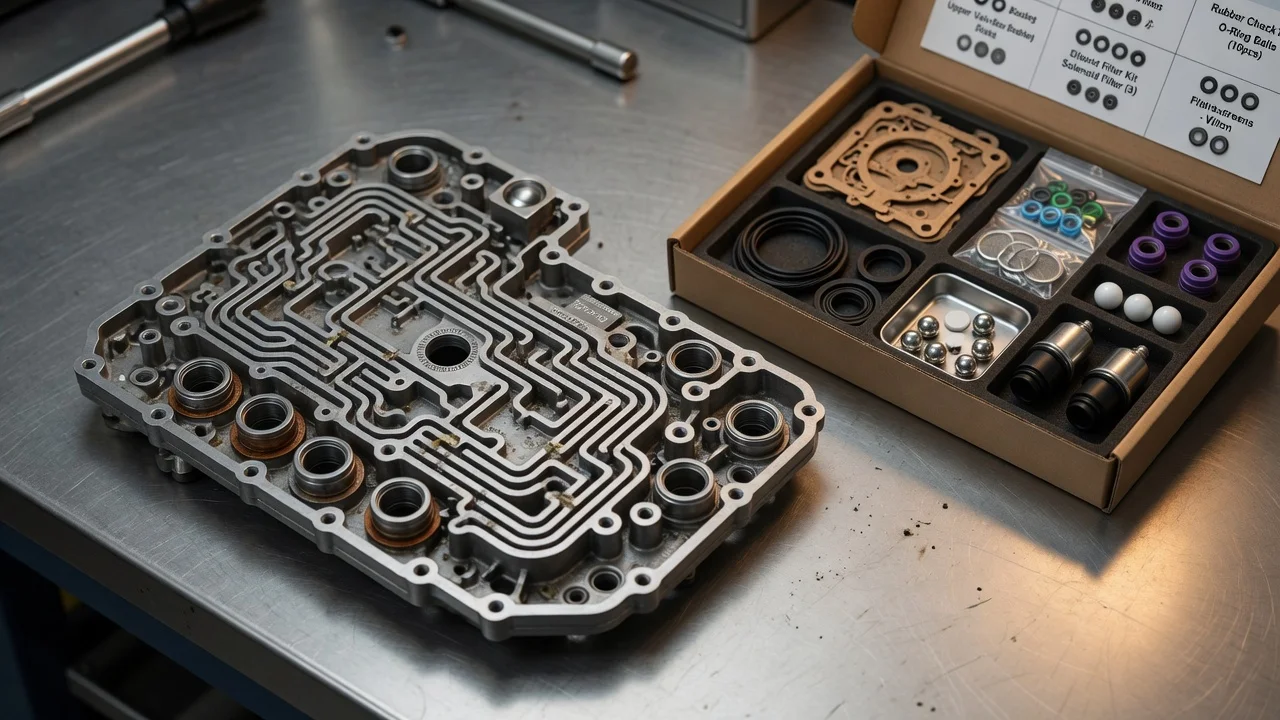
A valve body rebuild kit can restore hydraulic control in an automatic transmission, but only when it matches the exact unit and the fault actually sits in the valve body. Harsh, late or flared shifts can also come from low or degraded fluid, solenoid or wiring faults, worn clutches or control software. This guide covers how to confirm what you are working on, what separates one kit from another, and what the job demands beyond the parts in the box.
Define the job the product must do
Start with diagnosis, not parts. Symptoms often associated with valve body wear include harsh engagement into drive or reverse, slipping or flaring between gears, delayed upshifts, erratic torque converter clutch apply and pressure-related diagnostic codes. None of these proves that the valve body has failed. Check fluid level and condition using the procedure for your transmission, scan for stored codes, review the service history and, where the service information calls for it, perform a line pressure test. A rebuild kit addresses worn valve bores, leaking check balls or seats, fatigued springs and damaged gaskets or seals. It does not repair burned friction material, a worn pump or broken hard parts.
Next, define your practical constraints. On some transmissions the valve body can be removed with the unit in the vehicle; on others the transmission has to come out. Consider your experience with small precision parts, the tools you can access, and whether you want factory shift behavior restored or a deliberately firmer feel for towing or heavier use. Repair options usually include a rebuild kit installed yourself, a remanufactured replacement valve body, or a shop rebuild. Knowing which outcome you need narrows the kit choice before you compare any listings.
Check compatibility
Identify the transmission type precisely. Use the identification tag on the case, the build data tied to the VIN or the manufacturer service information rather than the vehicle name alone. The same model can use different transmissions depending on engine, drive layout and model year, and a single transmission family may go through revisions that change the valve body casting, separator plate, solenoid design or check ball layout. Note whether the unit is electronically controlled through a transmission control module or relies more heavily on hydraulic and mechanical control, because that affects which parts a kit contains.
Fitment depends on the interfaces the kit touches: separator plate and gasket pattern, check ball count and locations, valve and bore sizes, solenoid connectors and seals, and any filter or pan gasket included. Compare the kit listing against the casting or part numbers on your valve body, not just the year range. If a seller lists fitment only by vehicle, confirm it against the transmission code before buying. The kit does not change the fluid specification; the transmission still needs the fluid its manufacturer specifies.
Features that affect the choice
Kits generally fall into three groups. Seal and gasket refresh kits replace soft parts and suit a valve body with sound bores. Oversized valve and sleeve kits target known wear points where a valve has worn its bore; they usually require reaming with specific tooling, which may be included or sold separately, and accuracy matters. Shift correction or recalibration kits change springs, orifices or plates to alter shift behavior and pressure. Each solves a different problem: a refresh kit will not cure bore wear, and a correction kit will not fix a leaking circuit it does not address.
Separate useful evidence from marketing labels. Terms such as heavy duty or performance say little unless the listing explains what is changed and why. More meaningful details are a full component list, the specific circuits or valves addressed, clear instructions with torque values and check ball locations, whether reaming or test tools are included, and whether the kit aims to keep factory shift quality or intentionally firms it up. Firmer shifts change drivability and comfort, and on electronically controlled units the control module may need time or a relearn to adapt. Treat any promise to fix every shifting problem with caution.
Limitations and ownership costs
Setup takes care. Valve bodies contain many springs and valves that look similar but are not interchangeable, so work on a clean bench, follow the disassembly sequence and photograph each step. Check balls must go back in their exact locations. Bolts are typically torqued to low values in a set sequence, and overtightening can distort the casting or plate. Depending on the kit, you may need an inch-pound torque wrench, reamers, drill guides or vacuum test equipment to check bores before and after the work.
Budget for consumables beyond the kit: fluid meeting the correct fluid specification, a filter, a pan gasket and possibly solenoids if testing shows they are faulty. Many electronically controlled transmissions need an adaptive reset or relearn with a capable scan tool after valve body work, and some sealed units require a temperature-dependent fluid level check. These steps are part of the job, not optional extras.
Know what the kit cannot do. It will not repair worn clutches or bands, a failing pump or torque converter, wiring faults or control software issues. Heavy friction material or metal debris in the pan suggests internal wear that a valve body rebuild alone may not resolve, and that debris can also contaminate freshly rebuilt parts. In that situation, compare the kit cost and labor against a remanufactured valve body or a complete transmission repair.
Build a practical shortlist
Before comparing prices, confirm a few points for each candidate. The transmission code and valve body casting should match the kit listing. The kit type should match the diagnosed fault, whether that is soft-part leakage, bore wear or a desire for different shift behavior. The component list should be complete, with instructions covering torque values and check ball locations. Note whether required tooling is included or must be bought separately, and whether the kit works with your existing solenoids and separator plate.
Then add the full cost of ownership: correct fluid, filter, gasket, any scan tool access needed for the relearn, and your time or shop labor. Set that total beside the cost of a remanufactured valve body and the likelihood that other internal wear is present. A kit is a strong choice when the diagnosis points clearly to the valve body and the transmission is otherwise healthy; when the evidence is mixed, confirm the fault further before ordering parts.