Choosing a Transmission Valve Body Cleaner: What to Check First
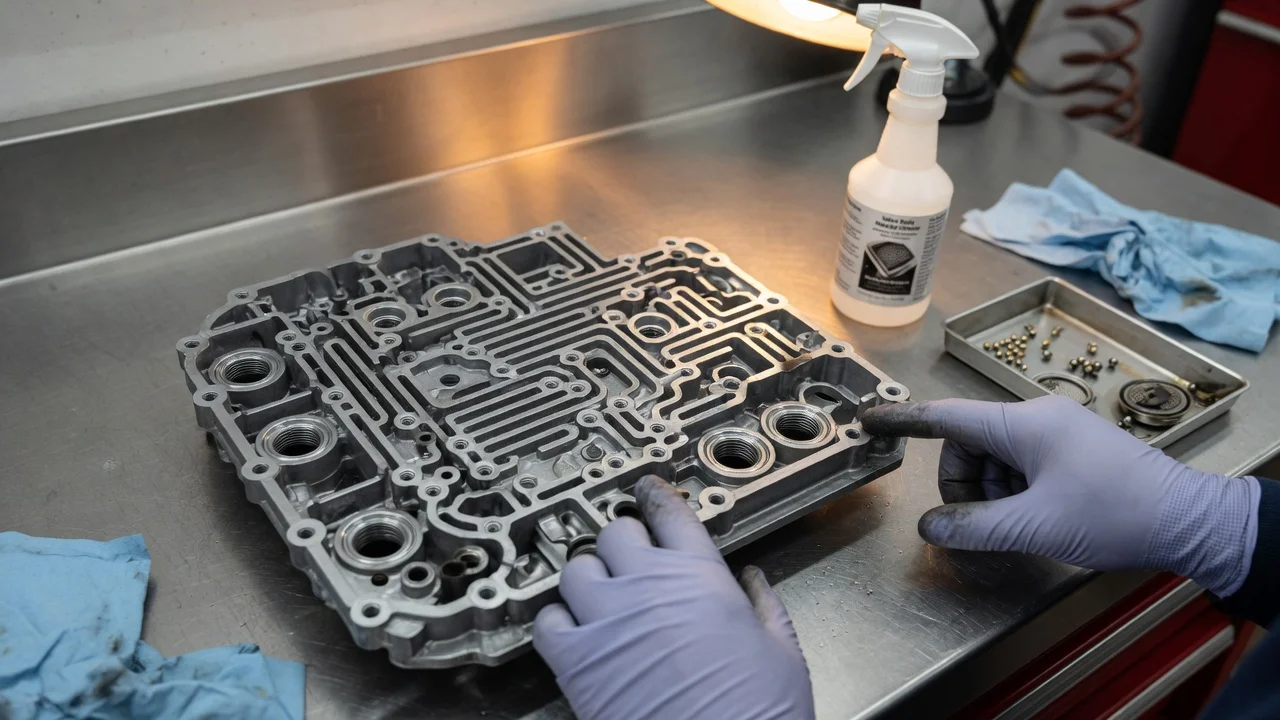
A transmission valve body cleaner can be one of two different products. One is a solvent for parts that are already out of the transmission. The other is an additive poured into the fluid in the hope of freeing sticky valves. Choosing the right one starts with knowing which transmission you have, what the symptom actually is and how the job will be done. A harsh or delayed shift is only one possible sign of a valve body problem, so treat any cleaner as part of a repair plan, not as a diagnosis.
Define the job the product must do
Start by deciding where the cleaning will happen. If the valve body is coming out of the vehicle, for a solenoid replacement, a separator plate gasket job or a rebuild, you need a parts cleaner. It has to remove varnish, friction material and fine debris from passages and bores, then leave nothing behind. If the transmission stays assembled, you are looking at an in-fluid treatment. That only works as well as the fluid can carry it, and it depends on a fluid and filter change afterward.
Then narrow the job to your situation. Note the vehicle, the transmission type (conventional automatic, CVT or dual-clutch), the mileage and the service history. Also note any stored diagnostic codes and exactly how the shift behavior changed. A code for a shift solenoid or a pressure control circuit calls for electrical testing before any cleaner. Slow engagement on a high-mileage unit with dark fluid and no records may justify a correct fluid service first. Practical limits matter too: workspace, ventilation, disposal options, and whether you are prepared to remove the valve body at all. Some units give access after dropping the pan, while others require more teardown.
Check compatibility
For a bench cleaner, compatibility depends less on the vehicle badge than on what the solvent will touch. Valve bodies are usually aluminum castings with steel valves and springs. The assembly may also include check balls that can be steel, rubber or plastic, filter screens, seals, and solenoids with plastic connectors and wiring. A solvent that is safe on bare metal can soften or swell some plastics and elastomers. Read the label for material warnings, and plan to remove solenoids and other electrical parts before cleaning instead of soaking them.
For an in-fluid product, fitment comes down to fluid specification. Your owner's manual or service information names a specific fluid, and many manufacturers do not call for any additive at all. Some CVT and dual-clutch designs are especially sensitive to changes in friction properties. Look for a product that explicitly states compatibility with your fluid type and transmission design, rather than a generic all-transmissions claim. Also check whether using it could affect a warranty or service contract. If the label cannot confirm compatibility with your fluid specification, leave it on the shelf.
Features that affect the choice
For bench work, the details that matter are solvent type, evaporation and residue. Chlorinated cleaners are typically non-flammable but carry stronger health warnings. Non-chlorinated versions are usually flammable and may need more drying time. Either type can harm certain plastics, so read the material warnings whichever you pick. A cleaner that evaporates fully without leaving a film matters, because residue in tight bores can hold debris. Delivery matters as well. A straw or adjustable nozzle reaches passages better than a wide fan, and adequate spray pressure helps flush channels. A parts-washer solvent bath suits a full teardown better than spot cleaning with an aerosol.
Treat claims such as restores shifting, fixes slipping or renews seals as marketing, not evidence. A cleaner can remove deposits, but it cannot restore worn metal. Seal conditioners work by changing how elastomers behave, which is a different job from cleaning. More useful evidence is concrete: a stated fluid compatibility, a safety data sheet you can read before buying, clear dosing and drain instructions, and specific material warnings. If one product promises both cleaning and seal conditioning, decide whether you actually want both effects inside your transmission.
Limitations and ownership costs
No cleaner fixes mechanical wear. Valve bores in aluminum bodies can wear over time and let pressure leak past a valve. That calls for a repaired bore with an oversize valve, a remanufactured valve body or a replacement unit. Cleaning also does nothing for a failed solenoid, damaged wiring, a faulty control module, worn clutches or torque converter problems. If symptoms remain after a correct fluid level check and a properly cleaned valve body, the diagnosis needs to move on rather than adding another treatment.
Budget for everything around the cleaner. A bench job usually means a pan gasket or sealant, a filter, and fresh fluid of the correct specification. It may also need a separator plate gasket, solenoid seals and lint-free cleaning supplies. Reassembly typically involves lubricating valves with clean fluid and following the specified torque values and sequence. Plan for gloves, eye protection, ventilation and proper disposal of solvent and used fluid. An in-fluid treatment adds a fluid change at the stated interval, and loosened debris can end up somewhere it causes new trouble. Some transmissions also need an adaptation reset or relearn after service, which requires a capable scan tool.
Build a practical shortlist
Ask every candidate the same questions before price enters the decision. Is it meant for bench cleaning or for use in fluid, and does that match your job? Does the label list materials it may harm, and can you keep solenoids, seals and plastic parts away from it? For additives, does it state compatibility with your exact fluid specification and transmission type? Is the safety data sheet available, and can you meet its ventilation and disposal requirements? Does it leave residue, and how long does it need to dry? Are dose, contact time and the follow-up fluid change spelled out?
Then compare repair options honestly. Cleaning is a reasonable step when codes, shift behavior and service history point toward a sticking valve and the unit is otherwise healthy. It means the right solvent, careful reassembly and fresh fluid. Skip the cleaner and move to testing, a remanufactured valve body or professional repair when you see any of these: electrical faults, known bore wear for your transmission, or heavy friction material or metal debris in the pan. Keep two or three products that pass the checklist, and choose the one whose directions you can follow completely. Record what you did, so the next diagnosis starts from facts.