Transmission ID by VIN: What the VIN Can and Cannot Tell You
The Short Answer
In most cases you cannot read a transmission type directly from the 17 characters of a VIN. The VIN, or Vehicle Identification Number, is the vehicle's unique serial code. Its characters describe the manufacturer, the model and body details, the model year, the assembly plant and the production serial number, but most manufacturers do not dedicate a VIN position to the transmission. What the VIN does give you is the key to the vehicle's factory build record. A VIN decoder, a dealer parts or service system, or the manufacturer's build data can use the VIN to report which transmission was installed at the factory.
One condition changes that answer: a VIN lookup tells you what the vehicle left the factory with, not necessarily what is in it today. If the transmission has been replaced or swapped, only a physical check of the unit will confirm what is installed.
How the VIN Is Structured
Vehicles sold in the US since the 1981 model year use a standardized 17-character VIN. Knowing the sections helps explain why transmission information is usually indirect.
Positions | Section | What it generally identifies; 1–3 | World Manufacturer Identifier (WMI) | Country of origin, manufacturer and vehicle type; 4–8 | Vehicle Descriptor Section (VDS) | Manufacturer-defined details such as model, series, body style, restraint system and often engine; 9 | Check digit | A calculated digit used to detect errors in the VIN; 10 | Model year | The vehicle's model year; 11 | Plant code | The assembly plant; 12–17 | Serial number | The vehicle's individual production sequence
The Vehicle Descriptor Section is where manufacturers encode vehicle attributes, and its meaning varies by brand, model and year. Some manufacturers have used a VDS character that reflects drivetrain or transmission configuration on certain models, but this is not universal. Because no model-specific evidence was supplied for this guide, you should check the decoding scheme for your exact make, model and model year rather than assume any position indicates the transmission.
Step-by-Step: Identifying the Transmission from the VIN
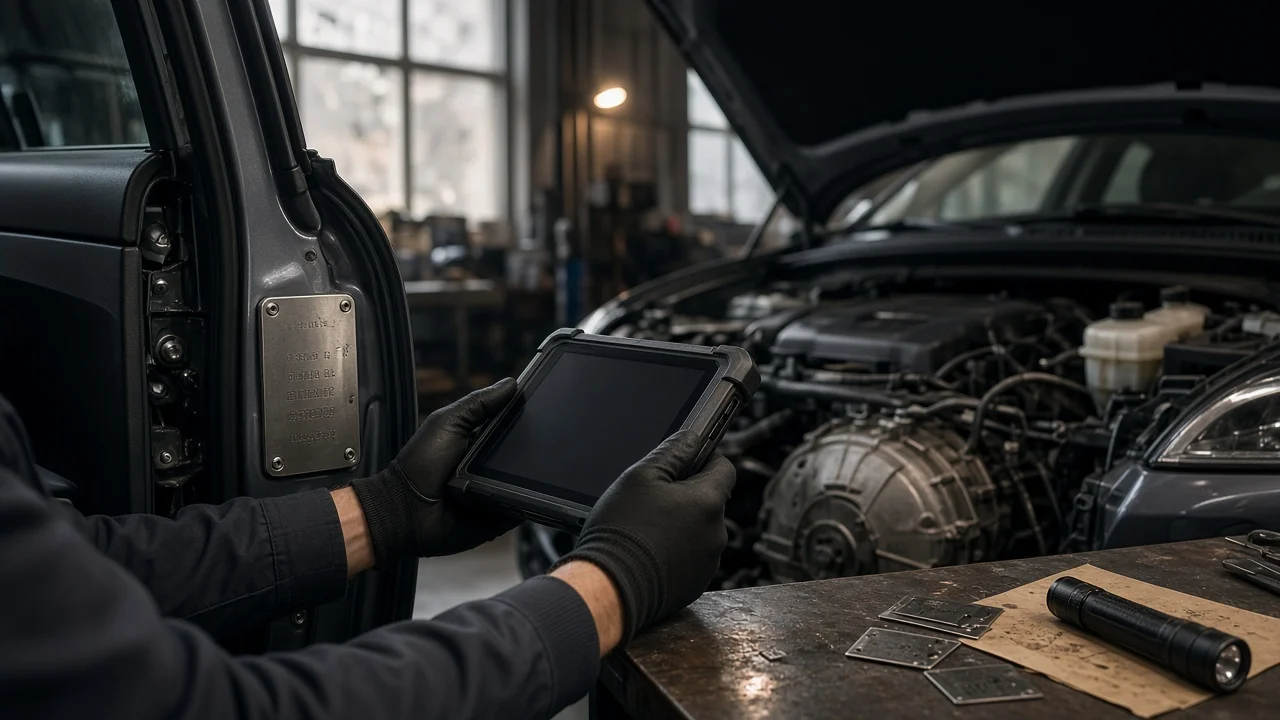
1) Find the full VIN. It is typically visible through the lower driver's-side windshield, on the driver's door jamb label, and on the title, registration and insurance documents. 2) Confirm all 17 characters. The letters I, O and Q are not used in standard VINs, which helps avoid confusion with 1 and 0. Make sure the VIN matches across the vehicle and its paperwork. 3) Run the VIN through a decoder. The National Highway Traffic Safety Administration offers a free decoder that reports data manufacturers submit; transmission fields may be filled in for some vehicles and blank for others. Commercial decoders vary in depth and accuracy. 4) Request the build data. A franchised dealer's parts or service department can usually look up the factory-installed transmission, often with its part or model number, from the VIN. Some manufacturers also provide build sheets or window-sticker reproductions to owners. 5) Check the vehicle's equipment labels. Depending on the manufacturer, the door jamb certification label or a separate option-code label may list a transmission code. For example, General Motors has historically placed a Service Parts Identification label listing option codes (RPO codes) in the glovebox or trunk, and many Ford door jamb labels include a transmission code field. Applicability varies by model year. 6) Match any code to a transmission model. A manufacturer code or option code must be translated using the manufacturer's service information or a dealer, since the same code format does not carry across brands.
How to Verify the Result
Treat VIN-based results as the factory specification and confirm them before buying parts, fluid or a replacement unit.
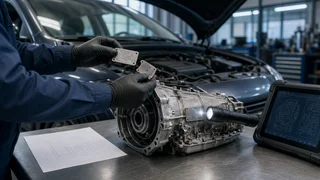
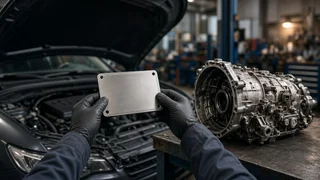
Inspect the transmission itself. Most transmissions carry an identification tag, sticker or stamping on the case showing a model, part or serial number. Its location depends on the transmission design. Compare sources. If the decoder, dealer build data and door or option label agree, the factory specification is well established. Look for signs of replacement. A tag that does not match the build data, a missing tag, or service records showing a transmission replacement mean the installed unit may differ from the original. Confirm with the manufacturer's service information or a dealer when ordering parts, since internal revisions within the same transmission family can affect compatibility.
Limits and Gaps to Keep in Mind
Free decoders depend on the data manufacturers report, so transmission details may be incomplete, generic (for example, only automatic or manual) or missing. Older vehicles, low-volume models and vehicles built for other markets can be harder to decode. This guide does not include model-specific VIN position meanings, transmission codes or label locations, because no confirmed vehicle-specific evidence was provided; those details must come from the manufacturer's documentation for your exact vehicle.