Toyota Rear Axle Bearing Kits: Check Vehicle and Axle Fitment
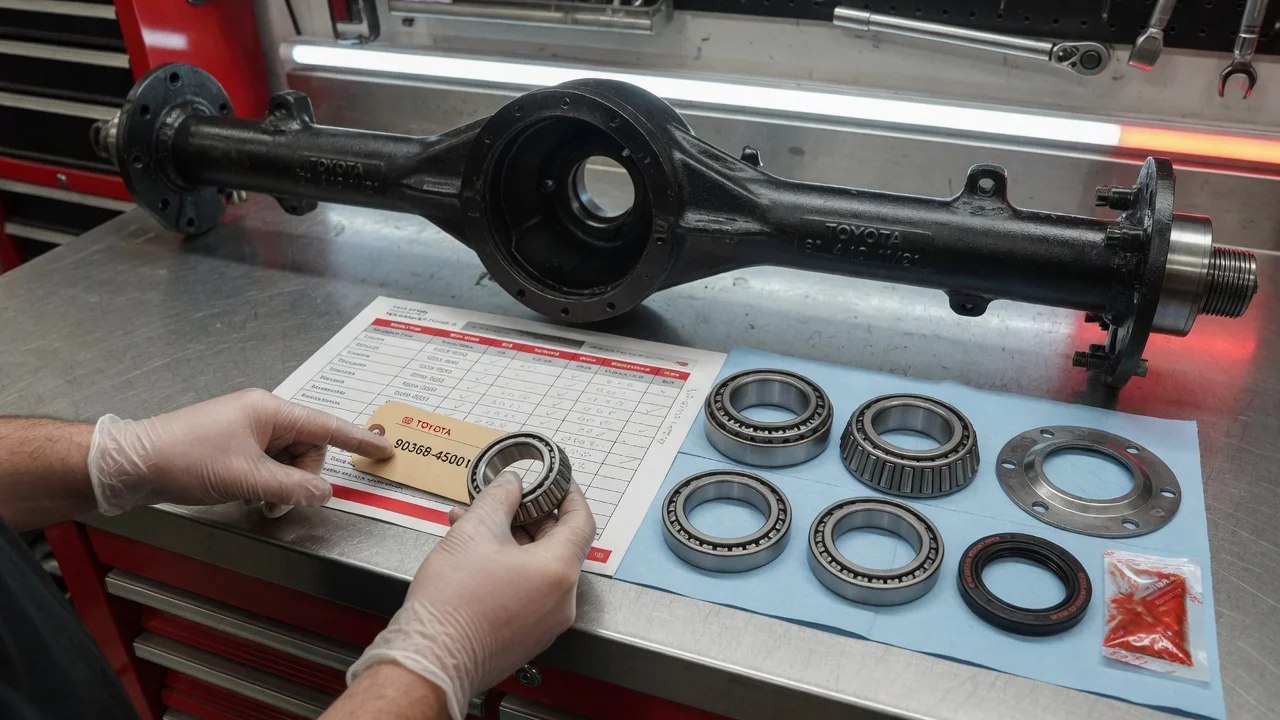
A worn rear axle bearing on a Toyota usually shows up as a growl or hum that follows road speed. Several other faults sound similar, though, and bearing kits are not interchangeable across models, years and axle designs. Before you order a Toyota rear axle bearing kit, confirm two things: that the bearing is actually the problem, and that the kit matches your exact vehicle configuration. This guide covers symptoms, competing causes, checks and the information a parts supplier or technician will need.
Establish the symptoms
Start by writing down exactly when the noise or vibration happens. Note the speed range where it begins and whether it gets louder as speed rises. Record whether it changes when you accelerate, coast or hold a steady cruise, and whether it gets louder in left-hand or right-hand curves. Also note whether it changes with cargo or towing, whether it differs between a cold start and a warmed-up drive, and whether smooth pavement quiets it. A bearing noise generally tracks road speed rather than engine speed, so a sound that rises and falls with the tachometer points elsewhere.
Look for associated signs. These include oily residue on the inner side of a rear wheel, tire or brake backing plate, a change in braking on one side, an ABS or traction warning light, a clunk when you set off, or a wheel that feels loose. Then list recent changes: new tires or a rotation, differential fluid service, brake work, a lift or leveling kit, heavy towing, or driving through deep water. Your service history often explains why a problem started when it did.
Confirm vehicle and axle fitment
Toyota uses more than one rear design. Pickups and SUVs with a solid rear axle commonly use an axle shaft bearing that is pressed onto the shaft and held by a retainer. A seal keeps differential oil away from the brakes. Many front-wheel-drive and some all-wheel-drive cars and crossovers use a rear hub bearing assembly instead, which is a different part even when it is listed under a similar name. Kit contents also vary. Some contain only the bearing, while others add a retainer ring, oil seal and related hardware, so check what is included before comparing prices.
Correct fitment depends on the full vehicle configuration, not just the model name. That means model, model year, production date, cab or body style, two-wheel or four-wheel drive, axle or differential type, drum or disc rear brakes, ABS sensor arrangement and the affected side. Production changes can fall partway through a model year, so look the part up by VIN where possible. Once the old parts are out, compare their markings and dimensions with the replacement. A bearing that looks similar may still differ in bore, width or seal design.
Distinguish plausible causes
Several faults can produce similar symptoms: Wheel bearing: a hum or growl that rises with speed and often changes when weight shifts during a turn. It may also show roughness or play when the wheel is checked. Tires: cupped or feathered wear, or an aggressive tread, can mimic bearing noise almost exactly. Tire noise usually changes with the road surface, and rotating the tires often moves or changes the sound. Differential: worn ring and pinion gears or pinion bearings usually change character between drive and coast more than between left and right turns. Low or contaminated gear oil makes them more likely.
Other candidates include a dragging brake, which brings heat, a burning smell or a pull. A driveshaft or universal joint vibration tends to build with speed and load. A loose heat shield or exhaust part rattles over bumps. A leaking axle seal can wet the backing plate without any bearing wear, and a blocked differential vent or overfilled housing can push oil past seals. No single sign settles the question. Weigh each observation, and look for causes that explain all of them rather than one.
Checks in a useful order
Start with checks any owner can do safely: Tires: inspect tire wear and pressures. Oil traces: look behind each rear wheel for gear oil. Warning lights: note any that are on. Road test: repeat a drive on a familiar, quiet road and record the speed and conditions where the noise appears. Tire rotation: if your tire type allows it, rotate the tires and drive the same route again. This is one of the simplest ways to rule tires in or out. Do not try to locate the noise by running the vehicle in gear while it is raised on a jack or stands.
Further tests need equipment and service information. With the vehicle on secure stands on level ground and the wheels chocked, a technician can rock the wheel for play and spin it by hand. Feel is clearer with the brake drum or caliper removed, because brake drag and the differential can mask roughness. Axial play should be measured and compared with the manufacturer's specifications, not judged by eye. The same applies to the differential fluid level and condition. Removing an axle shaft and pressing a bearing on or off requires a press, the correct procedure and torque values, so leave that work to a qualified technician.
Interpret the findings
Each result points in a different direction: Bearing: roughness felt when spinning the hub with brake parts removed, together with a road noise that changes with turning load, strongly supports a worn bearing on that side. Measured play beyond the manufacturer's limit confirms wear. Tires: a noise that moved or faded after a tire rotation points to the tires. Differential: a noise that changes with throttle but not with turns points toward the differential. Seal: an oil leak with a smooth, tight bearing suggests a seal problem. The bearing still deserves inspection, because the seal and bearing are often serviced together.
Several points still need confirmation before you replace parts. Confirm which side is affected, the exact replacement part for your VIN and axle, and whether the kit includes the seal and retainer your procedure calls for. Check whether oil has contaminated the brake shoes or pads, which may then need attention too. If water entry or a lubrication problem caused the failure, the opposite side and the differential may also be affected. Replace parts once the evidence agrees, not on the symptom alone.
Urgency and next action
Stop driving and arrange a tow if you notice any of these: Noise: grinding or loud metallic noise from a rear wheel. Movement: wheel wobble, or an axle shaft that clunks or appears to move outward. Heat: a hot hub, smoke or a burning smell. Brakes: oil on the brakes with reduced braking or a pull, or a brake warning together with a change in handling. On some solid-axle designs the bearing and its retainer help keep the axle shaft in place, so a failed bearing is a safety issue as well as a noise. Nobody can predict how far a worn bearing will last.
When you book the repair or order parts, bring the VIN, model year, trim, drive type, axle and brake type, the affected side, your symptom log, recent work and your service history. Also describe your operating conditions, such as towing, off-road use or water crossings. Ask the shop to confirm the diagnosis and the kit's fitment before installation. Afterward, follow the manufacturer's maintenance schedule for differential fluid rather than a universal interval, because requirements differ by vehicle and use.