Maddox Rear Axle Bearing Puller Set: Check Fit Before Buying
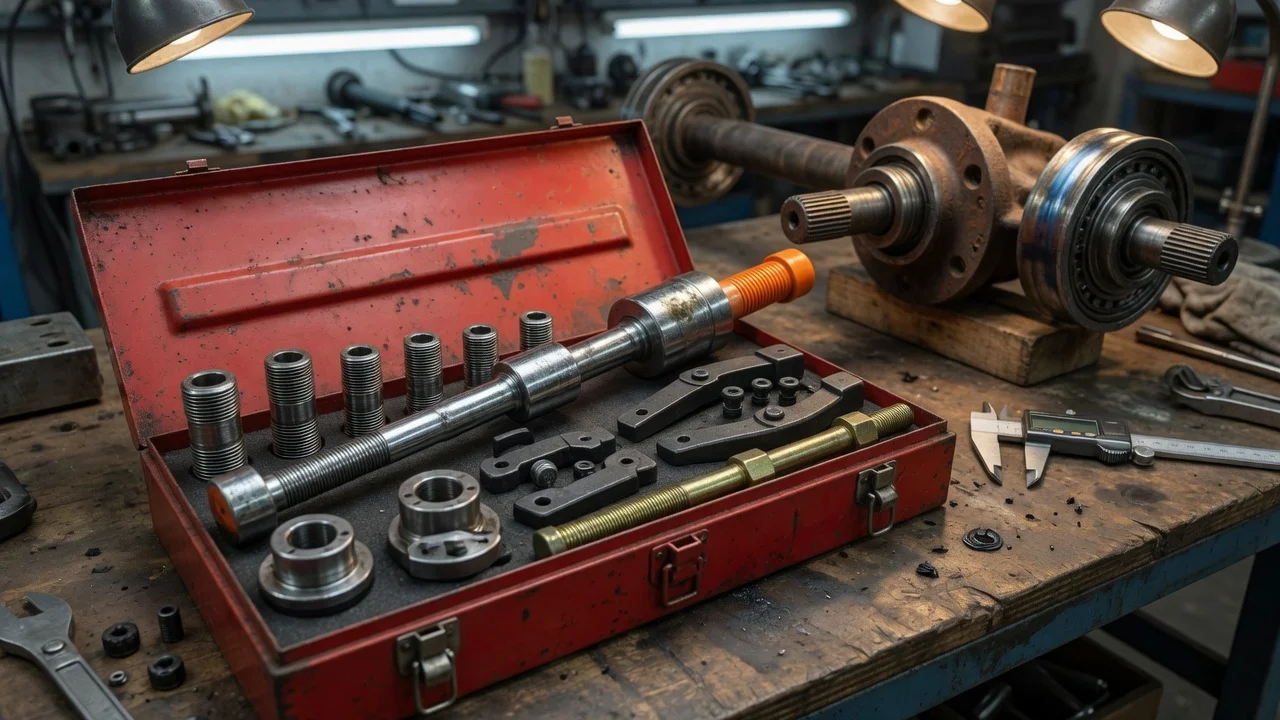
A Maddox rear axle bearing puller set only helps if your rear axle uses the kind of bearing it is designed to extract. Before you order the 3 piece set, confirm two things. First, the noise or leak you are chasing should point to the axle bearing. Second, your vehicle configuration should place that bearing where the puller can reach and grip it. This guide covers symptoms, causes, checks and next steps in that order.
Establish the symptoms
Write down what you notice instead of relying on memory. Record when the sound or vibration appears: only above a certain road speed, while coasting, under acceleration, or when cornering in one direction. A worn wheel bearing usually makes a hum, growl or grind that rises with road speed. The sound often changes as load shifts from one side to the other in a gentle turn. Also note whether the noise continues when you roll in neutral or with the clutch pressed, because that helps separate wheel noise from driveline load noise.
Associated signs matter as much as the noise. Look for gear oil on the inside of a rear wheel, brake shoes or pads contaminated with oil, play you can feel at the wheel, or uneven tire wear. Then list recent changes, such as new tires, brake work, a differential fluid service, a towing trip, or a hard hit on a pothole or curb. Your service history helps here. If a bearing or seal was recently replaced on one side, suspect the installation or the opposite side.
Distinguish plausible causes
A rear wheel bearing is only one of several parts that can hum or rumble. Cupped or irregularly worn tires also make noise that changes with speed, but it usually stays the same when load shifts during a turn, and it often moves to another corner when wheels are rotated. Differential problems, such as worn pinion or carrier bearings or gear wear, typically change with throttle and coast rather than steering, and they tend to come from the center of the axle rather than one corner. A dragging brake can cause noise and heat at one wheel, which may show up as a hot hub after a short drive.
Leaks have competing causes too. Gear oil at the wheel usually means a failed axle seal. On many semi-floating axles the seal is replaced along with the bearing, because removing one disturbs the other. However, an overfilled differential or a blocked axle vent can push oil past a seal that is otherwise serviceable, so a leak alone does not prove the bearing has failed. Brake fluid from a wheel cylinder or caliper looks and smells different from gear oil and needs a separate repair.
Checks in a useful order
Some observations are safe for any owner. Park on level ground, then inspect the tires for wear patterns and look behind each rear wheel for oil residue. If you know the correct procedure and fill point, check the differential fluid level. On a quiet, empty road, a careful road test at normal speeds can show whether the noise changes with speed, throttle or gentle steering.
The next checks need equipment. With the axle supported on jack stands, spin each rear wheel by hand and feel for roughness, then rock it at the top and bottom to check for play. A chassis ear or mechanic's stethoscope can show which side is louder. Some steps require the manufacturer specifications for your exact axle: measuring end play, inspecting the shaft surface where the bearing rides, and confirming fluid type and capacity. Without those figures, do not judge whether a measured amount of play is acceptable or excessive.
Removing the axle shaft is a workshop job. On many C-clip axles you remove the differential cover, take out the differential cross shaft (often called the pinion shaft), and release the clip before the shaft slides out. If that procedure, the torque values or the sealing method are unfamiliar, have a qualified technician do the work.
Confirm the puller fits your axle
Fit is where many purchases go wrong. Internal axle bearing pullers are generally meant for semi-floating axles where the bearing is pressed into the end of the axle housing and the shaft slides out through it, a layout common on C-clip designs. On axles where the bearing is pressed onto the shaft and held by a retainer plate, the bearing comes out with the shaft and normally needs a press, so an internal puller is the wrong tool. Many independent rear suspensions use a hub unit bolted or pressed into a knuckle, which also needs different tooling.
Before ordering the Maddox 3 piece set, read the product listing for its stated size range. Also check whether a slide hammer is included or must be bought separately, and if you already own one, whether its attachment thread matches. Then compare the listing with your own data: the bearing part number from the service manual or parts catalog, or the bore you measure once the shaft is out. If the listing does not state a range that clearly covers your bearing, ask the seller or choose a tool documented for your axle. Do not assume a universal fit.
Interpret the findings
If one wheel feels rough or has play, and the noise rises with speed and changes in turns, the bearing becomes the leading suspect, but that is not yet proof. Once the shaft is out, look at the surface where the rollers ride. Scoring, pitting or a groove there confirms damage and means a new bearing alone may not be enough. The shaft may need replacing, or you may need a repair-type bearing for worn shafts if the parts catalog lists one for that axle. If both wheels spin smoothly with no play and the noise follows throttle, look at the differential instead.
A leak with smooth bearings points first to a seal or vent problem. Keep the fit question separate, because confirming a bad bearing does not confirm the puller suits it. Replace parts only when the axle type, the bearing number and the tool's documented range all match. Check the opposite side as well, since both bearings on the same axle have seen the same operating conditions.
Urgency and next action
Stop driving and arrange an inspection if you notice any of these: grinding that gets worse quickly, heat at one hub, a wheel that wobbles, oil on brake parts, or a feeling that the wheel is moving in or out. On C-clip axles, a badly failed bearing or damaged shaft can let the shaft and wheel shift in the housing. Oil-soaked brakes also lose stopping power. No one can tell how many miles remain from the sound alone, so treat worsening symptoms as a reason to stop driving.
When you book a repair or order parts, have the vehicle's year, model, engine and drive type ready. Also have the rear axle identification, which is usually on a tag on the differential cover or a code on the build label. Bring your symptom notes, the results of each check, the affected side and your service history. With that information, a technician or parts counter can confirm the correct bearing and seal and the matching tool. They can also flag maintenance schedule items worth doing at the same time, such as a differential fluid change.