Harbor Freight Rear Axle Bearing Pullers: How to Choose a Set
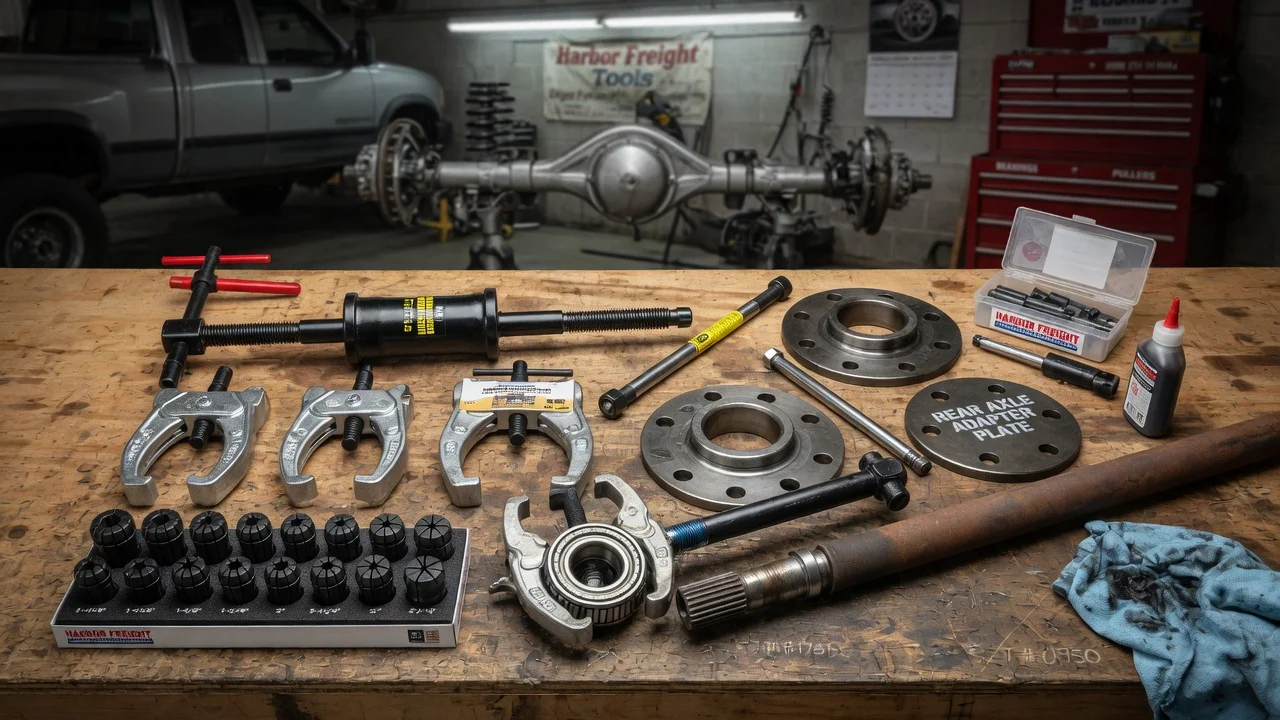
Replacing a rear axle bearing on a solid rear axle often comes down to one question: can your puller grip the bearing inside your axle tube? Harbor Freight sells pullers and slide hammer kits that many owners consider for this job. The right choice depends less on the box label than on your axle design, your bearing size and how often you will use the tool. This guide explains how to match a set to your vehicle before you buy.
Define the job the product must do
Start with the axle design, because it decides which tool does the work. Many rear-wheel-drive cars, SUVs and light trucks use a semi-floating solid rear axle, and it comes in two common forms. On a C-clip axle, a clip inside the differential holds the shaft. Once you remove the differential cover, pinion shaft and clip, the shaft slides out, but the bearing and seal stay pressed into the axle tube. Pulling that bearing is the job a slide hammer with an internal bearing puller is built for. On a retainer-plate axle, the bearing is pressed onto the shaft and locked by a pressed collar. A slide hammer with a flange adapter can pull the shaft from the housing, but removing the bearing from the shaft usually takes a press or careful cutting of the collar. Full-floating axles and many rear hub assemblies on front-wheel-drive vehicles need different tools entirely.
Next, be honest about your situation. A single repair on jack stands in a driveway justifies a different purchase than repeated work on several vehicles. Confirm the diagnosis before buying anything: a growl or hum that changes with speed or load can also come from tires, wheel bearings elsewhere or the differential. A careful inspection for play, noise and gear oil leaking past the axle seal keeps you from buying a tool for the wrong repair. If you know the service history, note whether the bearings were replaced before and with what parts.
Check compatibility
An internal axle bearing puller works by passing its jaws or collet through the bearing and catching the back edge, so the slide hammer pulls the whole bearing out of the tube. Its jaws must fit the bearing's inner opening and reach far enough to catch behind it. Get the bearing part number or its dimensions from the manufacturer specifications or a parts catalog for your exact vehicle configuration. Year and model are not always enough, because one model may offer more than one rear axle depending on engine, towing package or gear ratio. An axle tag or build code identifies yours. Then compare those dimensions with the jaw range on the tool listing instead of trusting a broad compatibility claim.
Check how the pieces connect. If you buy the puller and slide hammer separately, the puller adapter thread must match the slide hammer shaft, so confirm the thread on the packaging or listing before purchase. For retainer-plate axles, the flange adapter must fit your wheel stud pattern. Also check clearance around the axle tube. On vehicles where the wheel speed sensor sits in the axle housing, remove the sensor before you pull the bearing so the jaws or bearing do not damage it.
Features that affect the choice
Jaw design matters most. A split collet that expands with a center screw grips evenly around the bearing. Separate hooked fingers can work well but may tilt if they are not seated squarely, which can let the bearing cock in the bore or score the tube. Slide hammer mass matters too: a heavier hammer delivers more force per stroke, while a light one may struggle with a bearing that has rusted in place. Labels such as heavy duty or professional grade tell you little on their own. Look for stated dimensions, a list of included pieces and material information where the listing provides it.
Decide between a dedicated axle bearing puller and a larger combination set. A combination kit may add a seal puller, a flange adapter and extra jaws, which helps if you own vehicles with both axle styles. Pieces you will never use add cost and clutter. Owner reviews that name a specific vehicle and axle can be useful, but treat them as anecdotes rather than proof of fit for your configuration. Review the store's current return and warranty terms yourself before buying, since a tool that does not fit is easier to return unused.
Limitations and ownership costs
A puller removes parts; it does not install them. Seating a new bearing needs a bearing driver or a tube that presses evenly on the outer race, and the seal needs a seal installer or a correctly sized driver. A rear axle bearing puller cannot remove a press-fit bearing from a retainer-plate shaft, and it will not service full-floating hubs or bolt-on hub assemblies. Plan for the setup as well: draining gear oil, removing the differential cover, pinion shaft, C-clip and axle all come before the puller touches the bearing.
Budget for consumables: new bearings, new axle seals, gear oil of the type and quantity listed in the manufacturer specifications, any additive required for a limited-slip differential, and a cover gasket or sealant. On C-clip axles the bearing rollers often run directly on the axle shaft, so inspect that surface. If it is pitted or grooved, a new bearing alone will not last, and you may need a repair bearing designed to ride on a fresh section of the shaft or a replacement axle. Follow your vehicle's own maintenance schedule for gear oil service, and remember that operating conditions such as towing or driving through deep water can shorten bearing and seal life. After the job, clean the tool, lightly oil it, and check the threads and jaws for burrs before storing it.
Build a practical shortlist
Before you compare products, write down your confirmed axle type, bearing part number or dimensions, wheel stud pattern if you need a flange adapter, and whether the wheel speed sensor sits in the housing. Then check each candidate against the same questions. Does the jaw or collet range cover your bearing? Does the adapter thread match the slide hammer you own or plan to buy? Is the slide hammer heavy enough for a bearing that may be corroded? Does the set include only what your axle needs, or are you paying for extras? What installation tools and parts must you buy separately?
For a one-time repair, compare the purchase price with borrowing a puller through an auto parts store loaner program, if one is available near you, or with paying a shop for the bearing replacement. If you maintain several older rear-wheel-drive vehicles, owning a well-fitting set can make sense. Either way, choose the tool that matches the measurements of your own axle rather than the one with the longest parts list.