Pittsburgh Automotive Rear Axle Bearing Puller Set: Fitment and Selection
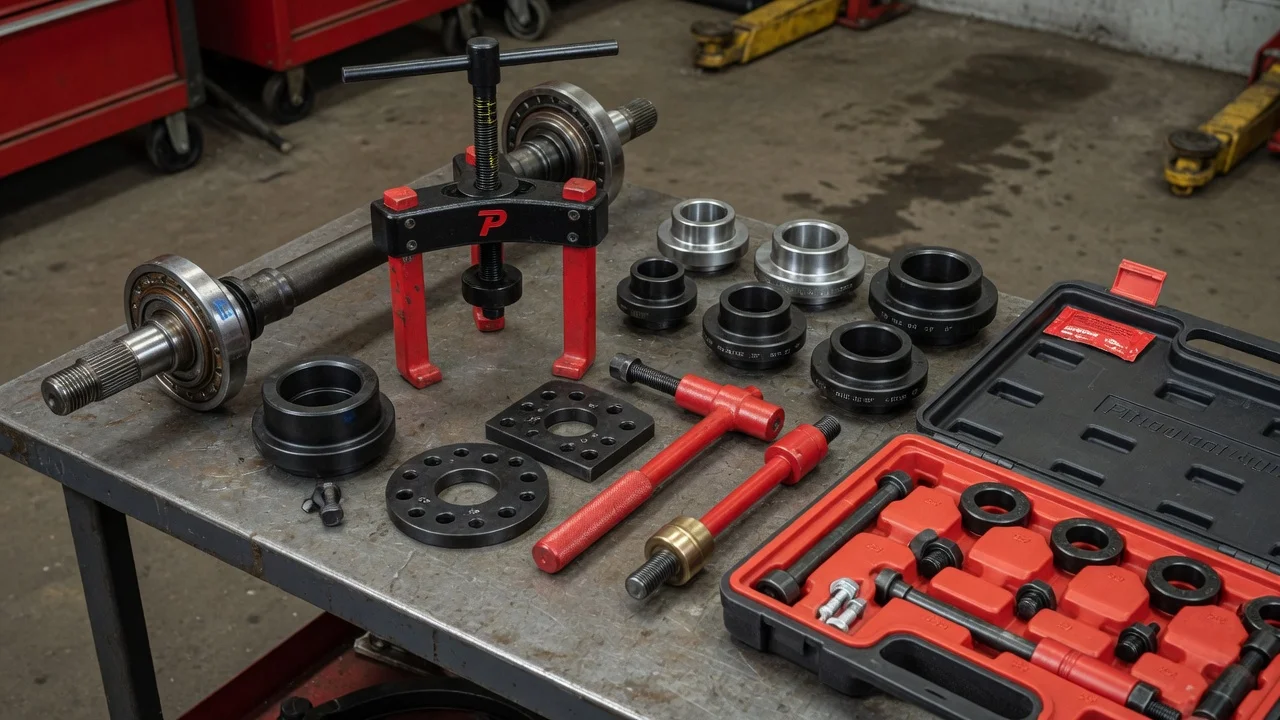
A rear axle bearing puller set does one narrow job: it removes a worn wheel bearing and seal from a solid rear axle housing after the axle shaft is out. Whether the Pittsburgh Automotive rear axle bearing puller set suits your vehicle depends on the axle design, the bearing's dimensions and how the set's adapters grip that bearing. This guide explains how to check fitment, which features matter and what the tool cannot do, so you can decide before you buy.
Define the job the puller must do
Start with the axle, not the tool. A puller of this kind is meant for semi-floating solid rear axles. On these axles the outer wheel bearing sits in the end of the axle housing tube, and the axle shaft slides out once it is released. On many pickups, SUVs and older rear-drive cars, you release the shaft by removing C-clips inside the differential. Other designs hold the shaft with a retainer plate at the brake backing plate. The puller attaches to a slide hammer, reaches into the housing tube, catches the back of the bearing and drives it outward with repeated impacts.
Confirm that the bearing is actually the problem before you buy anything. A growl or hum that changes with road speed, gear oil on the inside of the backing plate or drum, and play at the wheel all point toward the bearing or seal. Tires, brake components and differential gears can produce similar complaints, so a careful inspection and the vehicle's service history help tell them apart. Consider practical constraints too. You need a safe way to support the vehicle and room to swing a slide hammer in line with the housing. If your axle uses C-clips, you also need to open the differential. For a one-time repair, a set that covers your single bearing size matters more than broad coverage.
Check compatibility with your axle
Fitment comes down to the axle design and the bearing's dimensions. Identify your exact vehicle configuration, including the rear axle assembly. The axle is often marked on an axle tag or listed in the vehicle's build data. Use the manufacturer specifications or service information for that axle to find out whether the bearing stays in the housing when the shaft comes out. On many retainer-plate axles, the bearing is pressed onto the shaft and held by a retaining ring. For that design a slide-hammer puller is the wrong tool, because the bearing has to come off the shaft with a press.
If the bearing stays in the housing, compare the set's adapter sizes with your bearing. The adapter must pass through the bearing's inner opening and then grip behind it, so two things matter: the bearing bore and the depth of the housing shoulder behind the bearing. You can measure the bearing bore with calipers, or use the bearing part number from service records. Check those numbers against the size range printed on the packaging or instructions. Confirm that the adapters thread onto the included slide hammer, or onto one you already own. Also check whether a wheel speed sensor sits near the bearing, where an adapter could damage it during removal.
Features that affect the choice
The adapters matter most. A set with several collet or jaw sizes can cover more axles, but extra pieces only help if one of them fits your bearing correctly. A loose adapter can slip, tear up the bearing cage or score the housing bore, and then a simple bearing swap becomes a sealing problem. Clearly marked sizes let you match the adapter without trial and error.
The slide hammer's weight and stroke length set how much force each blow delivers. A bearing that has sat in a corroded housing for years may need firm, repeated blows. A lighter hammer may be enough on a clean, recently serviced axle. A sturdy case keeps the adapters together, which matters for a tool you may use only occasionally. Treat labels such as heavy duty, professional or forged as descriptions, not proof. The evidence that matters is the listed adapter range, the thread compatibility and whether the parts match your measurements.
Limitations and ownership costs
The puller removes bearings but does not install them. Seating a new bearing and seal squarely requires a suitable bearing and seal driver, and a crooked seal is a common cause of repeat leaks. The set does not work on full-floating axles, where the bearings are in the wheel hub, or on independent rear suspension that uses bolt-on hub units. Bearings pressed onto retainer-type shafts need a press with proper support.
Budget for the rest of the job. You will need the gear oil the manufacturer specifies and a cover gasket or sealant if the differential is opened. You will also need new bearings and seals, plus any fasteners or clips the service information says should not be reused. On some axles the rollers ride directly on the shaft, so inspect that bearing surface. Pitting or wear there means the shaft must be replaced or fitted with a repair bearing made for that situation, and the puller cannot fix it. For gear oil changes, follow your maintenance schedule and adjust for operating conditions such as towing instead of relying on a universal interval. After each use, wipe the adapters, check the jaws and threads for deformation, and apply a light coat of oil before storage.
Build a practical shortlist
Before choosing the Pittsburgh rear axle bearing puller set or any alternative, work through a short checklist. Confirm that your axle is a semi-floating design with the bearing seated in the housing. Record the bearing dimensions or part number from service information or the removed parts. Check that the set lists an adapter that matches those dimensions and the space behind the bearing. Verify that the adapters thread onto your slide hammer, and make sure you have room to use the hammer in line with the axle tube.
Then add up the complete job: bearings, seals, gear oil, gasket or sealant, an installation driver and any single-use parts. Compare candidate sets on fit, not on piece count alone. If no adapter in a set matches your measurements, it is the wrong tool for your vehicle, however wide its advertised coverage. A set that fits your axle correctly is a better buy than a larger kit that only comes close.