Tools Needed to Change Brake Pads and Rotors
The Short Answer
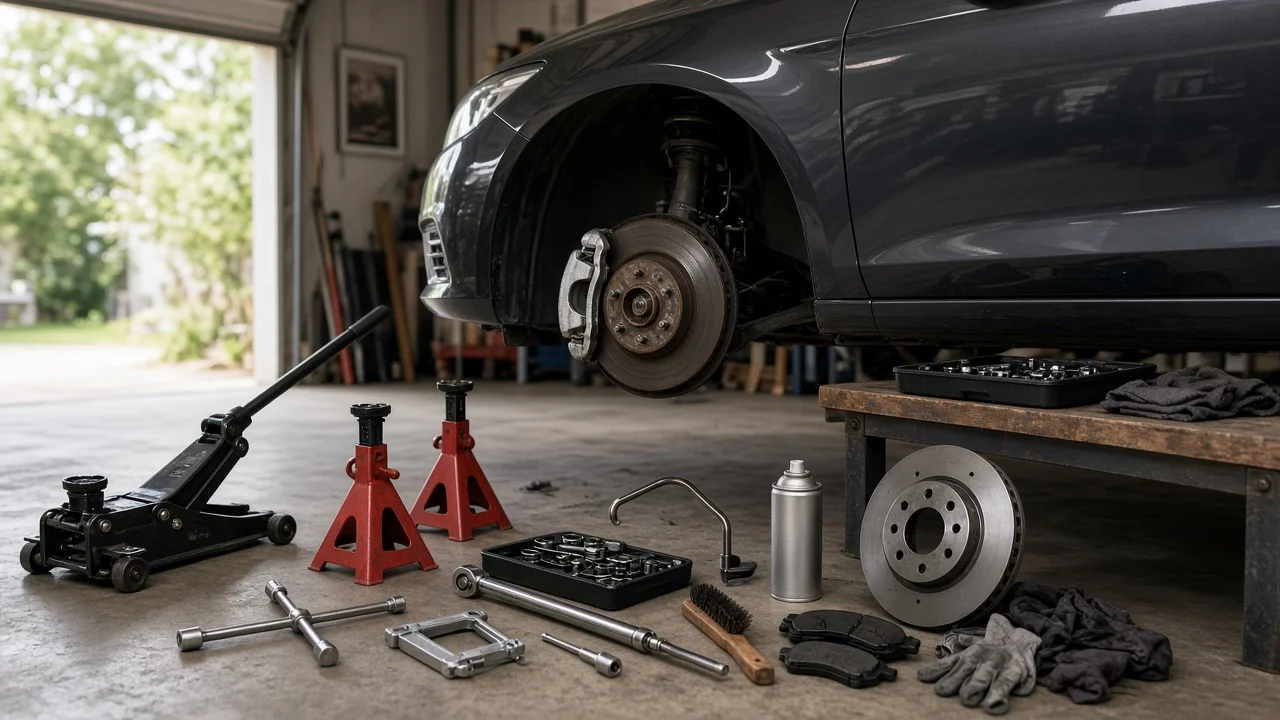
For most cars and light trucks with disc brakes, a pad and rotor replacement needs a modest set of hand tools. You need a way to lift and safely support the vehicle, a way to remove the wheel, sockets or bits that fit the caliper and caliper bracket bolts, a tool to push the caliper piston back, a torque wrench for reassembly, and basic cleaning and lubrication supplies.
The main qualification is that the exact list depends on the vehicle. Fastener sizes and head types vary by make, model and generation. Rear brakes with a parking brake built into the caliper, electronic parking brakes, and rotors that are integrated with the wheel hub can each require extra tools or a different procedure. Check the service information for your specific model year and trim before starting so you have the right sockets and know the correct torque values.
Essential Tools for a Typical Brake Job
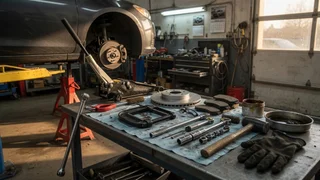
Floor jack: lifts the vehicle at the manufacturer's designated lift points. A scissor jack from the spare tire kit can lift the car but is a poor choice for working under or beside it. Jack stands: support the vehicle once it is lifted. Never work with a wheel removed while the vehicle rests only on a jack. Wheel chocks: block the wheels that stay on the ground so the vehicle cannot roll. Lug wrench or breaker bar with the correct lug nut socket: loosens wheel nuts or bolts. A breaker bar gives more leverage than a standard ratchet for tight fasteners. Socket set and ratchet: removes caliper guide pin bolts and caliper bracket bolts. Many vehicles use metric sizes, but some use Torx, Torx Plus, Allen (hex) or other head types, so confirm what your vehicle needs. Combination wrenches: useful for holding a guide pin nut or slide pin while you turn the bolt. Caliper piston tool or large C-clamp: compresses the caliper piston back into its bore so the caliper fits over thicker new pads and a new rotor. Torque wrench: tightens caliper bolts, bracket bolts and lug nuts to the specified values. Brake fasteners are safety-critical, so guessing is not a good substitute. Wire brush: cleans rust and scale from the caliper bracket where pad clips sit and from the hub face where the rotor mounts. Brake parts cleaner: removes oil, grease and dust from components and from the friction surfaces of new rotors, many of which ship with a protective coating. High-temperature brake lubricant: applied sparingly to slide pins, pad contact points and hardware as directed. Keep it off pad friction material and rotor surfaces. Gloves and eye protection: protect against brake dust, cleaner spray, brake fluid and debris.
Tools That Depend on Your Vehicle
These items are not needed on every brake job, but on certain vehicles the work cannot be done properly without them.
Caliper wind-back tool: many rear calipers with an integrated mechanical parking brake use a piston that must be rotated as it is pushed in. A C-clamp alone will not retract it and can damage the caliper. Wind-back kits include adapters for different piston face patterns. Scan tool or service-mode procedure for electronic parking brakes: vehicles with an electronic parking brake often require the rear caliper motors to be retracted into a service position before the piston can be compressed. Some vehicles allow this through a dashboard or button sequence; others need a compatible scan tool. Forcing the piston back without retracting the motor can damage the actuator. Impact screwdriver: some rotors are held to the hub by small retaining screws, often Phillips or Torx head, which can seize from corrosion. A hand impact driver struck with a hammer is less likely to strip them than a regular screwdriver. Dead-blow hammer or rubber mallet: helps break loose a rotor that has rusted to the hub. Strike the rotor hat area, not the friction surface edges, and avoid hitting the wheel studs. Penetrating oil: helps free rusted rotors and stubborn fasteners. Keep it off the friction surfaces and clean thoroughly afterward. M8 or M10 bolts for rotor jacking holes: some rotors have threaded holes that let you thread in bolts to push a stuck rotor off the hub. Check whether your rotors have them and which thread size fits. Hub and wheel bearing tools: on vehicles where the rotor is integrated with the hub, often found on some older trucks and certain four-wheel-drive models, replacing the rotor involves removing the hub and servicing or replacing wheel bearings and seals. That turns a basic brake job into a larger repair with its own tool list.
Helpful but Optional Tools
Impact wrench: speeds up removal of lug nuts and tight bracket bolts. Use it for removal only; final tightening should be done by hand with a torque wrench. Caliper hanger or bungee cord: supports the caliper while it is off the rotor so its weight does not hang on the flexible brake hose. Brake bleeder kit or a clear hose and catch bottle: needed only if the hydraulic system is opened, such as when a caliper or hose is replaced, or if you choose to flush the fluid during the job. Turkey baster or fluid syringe: removes some fluid from the master cylinder reservoir if compressing the pistons would push the level too high. Hub cleaning tool or abrasive disc: cleans the hub mounting face more thoroughly than a hand wire brush, which helps the new rotor sit flat. Micrometer and dial indicator: measure rotor thickness and lateral runout. These matter most when deciding whether to reuse rotors or when diagnosing a vibration; they are less essential if you are installing new rotors anyway. Flashlight or work light: makes it easier to inspect hoses, pad wear indicators and hardware. Creeper, kneeling pad or low stool: reduces strain during the job. Drain pan or cardboard: catches drips from cleaner and fluid and keeps the work area tidy.
Quick Reference: What Each Tool Does
Tool | Purpose in the job | Needed for most vehicles? Floor jack | Lifts the vehicle at the correct lift point | Yes; Jack stands | Supports the vehicle safely while you work | Yes; Wheel chocks | Prevents rolling | Yes; Breaker bar and lug socket | Loosens wheel fasteners | Yes; Socket set and wrenches | Removes caliper and bracket bolts | Yes; Torx, Allen or specialty bits | Fits non-hex caliper or rotor fasteners | Depends on vehicle; C-clamp or piston compressor | Pushes back standard caliper pistons | Yes; Caliper wind-back tool | Retracts screw-type rear pistons | Depends on vehicle; Scan tool | Puts electronic parking brake in service mode | Depends on vehicle; Torque wrench | Tightens fasteners to specification | Yes; Wire brush | Cleans bracket and hub surfaces | Yes; Brake parts cleaner | Degreases parts and new rotor surfaces | Yes; Brake lubricant | Lubricates slide pins and contact points | Yes; Impact driver | Removes seized rotor retaining screws | Depends on vehicle; Dead-blow hammer | Frees rusted rotors | Often helpful; Bleeder kit | Bleeds brakes if the hydraulic system is opened | Only if needed
Parts and Supplies to Have on Hand
Tools are only half of the preparation. Having the correct parts ready keeps the vehicle from sitting on stands longer than necessary.
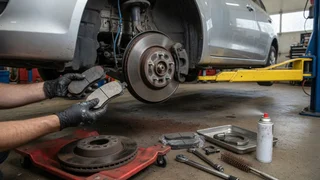
Brake pads matched to your vehicle's exact model year, trim and brake package. Some models offer different brake sizes depending on engine, towing package or performance trim. Rotors that match the same fitment details, since rotor diameter and thickness can vary within a single model line. New pad hardware: abutment clips, anti-rattle springs and pad shims. Many pad sets include them; reusing worn or corroded hardware can cause noise or uneven wear. Replacement caliper bolts if the service information calls for them to be replaced rather than reused, or if the originals are damaged. Thread locker, if the vehicle's procedure specifies it on certain bolts. Fresh brake fluid of the type specified on the reservoir cap or in the owner's manual, in case you need to top off or bleed the system. Use a sealed container, since brake fluid absorbs moisture once opened.
How the Tool List Differs: Pads Only vs. Pads and Rotors
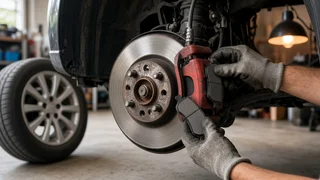
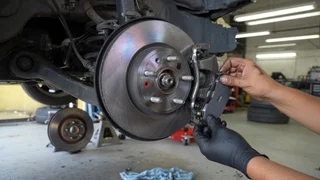
A pads-only job usually requires removing just the caliper, or on some designs only swinging it out of the way after removing one guide bolt. The caliper bracket often stays in place, so you may not need the larger socket or the leverage required for bracket bolts.
Replacing rotors as well means removing the caliper bracket, which is typically fastened with larger, tighter bolts than the caliper guide pins. That is where a breaker bar earns its place. You may also need tools to deal with retaining screws and a rusted rotor, plus a wire brush or hub cleaner to prepare the hub face so the new rotor sits flush. An uneven mounting surface can contribute to brake pedal pulsation later.
Safety Points That Affect Your Tool Choice
Use jack stands rated for your vehicle's weight and place them at the supported points described in the owner's manual. Work on a firm, level surface, set the parking brake when working on the front brakes, and chock the opposite wheels. Avoid blowing brake dust off with compressed air. Clean with brake parts cleaner and dispose of dust and rags properly. Brake fluid can damage paint, so cover nearby painted surfaces and wipe up spills promptly. Watch the master cylinder reservoir as you compress caliper pistons, since the returning fluid can cause it to overflow. After reassembly, pump the brake pedal until it feels firm before moving the vehicle. The pistons need to move back out against the pads, and the first press may go nearly to the floor. Follow the pad manufacturer's bed-in procedure to transfer an even layer of pad material onto the new rotors.
Bottom Line
If you own a floor jack, jack stands, a socket set, a breaker bar and a torque wrench, you already have most of what a basic brake pad and rotor replacement requires. Add a caliper piston tool, a wire brush, brake cleaner and brake lubricant, and you are equipped for the typical front brake job. Before buying anything else, confirm the fastener types, whether the rear calipers need a wind-back tool, whether the vehicle has an electronic parking brake, and whether the rotors are a separate part or integrated with the hub. Those details are what turn a standard toolkit into the right toolkit for your specific vehicle.