Tire Sidewall Damage: How to Assess Cuts and Scrapes
The Short Answer
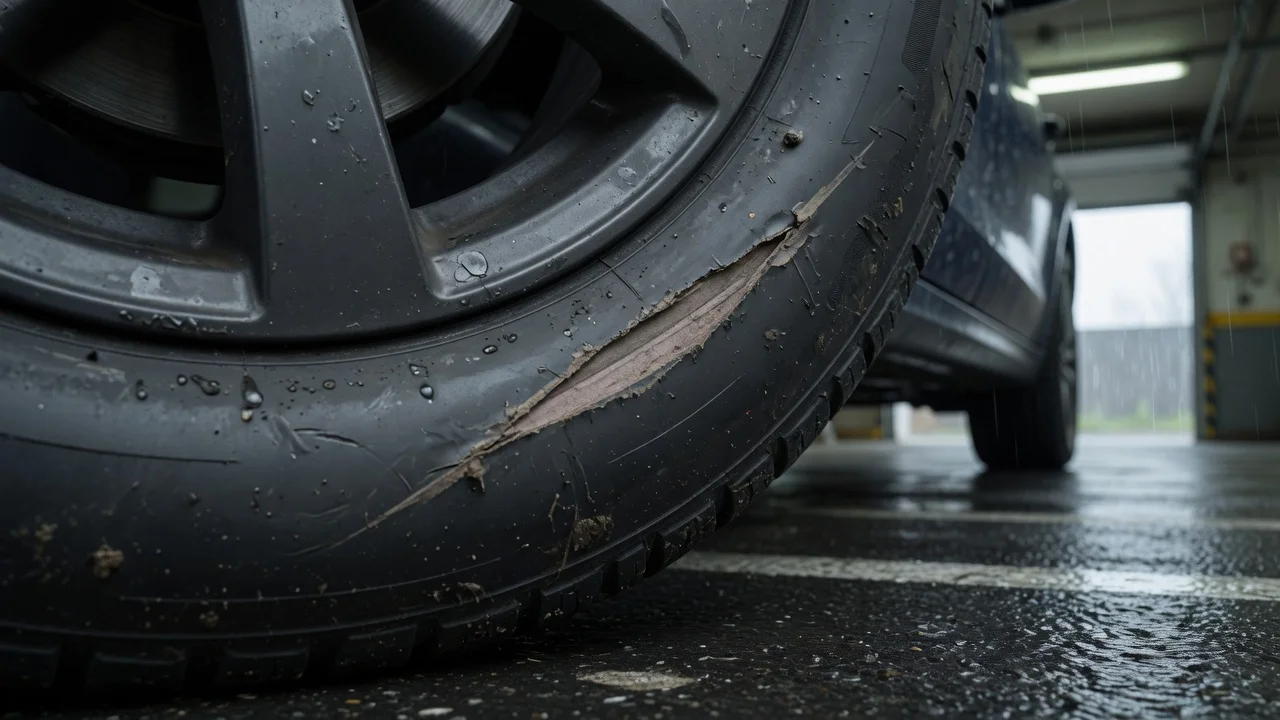
The sidewall is the side of the tire between the tread and the wheel rim. It flexes constantly and contains the body plies, the layers of reinforcing cord that give the tire its strength. Tire industry repair guidance generally treats the sidewall as non-repairable. Puncture repairs are normally limited to the tread area, so a sidewall cut deep enough to matter usually means replacing the tire.
Not every mark is serious. A light scuff confined to the outer rubber, such as curb rash on a raised protective rib, may be cosmetic. Replace the tire, or have it professionally inspected before driving further, if any of these are present: a bulge or bubble, visible cords or fabric, a cut that reaches below the surface rubber, air loss, or damage you cannot clearly judge. Some damage, especially from driving while underinflated, is only visible from inside the tire, so a clean-looking outside is not proof that the tire is sound.
Telling Cosmetic Scrapes From Structural Damage
Sign | What it usually indicates | Typical action; Shallow scuff or rubbed area in the outer rubber, no cords visible, tire holds pressure | Surface abrasion, often from curb contact | Monitor; have it checked if unsure of the depth; Cut or gouge with a visible opening into the rubber | Possible damage reaching the body plies | Professional inspection; replacement is likely; Visible cords, fabric, or steel | Reinforcing structure exposed and compromised | Replace; do not drive on it; Bulge, bubble, or lump | Internal cords broken, with air pushing the outer rubber outward | Replace; do not drive on it; Fine cracks across the rubber surface | Age or ozone cracking (weather checking) | Have it assessed; deep or widespread cracking calls for replacement; Tire lost pressure or was driven on while flat or very low | Possible internal damage not visible from outside | Professional dismount inspection
No single universal depth measurement separates a safe scrape from an unsafe cut, and none was available for this guide. Where the line falls depends on the tire's construction, so the tire manufacturer's guidance and a qualified technician's judgment take priority over any rule of thumb.
How to Inspect a Damaged Sidewall
This is a visual check you can do yourself to decide whether the vehicle should be driven. It does not replace a professional inspection, which can include removing the tire from the wheel to examine the inside.
What You Need
A level, safe place to park, away from traffic; A flashlight, which helps even in daylight because sidewall damage is easy to miss in shadow; A tire pressure gauge; Gloves, since cuts can hide debris or exposed steel; The recommended pressure, found on the tire placard (often on the driver's door jamb) or in the owner's manual
Steps
1) Park on level ground, apply the parking brake, and switch off the engine. Let the tires cool if you have just been driving, because hot tires read higher and can hide a slow leak. 2) Check the pressure with the gauge and compare it with the placard value. If the tire is clearly low or keeps losing air, treat it as damaged. Do not drive on it; fit the spare or arrange a tow. 3) Examine the outer sidewall around its full circumference with the flashlight. Look for cuts, gouges, bulges, cracks, and any sign of cord or fabric. 4) Inspect the inner sidewall, which faces under the vehicle. On front tires, turning the steering to full lock with the engine off can expose more of it. Damage on the inner side is common and easily overlooked. 5) To see the part of the tire resting on the ground, move the vehicle a short distance, about half a wheel rotation, then check that section. Do not drive any further if you have already found a bulge or exposed cords. 6) Run a gloved hand lightly along the sidewall to feel for bumps or soft spots you cannot see. Do not push tools or fingers into a cut to measure its depth. That can enlarge the damage and give a misleading result. 7) Compare the damage against the table above. Stop and do not drive if you find a bulge, visible cords, a hissing leak, or a cut whose depth you cannot judge.
Completion Check
You are finished when you have checked both sidewalls around the full circumference, confirmed that the tire holds the placard pressure, and placed the damage in one of two groups: clearly superficial, or needing professional inspection or replacement. If a scuff looked minor, recheck the pressure and the damaged area over the next few days. A slow pressure drop or a bulge that appears later both mean the tire must come off.
Work That Needs a Qualified Technician
Several judgments are beyond a roadside visual check. Internal damage, including the separations caused by driving on an underinflated tire, can only be confirmed by removing the tire from the wheel and examining the inner liner. Mounting and balancing a replacement also requires tire equipment.
Replacing a single tire can raise vehicle-specific questions. On some all-wheel-drive vehicles, manufacturers specify how closely tread depth or tire size must match across the vehicle. Run-flat tires come with their own guidance on driving after pressure loss and on whether they may be reused. These requirements vary by vehicle and tire, so check the owner's manual and the tire manufacturer's instructions rather than relying on general advice.
Limits of This Guide
This guide covers how to recognize and triage sidewall damage. It does not give numerical repair limits, legal roadworthiness standards, or rules for any specific vehicle, because those depend on the tire manufacturer, the vehicle maker, and the jurisdiction. When the evidence is unclear, treat the tire as unsafe until a professional has inspected it.