Tire Bubble: What It Means and When to Replace the Tire
The Short Answer
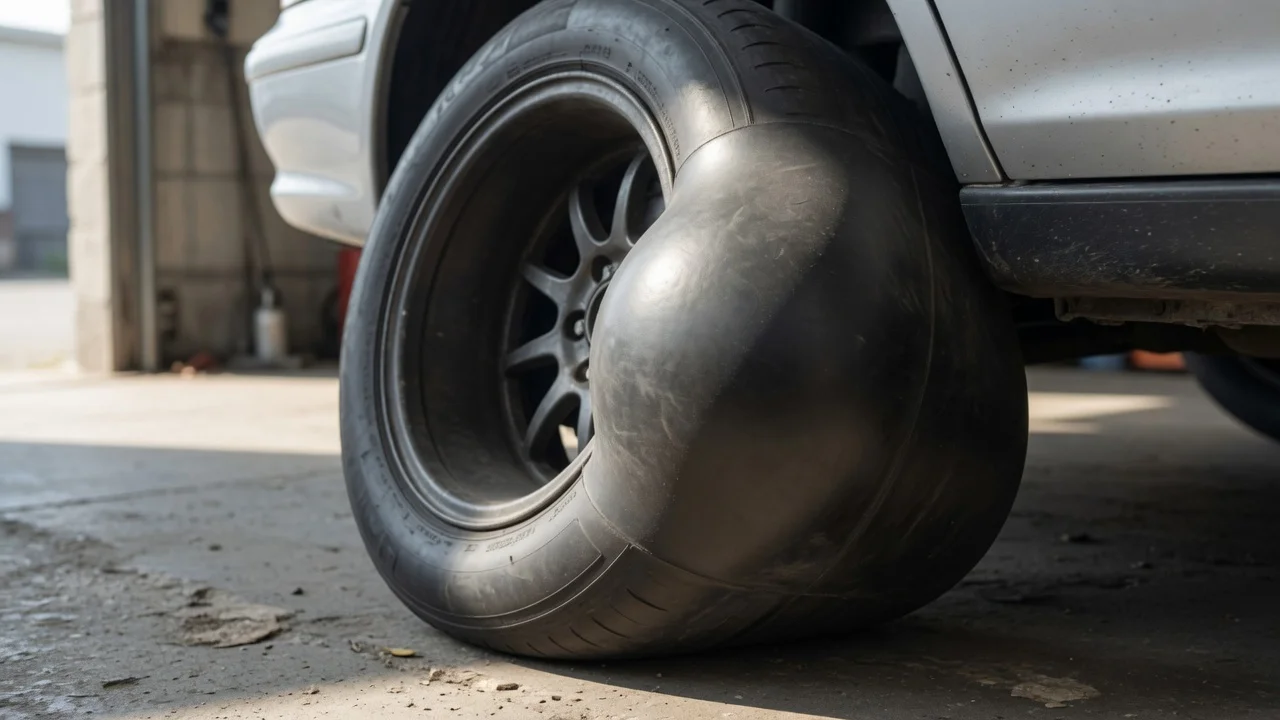
A bubble on a tire, usually seen as a rounded bulge on the sidewall, generally means the tire's internal structure has been damaged and air has pushed outward through a weakened area. A tire in this condition is at elevated risk of sudden failure, and the widely accepted guidance from tire manufacturers and repair standards is that it should be replaced rather than repaired. Sidewall damage of this kind is not considered repairable, and continuing to drive on it, especially at speed or with a heavy load, increases the chance of a blowout.
One qualification matters: not every irregularity on a sidewall is a bubble. Shallow inward dents or ripples, often called sidewall indentations or undulations, are a common and usually harmless feature of radial tire construction. The checks below explain how to tell the two apart.
How a Tire Bubble Forms
A modern tubeless radial tire holds air with an inner liner, a layer of rubber designed to be nearly airtight. Outside that liner is the carcass, made of fabric cords (the plies) embedded in rubber, which gives the tire its strength and shape. Under the tread, steel belts add stiffness and protect the carcass.
When the cords in the sidewall are cut, broken or separated, the inner liner may still hold air, but nothing strong enough remains to contain the pressure at that spot. Air then pushes the flexible outer rubber outward, creating a visible bulge. In practical terms, the bubble marks a place where only a thin layer of rubber is restraining the tire's full inflation pressure.
A bulge or lump in the tread area, rather than the sidewall, can indicate a different but equally serious problem: separation of the internal belts or plies from each other. This may also show up as vibration or a wobble that develops while driving.
Common Causes
Impact damage: Striking a pothole, curb, speed bump, road debris or railway crossing can pinch the sidewall between the object and the wheel rim, breaking cords internally even when the outer rubber shows no cut. Underinflation: A tire run with too little air flexes more and is more easily pinched against the rim on impact. Prolonged underinflation can also build heat and contribute to internal separation. Overloading: Carrying more weight than the tire's load rating permits increases flexing and stress on the structure. Low-profile tires: Tires with short sidewalls have less cushioning between the road and the rim, which can make impact damage more likely on rough roads. This is a general tendency rather than a guarantee for any particular tire. Manufacturing defects: Less commonly, a fault in construction can cause separation. Whether a given bubble stems from a defect or from road damage generally requires inspection by a tire professional or the manufacturer.
Bubble or Normal Sidewall Indentation? What to Check
Before deciding what to do, confirm what you are looking at. These visual and tactile checks help distinguish a damaged tire from a normal one, but they are not a substitute for a professional inspection when there is any doubt.
Observation | What it usually indicates | Next step; Rounded outward bulge on the sidewall, often after an impact | Internal cord damage; a true tire bubble | Stop using the tire as soon as it is safe; fit the spare or arrange replacement; Narrow inward dent or ripple running across the sidewall, often on several tires | Normal splice overlap from radial construction; generally cosmetic | Have it confirmed at a tire shop if unsure; no action usually needed; Lump or raised area in the tread | Possible belt or ply separation | Stop using the tire and have it inspected; Bulge accompanied by a cut, crack or exposed cords | Severe structural damage | Do not drive on it; use the spare or arrange towing; New vibration, thumping or wobble without a visible bulge | Possible internal separation, imbalance or wheel damage | Reduce speed and have the tire and wheel inspected promptly
A useful distinction: indentations sink inward and are typically present from new, while a damaging bubble protrudes outward and often appears suddenly after the tire has hit something. Checking both sides of the tire matters, because damage on the inner sidewall facing the vehicle is easy to miss.
What to Do If You Find a Bubble
1) Limit further driving. If you notice the bulge while on the road, slow down, avoid sudden maneuvers and pull over at a safe location. 2) Inspect the whole tire. With the vehicle parked on level ground and the parking brake set, look at both sidewalls and the tread for additional bulges, cuts or exposed cords. Turning the steering to full lock can make the inner sidewall of a front tire easier to see. 3) Check the wheel. Look for bends, cracks or chips on the rim near the bubble, since an impact strong enough to damage the tire may have damaged the wheel too. 4) Fit the spare if you have one. Follow the procedure, jacking points and wheel fastener tightening specification in your vehicle's owner's manual. If the spare is a temporary compact type, observe the speed and distance limits printed on it or stated in the manual. 5) If you have no spare or cannot change it safely, use roadside assistance or a tow rather than driving on the damaged tire. 6) Have the tire replaced and the wheel inspected by a tire professional. A bubble in the sidewall is not a candidate for a patch or plug repair. 7) Confirm completion: after replacement, the new tire should be inflated to the pressure on the vehicle's placard (commonly on the driver's door jamb), the wheel fasteners tightened to specification, and, if the shop recommends it, the wheel balanced and alignment checked.
Should You Replace One Tire or More?
Often a single damaged tire can be replaced on its own, particularly if the other tires are relatively new. However, mixing a new tire with significantly worn ones can affect handling balance, and on some all-wheel-drive and four-wheel-drive vehicles, differences in tread depth between tires may be restricted by the manufacturer to protect the drivetrain. The acceptable difference varies by vehicle and model year, so check your owner's manual or ask a dealer or tire specialist before deciding whether to replace one, two or all four tires.
Warranty and Cost Considerations
Standard tire manufacturer warranties typically cover defects in materials and workmanship, not damage from road hazards such as potholes. A separate road hazard protection plan, if you bought one with the tires, may cover impact damage. Terms differ between manufacturers, retailers and markets, so review your paperwork and keep the damaged tire available for inspection if you intend to make a claim. No specific replacement costs were provided for this article, and prices vary widely by tire size, type and region.
Reducing the Risk of Future Bubbles
Check tire pressures regularly with a gauge when the tires are cold, using the values on the vehicle placard rather than the maximum pressure molded on the sidewall. Slow down for potholes, speed bumps and rough crossings where it is safe to do so, and avoid striking curbs when parking. Stay within the vehicle's and tires' load ratings. Inspect sidewalls periodically and after any hard impact. If you choose low-profile tires, be aware that they may be more susceptible to impact damage on poorly maintained roads.
Bottom Line
An outward bulge on a tire is a sign of internal damage and a reason to take the tire out of service and replace it, not repair it. A shallow inward ripple, by contrast, is usually normal. When you cannot tell which you have, treat the tire as damaged until a tire professional confirms otherwise.