TD42 Glow Plug Relay Location: Where to Find It and How to Check It
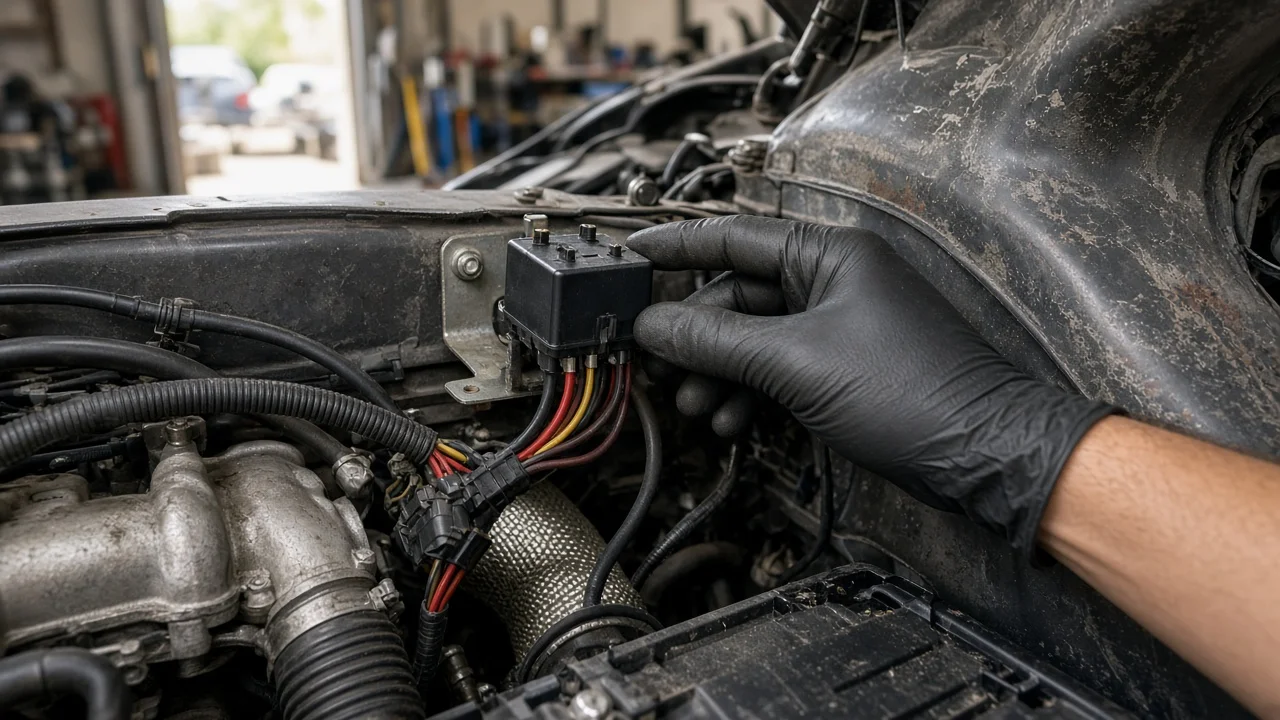
When a TD42 is slow to start on a cold morning, the glow plug relay is one of the first parts worth finding. On this Nissan inline six diesel, the relay usually sits in the engine bay, not in the cabin fuse panel. Its exact position still depends on the vehicle, model year, market and any wiring changes made since the truck left the factory. This guide covers where to look, how the preheat circuit works, and how to separate a glow problem from a fuel delivery problem.
Where the TD42 glow plug relay usually sits
On most Nissan Patrol and Safari models with the TD42, including the GQ (Y60) and GU (Y61) generations, the glow plug relay is mounted in the engine bay. It is normally on the inner fender or firewall area. Because it switches a heavy current, it stays within a short cable run of the battery and of the bus bar that links the six glow plugs along the cylinder head. You can recognize it by its wiring. One thick cable comes from the battery positive supply, often through a fusible link. Another thick cable runs to the glow plug bus bar, and a thinner lead from the glow control unit operates the relay coil.
The most dependable way to find it is to follow the heavy wire from the glow plug bus bar back to where it starts. That works even when photos or forum descriptions don't match your truck. Relocated batteries, dual battery setups, aftermarket accessories, and right-hand versus left-hand drive layouts can all move the relay or change how its wiring is routed.
How the preheat circuit works
The TD42 is an indirect injection diesel. Fuel is sprayed into a small prechamber and ignites from the heat of compression alone. In a cold engine, the cylinder head and prechambers draw heat out of the compressed air, so the fuel may not ignite reliably. Each prechamber has a glow plug that heats up before cranking to make up for this.
The circuit has three main parts. The glow control unit, sometimes called the timer, decides how long to preheat, usually based on coolant temperature. The relay is the heavy-duty switch: a small current through its coil closes contacts that feed battery power to all six plugs at once. The glow plugs are the heaters. With the ignition on, the dash glow light shows while the system preheats and goes out when it is ready to crank. Many versions also keep the plugs powered for a short time after the engine starts. This afterglow phase reduces white smoke and rough running while the engine warms up.
What changes the answer for your truck
Several factors affect where the relay is and what it looks like. These include the vehicle generation, whether the engine is the naturally aspirated TD42 or a turbocharged version, and the market the vehicle was built for. Some builds use a second relay or a dropping resistor so the plugs run at reduced voltage during afterglow. On those trucks you may find two similar relays close together, and you need a wiring diagram to tell which one does which job.
Engine configuration also matters when the TD42 is not in its original vehicle. Engine swaps into other four-wheel drives use custom or adapted wiring, so the relay can end up anywhere the installer chose. Some owners have also replaced the factory timer with a manual push-button glow controller. In that case the original control unit may be bypassed, and the relay is operated directly from a switch in the cabin. Before you buy parts, confirm what is actually on your truck.
Telling a glow fault from a fuel problem
A glow fault usually looks like this: long cranking when cold, white or grey smoke, and rough running for the first minute, with normal starts once the engine is warm. Fuel faults often behave differently. Air getting into the lines, a clogged fuel filter, a weak lift pump, or a leaking injector can cause hard starting even when the engine is hot, stalling soon after starting, or loss of power under load. Electronic fuel trim data is a petrol engine management concept. A mechanically injected TD42 does not report it, so a scan tool tells you little here, and checks are done by observation and measurement.
Diesel fuel systems run at very different pressures depending on where you are working. The low-pressure side between the tank, filter and injection pump can be bled using the hand primer, following the service procedure. The lines between the injection pump and the injectors carry very high pressure. Never loosen those lines while the engine is running, and never feel along them for a leak. A fine jet of high-pressure diesel can penetrate skin and cause serious injury. For a leak check, keep the engine off, look for wet fittings and fuel stains, and use a piece of card rather than your hands near running components. Fuel additives may help keep fuel clean, but they do not repair a failed glow plug, relay, injector or fuel pump.
Checking the relay and glow plugs safely
Start with simple checks on a cold engine. Turn the ignition on and listen for the relay to click, and watch whether the glow light comes on and then goes out. If the light works but there is no click, the problem may be the relay or its control signal. If neither happens, look at the glow control unit, its fuse, or the wiring to it. With a multimeter on the glow plug bus bar, you should see close to battery voltage during preheat. Expect a lower reading during afterglow on systems that use a resistor.
To test the plugs themselves, first disconnect the battery negative terminal, because the feed to the bus bar carries heavy current. Then remove the bus bar and measure each plug's resistance to ground. A plug that reads open circuit has failed, and one that reads very differently from the others is suspect. Check the heavy cable ends, the relay terminals and the fusible link for corrosion, heat discoloration or looseness, since a poor connection can starve all six plugs. Don't bridge the relay terminals for longer than a brief test. Glow plugs held at full power without their normal timing can overheat and fail.
Limitations and next step
General guidance can't confirm the exact bracket position or wiring for every TD42. Production changes, market differences and earlier repairs all affect what you will find. The factory service manual wiring diagram or the parts catalog illustration for your model code is the definitive reference. If the relay clicks, the bus bar receives voltage and the plugs test good, but the engine still starts poorly, look beyond the glow system at compression, fuel supply, the injection pump and the injectors.
Injector and injection pump testing needs specialized equipment, so leave that work to a diesel specialist. Stop and get professional help if you find melted insulation, scorched terminals or a burning smell near the relay. Those signs point to a wiring fault that can recur or cause a fire if you only replace the relay.