Start Stop Unavailable on Jeep Compass: What the Message Means
The short answer
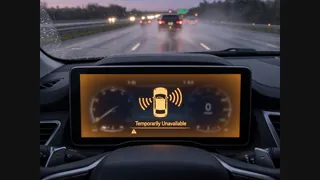
When a Jeep Compass reports that stop/start is unavailable, the engine's automatic stop/start function has decided not to shut the engine off at stops. Jeep calls this feature Engine Stop-Start (ESS). The message is often not a fault. The system checks a set of conditions before every auto-stop, and if any one is not met, it keeps the engine running. If the message stays on across many drives in conditions where the system normally works, or if it is paired with a service warning, a fault is more likely. The battery and its monitoring system are the usual first suspects.
An important qualification: the exact message wording, the conditions the system checks, and the components involved can vary by model year, engine, market and instrument cluster. Your owner's manual for your specific vehicle is the authoritative source for its ESS rules and messages.
Normal reasons the system holds off
Stop/start systems on modern vehicles, including the Compass, generally block an auto-stop when stopping the engine could hurt comfort, safety or the battery. Typical conditions include the following. Treat this as a general guide, not a confirmed list for every Compass variant.
Battery charge is too low, or the battery is still recovering after a short trip or a cold start. The engine or transmission has not reached normal operating temperature. Outside temperature is very hot or very cold. The climate control is working hard, such as heavy cooling, heating or defrosting. The driver's seat belt is unbuckled, a door is open, or the hood is open. The vehicle has not reached a minimum speed since the last auto-stop. The steering wheel is turned sharply, or the brake pedal is pressed lightly. The vehicle is on a steep grade, or a low-range or off-road mode is engaged on four-wheel-drive versions. The stop/start feature has been switched off with its dashboard button.
If one of these applies, the message usually clears once conditions change, for example after a longer drive that warms the engine and recharges the battery.
When it may point to a problem
A message that stays on day after day, in mild weather and after longer drives, suggests the system has detected something it will not work around. A separate service or fault message is a clearer sign. In stop/start vehicles generally, the most common cause is the battery. A weak or aging battery, a battery of the wrong type, or a battery sensor that has not been reset after replacement can all keep the system disabled. Stop/start vehicles usually need a battery built for frequent restarts, typically an AGM type.
Some Stellantis vehicles also use a smaller auxiliary battery to support the stop/start system. No supplied information confirms which Compass model years or engines use one, so check your owner's manual or ask a dealer before assuming it applies to your vehicle.
Practical next steps
Note when the message appears, including temperature, trip length and climate settings, and see whether it clears after a longer drive. Confirm the stop/start button has not turned the feature off. Have the battery load-tested, and confirm it is the correct type for a stop/start vehicle. If the battery was recently replaced, ask whether the battery sensor or module needs to be reset or registered. If the message continues or comes with a service warning, have a dealer or qualified shop scan for stored fault codes. Check whether any recalls or technical service bulletins apply to your VIN.
What this guide cannot confirm
No model-specific documentation, test data or service bulletins were available for this guide. It therefore does not state exact temperature or speed thresholds, battery specifications, fault codes, or which Compass years and engines use particular components. Those details should come from the owner's manual, a dealer, or a technician working on your specific vehicle.